






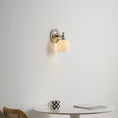
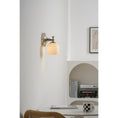
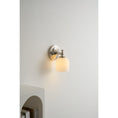
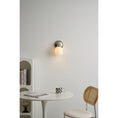
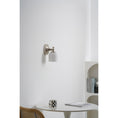
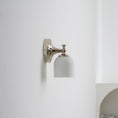
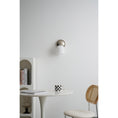
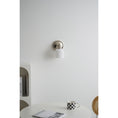


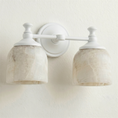
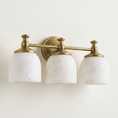
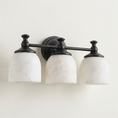
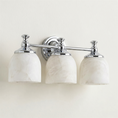
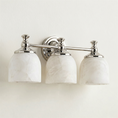
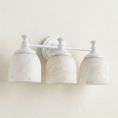
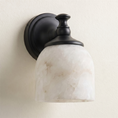
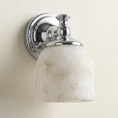
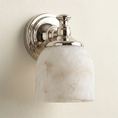
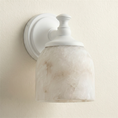
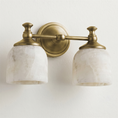
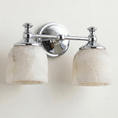
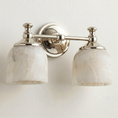
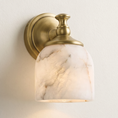
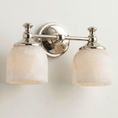
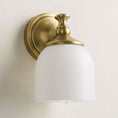
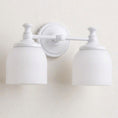
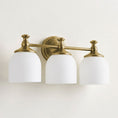
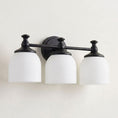
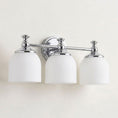
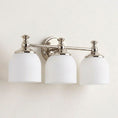
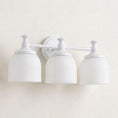
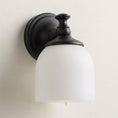
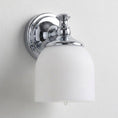
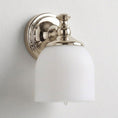
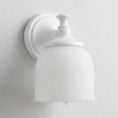
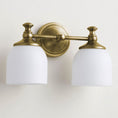
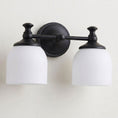
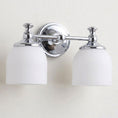
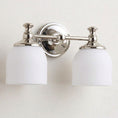
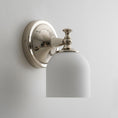
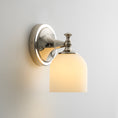
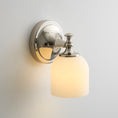
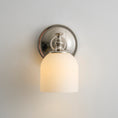
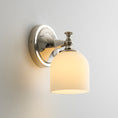
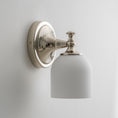
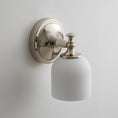
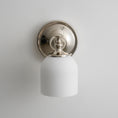
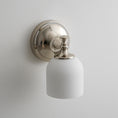
Laiton Forgé · Verre Opaque · Applique Salle de Bains Transitionnelle
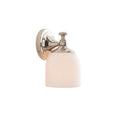
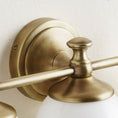
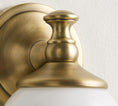
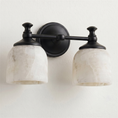
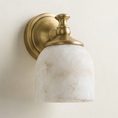
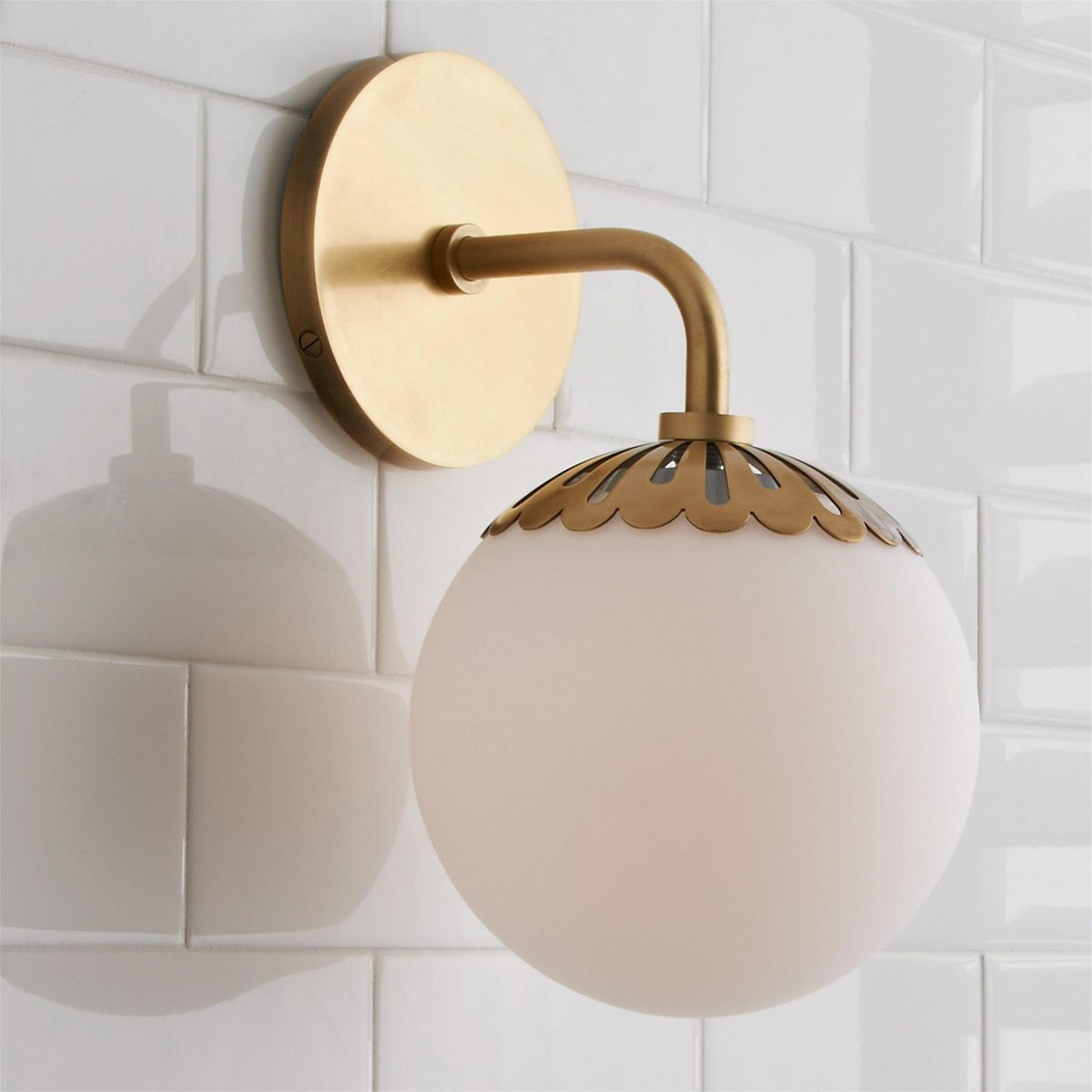
Applique murale à bras court dans l'esprit des luminaires de salle de bain et de vestiaire américains classiques — avec une plaque de fondation à médaillon étagé, un bras en laiton tourné agrémenté d'un détail de cloche, et un abat-jour en dôme de verre laiteux givré diffusant une lumière douce et homogène. Le corps est forgé à froid à partir de tôle de laiton pour plus de substance et de durabilité, puis plaqué et finalisé à la main.
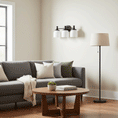
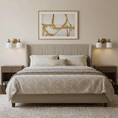
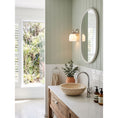
Le dôme en verre laiteux diffuse la lumière de façon uniforme sans éblouissement, idéal pour les miroirs de vanité et les espaces de toilette. Disponible en cinq finitions — Laiton poli, Noir mat, Chrome, Nickel poli et Blanc — et en configurations simple, double ou triple tête pour des vanités de tous les formats. Parfait pour les poudriers, les vanités de salle de bain principale, les paires de couloir et les vestiaires aux intérieurs traditionnels, transactionnels et Hollywood Regency.
Caractéristiques
Laiton forgé à froid
Corps en tôle de laiton forgée — plus lourd et durable que les alternatives filées ou moulées.
Dôme en verre laiteux
Le verre laiteux givré diffuse la lumière uniformément — sans éblouissement pour les miroirs de vanité et la toilette.
1, 2 ou 3 têtes
Choisissez la configuration selon la largeur de votre vanité — barre simple, double ou triple.
Finition — À choisir à la caisse
Laiton bruni laqué
Or miel chaleureux — vanités américaines transitionnelles et traditionnelles par excellence.
Noir mat
Noir mat et doux — salles de bain modernes et contrastées avec marbre ou pierre.
Chrome poli
Argent brillant avec finition miroir — frais dans les salles de bain modernes et minimalistes.
Nickel poli
Ton d'argent plus chaud que le chrome — flatteur avec le marbre crème et le bois chaleureux.
Blanc
Blanc satiné épuré — s'efface dans les murs pâles pour une installation plus discrète.
Laiton forgé à froid & plaquage finalisé à la main. Le corps est forgé à partir de tôle de laiton et finalisé à la main — les légères variations de ton du plaquage font partie du caractère artisanal. Chaque dôme en verre laiteux est soufflé à la bouche et peut présenter des différences subtiles de forme et d'épaisseur de paroi typiques du verre soufflé à la main.
Notes du Produit
P 15 × L 20,5 × H 26 cm
1 tête · ∅ 5,9″ × L 8,1″ × H 10,2″
P 47 × L 20,5 × H 26 cm
3 têtes · ∅ 18,5″ × L 8,1″ × H 10,2″
| Matériaux | Corps en tôle de laiton forgée · Abat-jour en verre · Abat-jour en albâtre |
| Finition | Laiton poli · Noir mat · Chrome · Nickel poli · Blanc · à choisir au moment de la commande |
| Style | Transactionnel américain · applique vanité / salle de bain · bras court |
| Taille — 1 tête | P 15 × L 20,5 × H 26 cm · ∅ 5,9″ × L 8,1″ × H 10,2″ |
| Taille — 2 têtes | P 35,5 × L 20,5 × H 26 cm · ∅ 14″ × L 8,1″ × H 10,2″ |
| Taille — 3 têtes | P 47 × L 20,5 × H 26 cm · ∅ 18,5″ × L 8,1″ × H 10,2″ |
| Culot | Douille E14 chandelier par bras · ampoules non incluses |
| Ampoules recommandées | Ampoule bougie LED blanc chaud 2700K–3000K, équivalent incandescence max 40W chacune |
| Température de couleur | Dépend de l'ampoule choisie · blanc chaud recommandé pour la lueur du verre laiteux |
| Variation d'intensité | Compatible avec une ampoule dimmable et un variateur TRIAC |
| Tension | AC 110–240V · universel |
| Fixation | Câblé à la boîte de jonction murale · la plaque de fondation à médaillon étagé recouvre la plupart des boîtes simple-gang US |
| SKU | RDW-102213 |
| Délai de livraison | Fabrication sur commande · veuillez consulter l'estimation à la caisse |
| Idéal pour | Vanités de salle de bain & poudrier · Vestiaires · Paires de couloir · Au-dessus de miroirs & armoires à pharmacie · Intérieurs traditionnels & transactionnels |
Installation
- S'installe sur une boîte de jonction murale standard — installation professionnelle recommandée.
- Le socle à médaillon en escalier s'adapte à la plupart des boîtiers simple-gang US ; vérifiez avant de percer.
- Pour l'installation au-dessus d'un miroir de salle de bain, installez à 75–80″ au-dessus du sol fini (centré au-dessus du miroir) pour la version 1 tête, ou centrez la barre 2/3 tête au-dessus du point médian de la vanité.
- Accepte les ampoules à culot candélabre E14 — fournissez vos propres ampoules LED bougie blanc chaud (une par tête).
- Convient aux installations générales de salle de bain loin des projections directes d'eau de douche.
- Nettoyez le verre et le métal avec un chiffon sec doux ; évitez les nettoyants abrasifs sur les finitions plaquées.
Téléchargements
Questions fréquentes
Comment choisir entre 1, 2 et 3 bras ? +
Pour une vanité de moins de 24″ de large, la version 1 tête (centrée au-dessus du miroir) fonctionne mieux. Pour les vanités de 24–48″, la version 2 têtes (∅ 14″ barre) — centrée au-dessus du bassin. Pour les doubles vanités de 48–72″, la version 3 têtes (∅ 18,5″ barre) — ou une paire de têtes simples encadrant chaque miroir. Confirmez les proportions par rapport à la disposition de votre vanité.
La applique Chart est-elle gradable ? +
Oui, avec l'ampoule appropriée. Chaque tête accepte une ampoule à culot E14 chandelier. Installez des ampoules LED chandelier gradables sur un variateur mural TRIAC et l'applique s'assombrit progressivement. Blanc chaud 2700K–3000K est recommandé pour un éclairage de toilettage flatteur.
Puis-je l'utiliser dans une salle de bain au-dessus d'une douche ? +
Le Chart convient aux installations générales de salle de bain loin des projections directes d'eau de douche — par exemple au-dessus d'une vanité, d'un miroir, ou dans une salle d'eau. Évitez de l'installer directement au-dessus d'une douche ou d'une baignoire où la vapeur et les projections d'eau font un contact prolongé. Pour les installations en zone humide, veuillez nous contacter.
Quel fini dois-je choisir ? +
Le laiton poli convient aux salles de bain transitionnelles et traditionnelles chaleureuses avec des tons crème ou bois. Le noir mat ancre les salles de bain modernes, marbre et pierre. Le chrome a une allure fraîche et moderne ; le nickel poli est plus chaud que le chrome et s'associe bien au marbre crème. Le blanc s'efface sur les murs pâles pour une installation plus discrète.
Pourquoi du laiton forgé plutôt que coulé ou filé ? +
Le forgeage à l'aide de marteaux comprime le laiton sous haute pression pour produire un corps plus dense et plus résistant que les alternatives coulées ou filées — meilleur pour retenir le placage à long terme et moins sujet aux bosses. Le compromis est un poids plus important et un coût de production plus élevé, ce qui explique pourquoi le laiton forgé est la norme pour les appliques de salle de bain de qualité supérieure fabriquées en Amérique.
- Design de forme unique
- Fabriqué de manière responsable
- Matériau de haute qualité
- Testé pour la durabilité
ENTRETIEN
ENTRETIEN
- Époussetez avec un chiffon doux et sec.
- Pour protéger la finition, nous ne recommandons pas l'utilisation de nettoyants ménagers ou d'abrasifs.
- Ne pas dépasser la puissance spécifiée.
POLITIQUE D'EXPÉDITION ET DE RETOUR
POLITIQUE D'EXPÉDITION ET DE RETOUR
Profitez de la livraison gratuite sur tous les produits. Avec la livraison à la porte d'entrée, votre article est expédié de notre Centre de distribution par UPS dans un délai de 2 à 3 jours ouvrables et arrive à votre domicile en 4 à 6 semaines. Les articles admissibles peuvent être retournés dans les 30 jours suivant la réception. Les articles fabriqués sur commande ne sont pas admissibles au retour.
10%
OFF
Use this code at checkout to enjoy a 10% discount on your entire purchase.

The metal that holds
the light of years.
Brass is the alloy civilisations reach for when they want light to last. Door pulls polished by three generations. Naval instruments still readable a century after the ship was scrapped. Church candelabra that outlive the parish. Radilum's American Brass Collection is built on that same expectation — fixtures forged from H65 cartridge brass, finished by hand, sealed against time, and meant to be the lamp your grandchildren still recognise.

The alloy that refuses to age.
Brass is a copper-zinc alloy whose first known smelting dates to roughly 500 BCE in the eastern Mediterranean — Greek artisans alloying calamine ore with native copper to produce a metal that struck like gold but bent like a tool. By the Roman imperial period, brass was the material of coinage, military fittings, and the household lamps that lit late-republic Rome. Two and a half millennia later it remains, by an enormous margin, the most-used non-ferrous engineering alloy on the planet — and the lighting industry's quiet workhorse.
What makes brass uniquely fit for lighting is a coincidence of properties no single-element metal achieves. Copper gives it warm chromatic depth and the specific red-yellow that reads as luxurious rather than industrial. Zinc hardens the alloy enough to hold sharp turned profiles, threaded fittings, and cast detail without the softness of pure copper or the dullness of grey castings. The blend produces a metal that is workable when you need it to be — and rigid for the next century.
Of the dozen brass grades available to manufacturers, Radilum specifies H65 cartridge brass — 65% copper, 35% zinc. The name comes from its original use: military shell casings, where the metal had to absorb the shock of firing without splitting. That same toughness, applied to a lamp arm, means the part stays dimensionally stable under decades of thermal cycling, hardware tightening, and bulb replacement. Lower-copper alloys (H62, H59) are cheaper but more brittle. We do not use them.
The Radilum brass collection is built on a simple recognition that the wider lighting industry has spent the last two decades forgetting: that the cost difference between a true brass fixture and a brass-plated zinc one is measurable in years of service, not dollars at checkout.
Four properties that change everything
about how a lamp ages.
Most fixture materials are chosen for what the lamp looks like in the showroom photograph. Brass is one of the very few materials that earns its place over the next thirty years. The differences come down to four physical and aesthetic properties.
01 Mass that reads as quality
Solid H65 brass has a density of 8.5 g/cm³ — denser than steel, denser than cast iron, more than three times the weight of zinc-die-cast. A brass sconce of comparable size to a brass-plated zinc one will weigh nearly four times as much. You feel the difference the moment you lift the box. It's not marketing — it's chemistry.
02 Living finish, not a coating
Brass-plated finishes are paint that happens to be metallic. They scratch, chip, and reveal cheaper alloy underneath. Solid brass is the finish — what you see is the metal itself, polished or patinated. A scratch on plated brass is a flaw; a scratch on solid brass is a wear mark that polishes back out. This is why brass instruments survive a century of touring while plated hardware ages out of fashion in five years.
03 Naturally antimicrobial
Copper alloys are oligodynamic — meaning their surface ions disrupt microbial cell membranes on contact. The EPA registers solid brass and bronze as antimicrobial surfaces. A brass switch plate, lamp pull, or door fitting is meaningfully cleaner than the stainless steel equivalent. For high-touch fixtures (bedside lamps, hallway sconces) this matters more than the brochures usually mention.
04 A spectrum the eye reads as warm
Brass reflects light selectively across the visible spectrum — absorbing slightly more blue and green, reflecting more red and yellow. The result is that any light source mounted in or near a brass fixture acquires a faint warm wash. We design the LED specification with this shift in mind: a 2700K bulb behind brass reads as roughly 2550K to the eye, the colour of late-afternoon window light.
Six finishes. Six different conversations
between metal and room.
A single block of H65 can be finished in a dozen ways — and the finish, more than any other variable, decides the personality of the fixture. The atelier maintains six standard characters and adds custom patinas on request. Physical samples are sent before final order on every project of three fixtures or more.
- Reflectivity~85%
- SealantIncralac
- Best forFormal rooms
- Reflectivity~35%
- TextureLinear satin
- Best forMost projects
- ToneAmber to black
- VariationEach unique
- Best forVintage interiors
- Reflectivity~5%
- EdgesBrass glint
- Best forModern luxe
- SealantNone
- PatinaContinuous
- Best forHeritage homes
- PlatingSatin nickel
- BodySolid H65
- Best forCool palettes
The seventeen you can actually order
The six characters above describe how a finish behaves. What you specify is one of seventeen numbered finishes — or a custom patina grown to match a sample you send us.
 01
01 02
02 03
03 04
04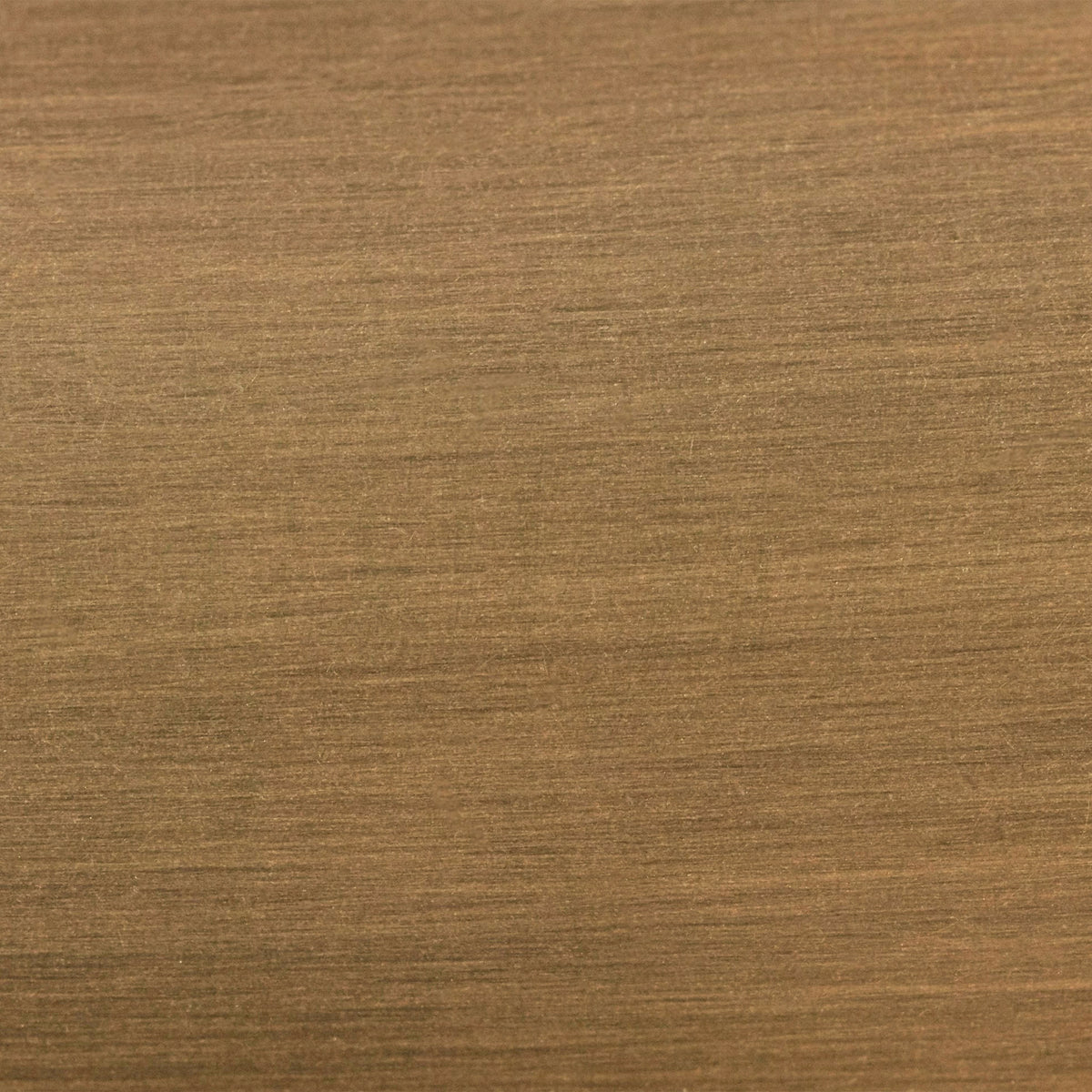 05
05 06
06 07
07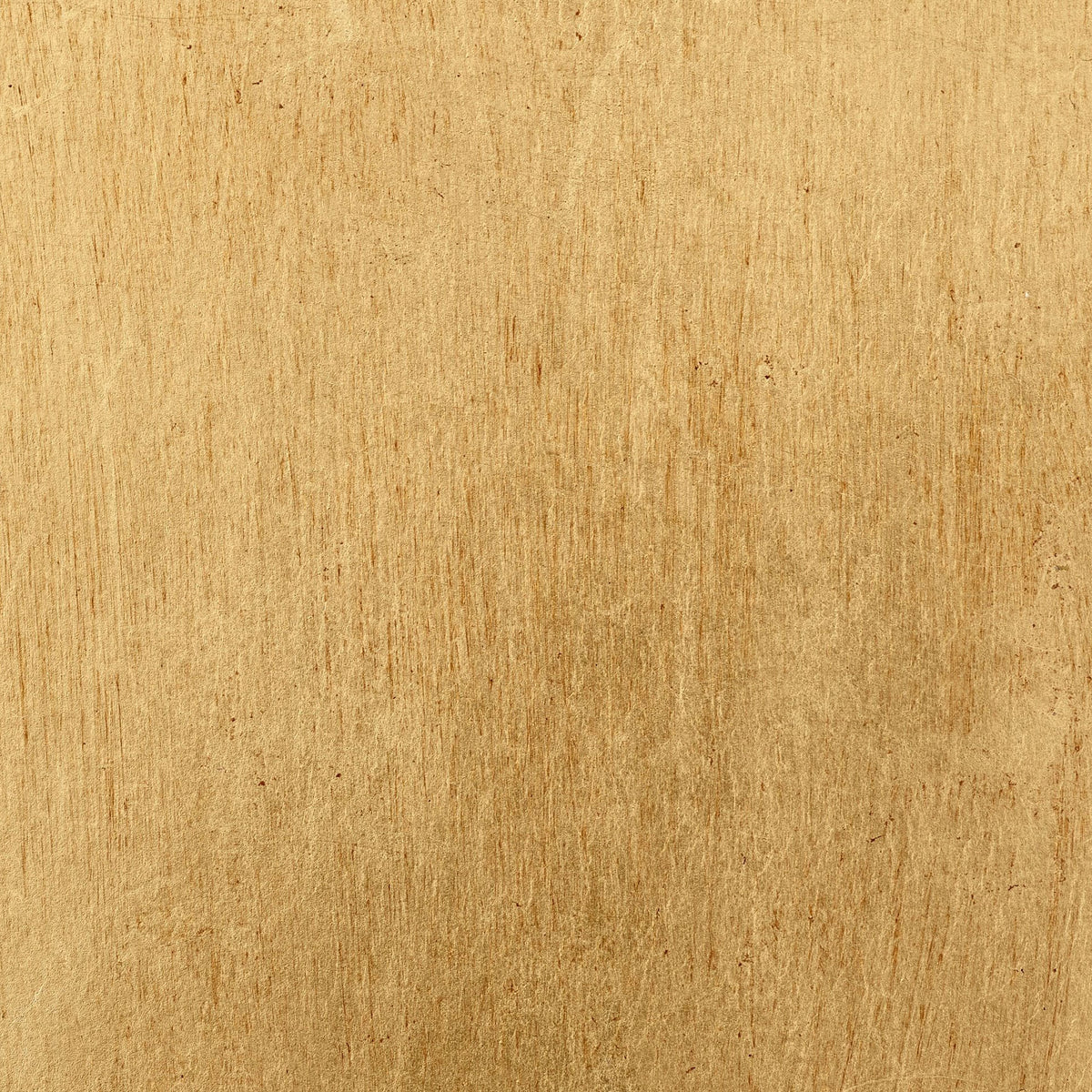 08
08 09
09 10
10 11
11 12
12 13
13 14
14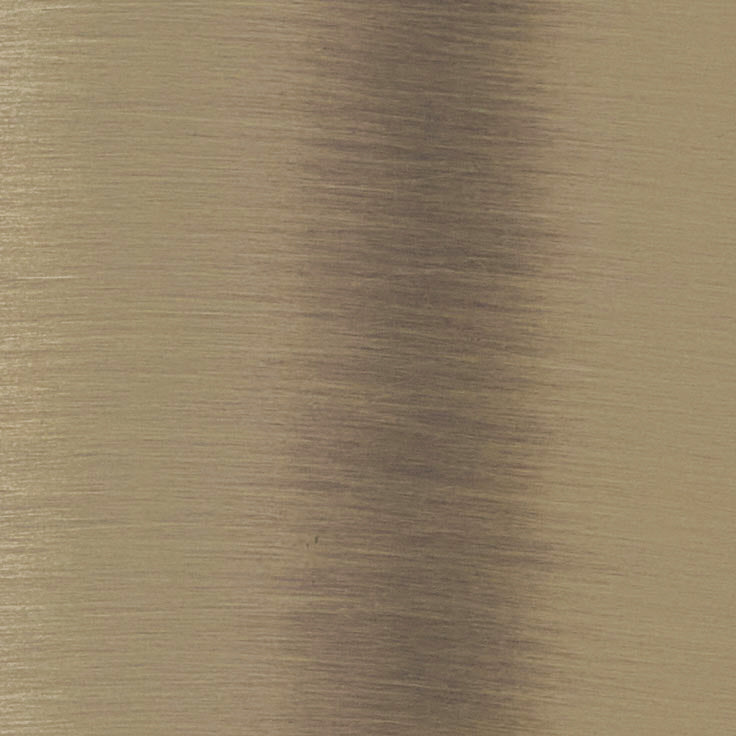 15
15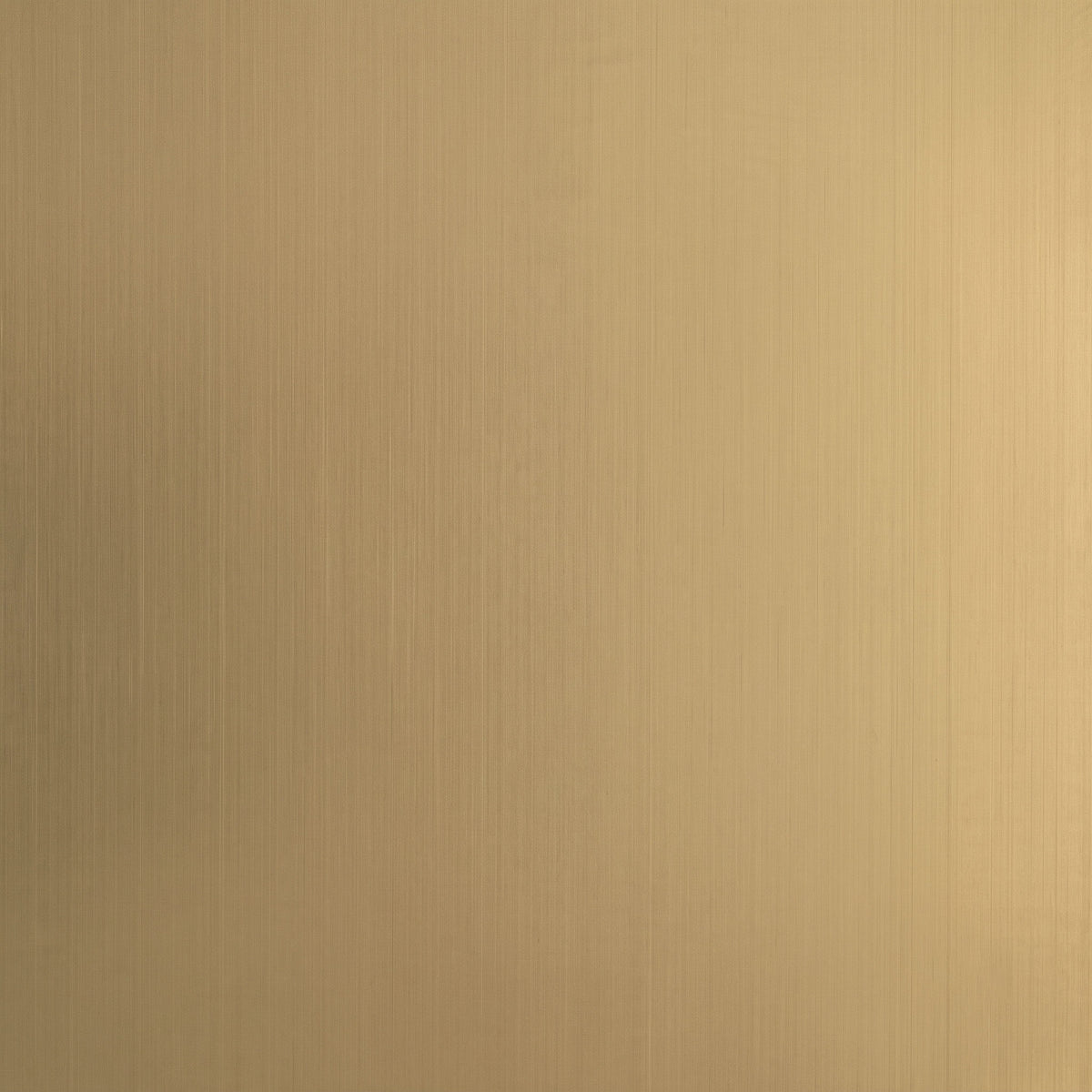 16
16 17
17Finishes 01–17 · brass, bronze, iron, steel, nickel, chrome, black · custom patinas matched on request
Order by number, not by name. "Antique brass," "aged brass," "burnished brass" — ask five workshops what those mean and five different metals come back. Finish 04 is the same physical sample in our studio, on the atelier bench, and on your packing list.
And because no screen renders metal honestly, we ship the physical panels before anything is committed. Hold them against your cabinetry and wall paint, at the hour you actually use the room — then send the number.
Color that is grown, not painted on.
A brass finish is not a coat of paint — it is a controlled chemical reaction on the surface of the metal itself. Where a sprayed lacquer sits on top and eventually chips, a true patina is the brass reacting with sulphur, ammonia, or acid salts until its surface ions shift colour. The tone you see is the metal, transformed. That is why a patinated Radilum fixture deepens with age instead of peeling — and why every piece is coloured by hand, one at a time.
Seven stages, ten to twelve weeks,
and nothing exists before you choose.
A Radilum fixture is not pulled from a shelf. It is tooled, cast, polished, patinated and sealed after you order it — which is why the finish can be anything you want, and why the whole thing takes twelve weeks rather than two days.
One project specialist carries the commission from brief to install. There is no handover between sales, design, production and freight; the person who answers your first email is the one who sends you the polishing photographs.
The four stages you will see photographed
Stages three through six happen in the atelier, and each one arrives in your inbox as a timestamped photograph. Not because pictures sell anything — twelve weeks is a long time to trust a workshop on the other side of the world, and a photograph is the only thing that proves what we described actually happened. They come whether or not you ask.

Steel cut from your drawing
The signed-off render becomes a parametric model, then a five-axis tool path, then a steel mould cut in our own shop. Nothing is outsourced here — a tolerance lost at this stage cannot be recovered later.

H65 — the shell-casing alloy
65% copper, 35% zinc: the brass first specified for military cartridges because it absorbs shock without splitting. Every cast piece is annealed so it will not crack a decade from now.

Colour is grown, not sprayed
One technician carries your fixture through every grit, then the patina bath. The reaction is arrested within seconds of reaching tone, and high points are rubbed back by hand. Their mark is etched on the fitting plate.

Multi-layer sealant, tested for 25 years
Three coats of imported Incralac — the conservation lacquer museums use on bronze sculpture. Accelerated-aging tests project 25+ years tarnish-free — or we skip this stage entirely, by request.
The swatch is the cheapest step in the entire commission and the only one that prevents a remake — the finish is the single variable that cannot be corrected once the fixture is built.
Five archetypes — the working portfolio.
Most projects begin from one of five standard categories. Every category scales from intimate residential to full-room hospitality; every category accepts any of the seventeen finishes; every category ships UL-listed for North America (CE/SAA available on request).



Three principles drawn from two centuries
of American interior design.
The Radilum American Brass Collection is shaped by three lineages — Federal-era neoclassical proportion, the early-20th-century Arts & Crafts movement, and the mid-century industrial vernacular. The result is a portfolio that reads as American not because it is decorated with eagles and stars, but because it carries the same restraint and structural honesty that those three traditions share.

Restraint & Proportion
From Federal-era cabinetry: symmetry, balance, restraint. Arms stepped at golden-ratio intervals. Canopies sized to match the column they descend from. Nothing is decorative for decoration's sake. The grandeur is in the proportion, not the ornament.

Structural Honesty
From the Arts & Crafts vocabulary: function expressed, never disguised. Joinery shows. Fasteners are visible and intentional. The arm of a sconce is shaped because it must support a bulb — and that shape is the design. Nothing pretends to be what it isn't.

Classic Shades
From mid-century industrial: opal milk glass, fluted glass, woven linen, perforated metal mesh. Each shade has a hundred-year vocabulary behind it. We pair the shade to the fixture's intended room — not the photographer's preference for what reads on social media.
Begin with a brief, or a finish sample.
Whether you need a single bedside sconce or a hundred matched fixtures for a hospitality build-out, the first step is the same — write to us. The project specialist who reads your email is the one you'll work with from brief to install. Every email gets a real reply within 24 hours.

Expédition rapide
Livraison en 4 à 6 semaines

Certification nord-américaine
Aperçu de la certification nord-américaine

Paiement sécurisé
Paiement sécurisé par plusieurs cartes de crédit.


Measuring for Pendant Lighting
When installing pendants and chandeliers, it’s important to consider how you want your fixtures to hang in relation to the other furnishings in your space. Read on for our recommendations on how to hang the perfect light.
Kitchen
Aim for 30–36″ from the bottom of your fixture’s shade to the top of your island or countertop. Space multiple pendants 26–30″ apart. For a sense of proportion and balance, allow 12″ from the outermost fixture to the edge of your counter.
Dining Room
For optimal lighting and visibility, the bottom of your pendant should sit 30″ from the surface of your dining table. To scale your fixture, take the length and width of the room in feet, then convert that to inches. For a 10′ by 14′ room, the chandelier should be about 24″ wide.
Bedroom
If you’re hanging a pendant above a nightstand, allow for at least 30″ between the bottom of the shade and your nightstand’s surface. To keep the look balanced, center your pendant over your nightstand.
Tableau des tailles
| Taille |
| superficie XS |
| Pièce XS |
| Taille | Ø 2"-6" | Ø 6"-12" | Ø 12"-18" | Ø 20"-24" | Ø 24"-32" | Ø 32"-40" |
|---|---|---|---|---|---|---|
| superficie | 32-54 PI² | 54-107 PI² | 107-161 PI² | 161-215 PI² | 215-269 PI² | 269-378 PI² |
| Pièce | SALLE DE BAIN/COULOIR | SALLE À MANGER | CUISINE | CHAMBRE | SALON | INTÉRIEUR COMMERCIAL |
* Les tailles sont américaines et exprimées en pouces.
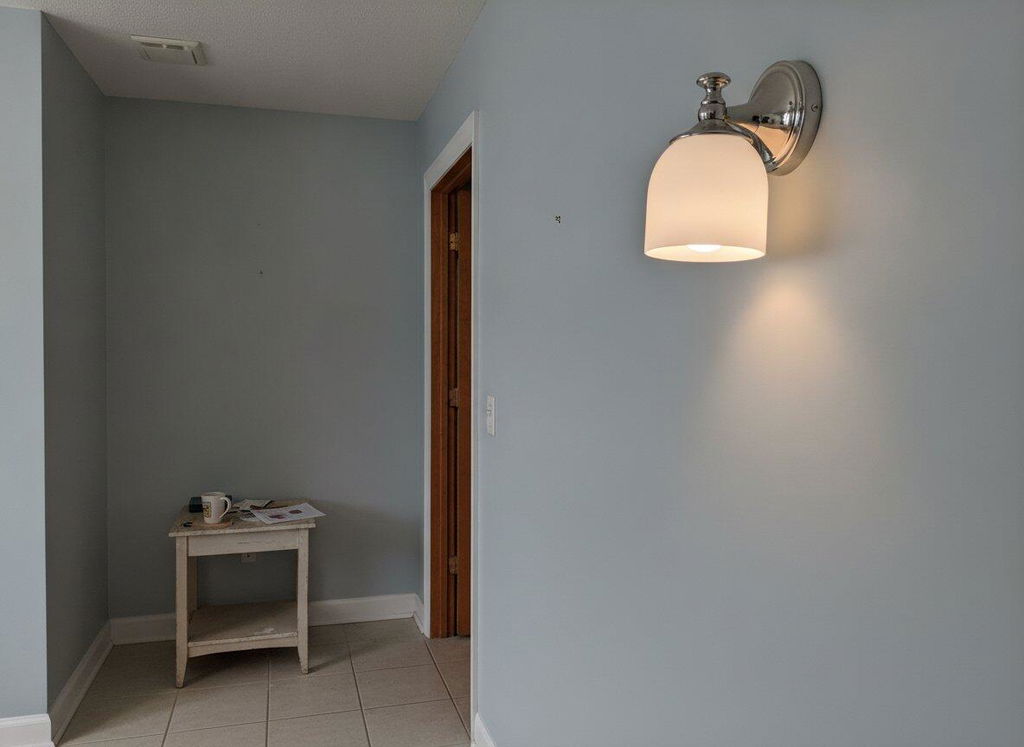
Looks so much better than the old one.
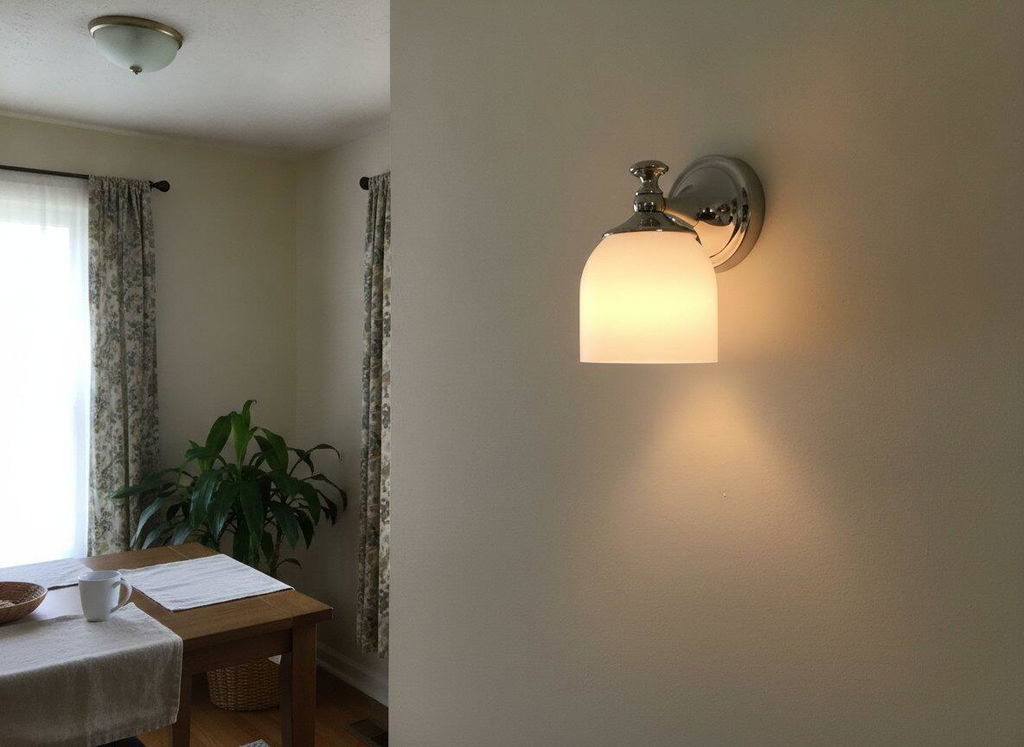
Easy install, looks expensive.
Love these. Light is soft and warm.
Love these in our powder room.
Looks expensive.
Looks good in our powder room. Wish the light was a bit brighter though.
Looks beautiful in our powder room.
So happy with this.
It's gorgeous. Husband installed in like 30 min. The frosted glass gives off nice soft light for the mirror.
Got this in chrome for our powder room and honestly obsessed. The frosted glass is perfect, no harsh glare when you're doing makeup. Hubby installed it in like 15 minutes.
Got the chrome finish and honestly it's beautiful.
Looks great and install was easy. Light output is softer than i expected but works fine for our hallway.
Looks great but tbh kinda expensive for what it is.
Got this for our powder room and it's super cute but wished the light was a bit brighter.
This fixture has the perfect balance of style and function. It doesnt overpower the room but still makes a statement.
I was impressed by how easy it was to install. Within minutes, I had a beautiful light fixture on my wall. The warm glow makes my space feel so much more inviting.
Absolutely love this wall lamp! The soft light it provides makes the room so cozy in the evenings. The quality feels amazing for the price I paid.
We chose this wall lamp for our living room, and it looks amazing. The design is versatile and complements various decor styles. Our guests have complimented it multiple times.
These wall lamps were the finishing touch our living room needed. The design is versatile enough to work with both modern and traditional dcor. They look like designer fixtures without the hefty price tag.
This wall lamp adds a touch of elegance to our living room. The light it emits creates a warm and inviting ambiance that's perfect for entertaining guests.
I needed something simple but stylish for my bathroom, and this was perfect. It doesnt take up much space but makes a big design impact. Couldnt be happier with the result.
We are so happy with this purchase. The fixture is sturdy, stylish, and the glow is warm and inviting. It made our hallway look brand new.
I added this light to our bedroom and it was exactly what the space needed. Its subtle, elegant, and practical. Our guests always comment on how nice it looks.
I'm impressed with the craftsmanship of this sconce. The finish is flawless, and the design is sleek and modern. It's a great value for the price.
This wall lamp looks even better in person than it does online. The finish is gorgeous, and it feels like something out of a high-end design magazine. It instantly upgraded the space.
This wall lamp is both functional and decorative. It's the perfect size for our bedroom, providing ample light without being obtrusive.
Perfect wall fixture for my bedroom. It gives a professional yet warm look, and the lighting is just right for working late evenings. I couldnt be happier with this purchase!
We added this sconce to our bedroom, and it instantly elevated the space. The brass finish catches the light beautifully, creating a welcoming atmosphere.
I wasnt sure if this would fit with my existing dcor, but it blends so seamlessly. The craftsmanship is solid, and the design feels timeless. It really adds a touch of sophistication to the room.
Such a great addition to our living room. The design is classic with a modern touch, and it balances the space perfectly. Everyone who sees it asks where I bought it.
I bought a pair of these sconces for either side of my bed, and they are amazing. The quality feels excellent and the price was reasonable.
This wall lamp exceeded my expectations. The design is timeless, and the materials used are top-notch. It's a beautiful addition to our livingroom.
This wall lamp exceeded my expectations. Its both functional and decorative, giving our hallway such a refined look. Easy to install and feels like it will last for years.
What are the dimensions of the backplate on the chart short arm sconce?
The backplate for this specific fixture is designed to fit a junction box size of 12 cm
