




Radilum
Lustre Zaira Grand
Livraison standard gratuite aux États-Unis, au Canada, en Europe, au Royaume-Uni, en Australie et aux Émirats arabes unis
💡 Utilisez le code de réduction RDSHN pour profiter de 10 % de réduction
Souvent achetés ensemble

 $5,255.00
Style Empire · 55 Lumières · Cristal & Laiton · Lustre de Prestige
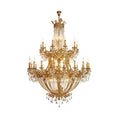
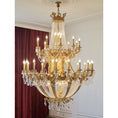
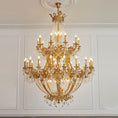
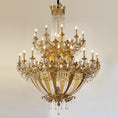
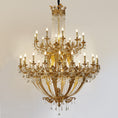
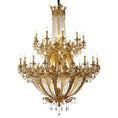
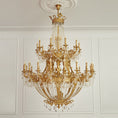
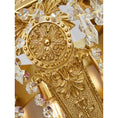
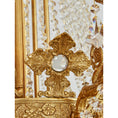
Un grand lustre à 55 lumières dans le langage de l'éclairage Empire français et de la cour Napoléon III du XIXe siècle — une composition à trois étages de bronzerie coulée, de chaînes de cristal bohémien enfilées à la main, et trois rangs de bras candélabre s'échelonnant d'un étage inférieur à 25 bras vers un étage intermédiaire à 10 bras et une couronne supérieure à 20 bras. Les perles de cristal à tissage panier du corps inférieur rappellent les grands lustres de Versailles et de l'Opéra Garnier. Les acanches coulées, les rosaces et les finitions de pommeau couronnent la rosace.
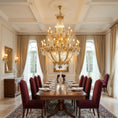
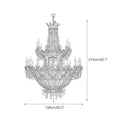
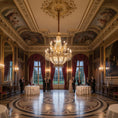
Conçu pour les intérieurs d'envergure : grands halls d'entrée, salles de bal, grandes salles à double hauteur, salles à manger formelles dans des résidences privées de plus de 5 000 pi² (465 m²), halls d'hôtels de luxe et projets de restauration historique. Avec un ∅ 62,2″ × H 82,7″ (158 × 210 cm) et 55 lumières individuelles, ce luminaire relève de la classe spécification — l'armature en bronzerie coulée, les cristaux enfilés à la main et la silhouette d'éclairage de cour du XVIIIe siècle sont tous assemblés à la main. Adapté aux intérieurs Beaux-Arts, Néoclassiques, Empire français, traditionnels et éclectiques palatials.
Caractéristiques
Armature en bronzerie coulée
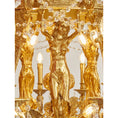
Chaque étage de bras coulé en bronzerie massif, vieilli à la main pour une profondeur de patine chaleureuse sur toute la structure.
Cristaux enfilés à la main
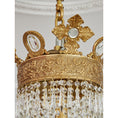
Chaînes de cristal bohémien et perles à tissage panier enfilées à la main — chaque goutte placée individuellement.
Lustre à trois étages et 55 lumières
Couronne supérieure à 20 bras · anneau intermédiaire à 10 bras · étage inférieur à 25 bras — conçu pour l'échelle des salles de bal et grandes salles.
Bronzerie coulée et vieillie à la main & cristaux enfilés à la main. Chaque pièce est coulée, finalisée et assemblée à la main — les variations subtiles dans la teinte de la bronzerie, l'enfilage manuel des cristaux et les détails du pommeau entre les pièces font partie du caractère artisanal. Les cristaux sont enfilés individuellement sur l'armature en bronzerie ; prévoyez 30 à 60 minutes après déballer pour redresser délicatement les chaînes qui auraient pu se comprimer en transit.
Luminaire d'envergure — support de plafond renforcé requis. Le Zaira à 55 lumières pèse environ 110 kg / 242 lbs assemblé, dépassant largement la charge nominale des boîtes de jonction standard des plafonds résidentiels. Votre électricien et votre ingénieur en structures doivent confirmer le support des solives et installer une barre de fixation lourde avant l'installation.
Notes du Produit
∅ 158 × H 210 cm
55 têtes · ∅ 62,2″ × H 82,7″ · environ 110 kg / 242 lbs · chaîne de suspension 19,7″
| Matériaux | Corps, bras et pommeau en bronzerie coulée · Chaînes de cristal bohémien à tissage panier enfilées à la main & perles de cristal |
| Finition | Bronzerie poli vieillie à la main · cristal clair |
| Style | Empire français · Napoléon III · Beaux-Arts · lustre de cour du XIXe siècle |
| Configuration | 3 étages · couronne supérieure 20 bras + anneau intermédiaire 10 bras + étage inférieur 25 bras · 55 lumières total |
| Dimensions | ∅ 158 × H 210 cm · ∅ 62,2″ × H 82,7″ |
| Poids | Environ 110 kg / 242 lbs assemblé · support de plafond en structure requis |
| Culot | Culot E12 (US) ou E14 (UE) pour candélabre par bras · 55 ampoules · non incluses |
| Ampoules recommandées | Ampoules LED blanc chaud 2700K–3000K, max 25W équivalent incandescence chacune (puissance inférieure prévient l'impact thermique à long terme sur les cristaux) |
| Température de couleur | Dépend des ampoules choisies · blanc chaud recommandé pour mettre en valeur les jeux de bronzerie coulée et de cristal |
| Variation d'intensité | Compatible si des ampoules dimmables et un variateur TRIAC sont installés (recommandé pour une utilisation en lumière d'ambiance le soir) |
| Tension | CA 110–240V · universel · également disponible en voltages personnalisés pour les projets internationaux et de restauration historique |
| Fixation | Suspension filaire · chaîne de suspension 19,7″ (50 cm) fournie, ajustable sur site · barre de fixation lourde + support de solive en structure requis |
| Hauteur de plafond recommandée | Minimum 12 pi (3,6 m) pour une bonne proportion · idéal à 15–25 pi (4,5–7,5 m) pour les grandes salles à double hauteur et plafonds de salle de bal |
| SKU | RDC-150906 |
| Délai de livraison | Sur mesure · les luminaires de prestige nécessitent généralement une production prolongée · contactez-nous pour connaître les délais actuels |
| Professionnel et projets | Dossiers de spécification pour concepteurs, tarification professionnelle et coordination de projets en volume disponibles · veuillez nous contacter pour des devis spécifiques aux projets |
| Idéal pour | Grands halls d'entrée · Salles de bal · Grandes salles à double hauteur · Salles à manger formelles dans domaines de 5 000+ pi² · Halls d'hôtels de luxe · Projets de restauration historique · Intérieurs Beaux-Arts, Néoclassiques, Empire français & éclectiques palatials |
Installation
- Installation spécialisée fortement recommandée. À ~110 kg / 242 lbs et ∅ 62,2″, ce luminaire ne devrait pas être installé par des bricoleurs généralistes — faites appel à un installateur de lustres ou à un électricien agréé ayant une expérience des luminaires d'envergure.
- Un support structurel du plafond est requis. Un support de luminaire robuste doit être ancré aux poutres du plafond ; les boîtes de jonction résidentielles standard ne sont pas dimensionnées pour ce poids. Consultez un ingénieur en structures si les portées des poutres ne sont pas claires.
- Chaîne de suspension fournie à 50 cm (19,7″) ; la longueur de chaîne peut être ajustée sur site en fonction de la hauteur du plafond. Des extensions de chaîne personnalisées sont disponibles pour les plafonds de 20+ pi.
- Les cristaux sont emballés individuellement et enfilés sur l'armature en bronzerie sur site. Prévoyez 4 à 8 heures de temps d'assemblage spécialisé selon l'expérience de l'installateur.
- Accepte 55 ampoules à baïonnette E12 (États-Unis) ou E14 (Europe) — fournissez vos propres ampoules LED blanc chaud. Nous recommandons l'équivalent de 25W à incandescence chacune (consommation LED réelle de 1,5–3W) pour gérer la puissance totale du luminaire et l'exposition thermique du cristal.
- Vérifiez la hauteur sous plafond : minimum 3,6 m (12 pi) pour des proportions adéquates, idéalement 4,5–7,5 m (15–25 pi) pour un impact visuel complet.
- Intérieur uniquement · nettoyez périodiquement les pendeloques en cristal avec un chiffon microfibre sec et doux ou des gants spécialisés de nettoyage de cristal ; évitez les vaporisateurs liquides qui laissent des résidus sur le laiton coulé.
Téléchargements
Questions fréquentes
Pour quel espace le lustre Zaira est-il conçu ? +
Il s'agit d'un luminaire d'envergure exceptionnelle. Avec un diamètre de 158 cm × hauteur de 210 cm (∅ 62,2″ × H 82,7″), il est conçu pour les grands foyers et les grandes pièces de 40+ m² (430+ pi²), les salles à manger formelles dans les résidences de 5 000+ pi², les salles de bal, les halls d'hôtel et les projets de restauration historique. Il nécessite un minimum de 3,6 m (12 pi) de hauteur sous plafond pour être bien proportionné, idéalement 4,5–7,5 m (15–25 pi) pour un impact visuel complet.
Proposez-vous une tarification commerciale pour les designers et les projets d'envergure ? +
Oui. Nous travaillons avec des décorateurs d'intérieur, des architectes, des groupes hôteliers et des entreprises de construction d'estates sur les dossiers de spécification, les tarifs professionnels et la coordination des commandes en volume. Pour les finitions personnalisées, les exigences de tension (p. ex. variantes UK BS 110V pour les restaurations historiques) ou les ensembles de lustres et d'appliques assortis sur un projet, veuillez nous contacter avec votre spécification avant de commander.
Comment le lustre est-il expédié ? +
Le luminaire est expédié dans plusieurs caisses construites sur mesure avec des cristaux emballés individuellement pour le transport. En raison de la taille et du poids (~110 kg / 242 lb), une livraison par transport routier est requise — veuillez confirmer que votre adresse de livraison dispose d'un accès approprié (approche par camion, hauteur sous plafond pour les caisses, etc.) avant de commander. L'assemblage sur site nécessite généralement un installateur de lustre qualifié pendant 4–8 heures. Nous pouvons fournir une documentation d'aide à l'installation, mais l'installation sur site est organisée par vos soins.
Pourquoi pèse-t-il 242 lb ? +
Le Zaira est construit en laiton coulé massif — chaque bras, finial, rosace et élément structurel est en métal coulé, non pas en acier estampé ou plaqué. Ajoutez 55 douilles pour ampoules bougie, des centaines de cristaux enfilés à la main, et la colonne en laiton tressée en panier, et le poids assemblé atteint environ 110 kg. C'est pourquoi un support structurel au plafond et une barre de fixation renforcée sont nécessaires — les boîtes résidentielles standard ne sont pas évaluées pour cette charge.
Le lustre est-il dimmable ? +
Oui, avec les bonnes ampoules. Chaque bras accepte une ampoule à baïonnette E12 (États-Unis) ou E14 (Europe). Installez des ampoules LED bougie dimmables sur un variateur mural TRIAC et l'ensemble du réseau de 55 lumières s'atténit régulièrement. Le blanc chaud 2700K–3000K est essentiel — la lumière du jour (5000K+) refroidira le ton du laiton et brisera l'ambiance appropriée à la période que le luminaire est conçu pour créer.
Quel est l'héritage de ce style ? +
Le Zaira s'inspire des traditions des lustres des salles de cour européennes des XVIIIe et XIXe siècles — l'Empire français sous Napoléon Ier, la renaissance Beaux-Arts de l'époque Napoléon III, et les grands lustres publics de l'Opéra de Paris, de Versailles et des palais des cours européennes de l'époque. La composition à trois niveaux avec les perles de cristal en tressage de panier et les détails d'acanthe coulés sont reconnaissables dans cet héritage. Il s'agit d'une interprétation contemporaine fabriquée sur commande de ce vocabulaire historique, non pas une reproduction d'une pièce de période spécifique.
Puis-je commander une finition ou une échelle différente ? +
Oui. En tant qu'atelier de fabrication sur commande, nous pouvons adapter la finition (laiton antique / or poli / argent / personnalisée), le type et la couleur du cristal, le nombre total de lumières et les dimensions selon les exigences du projet — particulièrement important pour les travaux de restauration historique et les commandes de estates sur mesure. Les constructions personnalisées prolongent les délais ; veuillez nous contacter avec votre spécification au stade le plus précoce du projet.
Téléchargements
Vous avez besoin d'un fichier 3D ou d'un autre document ? Contactez un designer — c'est gratuit ; les fichiers 3D sont dessinés pour votre projet, veuillez donc compter un peu de temps.
FAQ
Quelles sont les dimensions exactes du Grand Lustre Zaira ?
Le lustre grand Zaira mesure ∅ 158 cm × H 210 cm (∅ 62,2″ × H 82,7″). Il pèse environ 110 kg / 242 lbs une fois assemblé et nécessite un support de plafond renforcé.
Quels matériaux et finition ce lustre possède-t-il ?
Corps en laiton coulé, bras et finiales avec des chaînes de cristal de Bohême enfilées à la main et des perles en tressage de panier. La finition est un laiton poli vieilli à la main avec du cristal clair.
Quelle source lumineuse utilise ce lustre ?
55 ampoules à culot E12 (États-Unis) ou E14 (UE), non incluses. Dimmable avec des ampoules dimmables compatibles et un variateur TRIAC. Les ampoules LED bougie blanc chaud 2700K–3000K sont recommandées, max 25W équivalent incandescence chacune.
Comment le lustre grand Zaira est-il installé ?
Suspension à câblage fixe avec chaîne de suspension réglable de 19,7″ (50 cm) fournie. Un support de plafond robuste et une fixation de poutre structurelle sont nécessaires ; votre électricien et votre ingénieur en structures doivent confirmer le support du plafond avant l'installation.
Combien de lumières le lustre grand Zaira a-t-il ?
55 lumières au total dans une configuration à trois niveaux : couronne supérieure à 20 bras, anneau central à 10 bras et niveau inférieur à 25 bras.
Qu'est-ce qui est inclus avec ce lustre ?
Le lustre est assemblé à la main et comprend une chaîne de suspension de 19,7″. Les ampoules ne sont pas incluses. Laissez 30–60 minutes après le déballage pour façonner doucement les chaînes qui auraient pu se compresser pendant le transport.
Vous hésitez encore ? Posez une question — réponse dans les 24 heures ouvrables.

- Design de forme unique
- Fabriqué de manière responsable
- Matériau de haute qualité
- Testé pour la durabilité
ENTRETIEN
ENTRETIEN
- Époussetez avec un chiffon doux et sec.
- Pour protéger la finition, nous ne recommandons pas l'utilisation de nettoyants ménagers ou d'abrasifs.
- Ne pas dépasser la puissance spécifiée.
POLITIQUE D'EXPÉDITION ET DE RETOUR
POLITIQUE D'EXPÉDITION ET DE RETOUR
Profitez de la livraison standard gratuite sur chaque commande, assurée et suivie jusqu'à votre porte. Les articles admissibles peuvent être retournés dans les 30 jours suivant la réception. Les articles sur commande ne sont pas admissibles au retour.
Dans notre atelier
Fabrication sur commande, expédition assurée
Chaque luminaire est fabriqué sur commande — généralement 1 à 3 semaines dans notre atelier, un peu plus long pour le verre soufflé à la main et les grandes pièces. Ensuite, il est expédié assuré par voie maritime, avec traitement douanier par nos soins et suivi jusqu'à votre porte : la plupart des commandes arrivent 5 à 7 semaines après la commande. Vous avez besoin plus rapidement ? Le transport aérien express prend 2 à 4 semaines au total, dont le prix est affiché au moment du paiement.
Façonné à votre mesure
Rien ici n'est définitif
Modifiez la finition, la couleur, la pierre, la taille — ou envoyez-nous une forme.
Services de design
Plans d'éclairage maison complète gratuits
Envoyez-nous vos plans d'étage ou photos ; un designer Radilum retourne un plan pièce par pièce avec luminaire, dimensions et hauteur de fixation — généralement sous 2 jours ouvrables.

Livraison gratuite
Livraison standard gratuite, assurée et suivie jusqu'à votre porte.

Certification nord-américaine
Aperçu de la certification nord-américaine

Paiement sécurisé
Paiement sécurisé par plusieurs cartes de crédit.


L'histoire du cristal
Taillé pour capturer la lumière
Le cristal à facettes est taillé et poli pièce par pièce, puis suspendu de sorte que chaque goutte projette la lumière dans une direction différente — l'éclat que vous voyez provient de centaines de petites réflexions qui se déplacent ensemble. Les montures sont en laiton ou en fer, dans l'une quelconque de nos finitions.
Chaque pièce a une pièce phare.C'est là qu'elle est suspendue.
Certaines lumières remplissent une pièce ; très peu la définissent. Un lustre en cristal américain est du second type — le luminaire que les invités regardent d'abord, celui autour duquel tout l'espace s'organise tranquillement.

Ce n'est pas le lustre de grand-mère — audace de fer, grâce cristalline.
Le cristal français chuchote, les cristaux européens traditionnels défilent. Le cristal américain fait quelque chose d'autre : il associe une monture en métal solide et honnête avec juste assez d'éclat — épuré, moderne et facile à vivre.
Une monture avec une colonne vertébrale.
Bronze vieilli et noir mat — des finitions empruntées à l'atelier et à la ferme, non au palais. Le métal trace des lignes épurées et confiantes qui ancrent l'ensemble et lui confèrent une présence architecturale.

Étincelle, dosée.
Le cristal utilisé comme un tailleur utilise une poche de costume — quelques facettes délibérées, parfaitement placées. Là où les lustres européens en sont couverts, la coupe américaine laisse une poignée de facettes nettes porter tout l'effet.

La bonne taille est une formule, non une improvisation.
Le regret numéro 1 avec les lustres en cristal est l'échelle — trop grand encombre le plafond, trop petit se perd. Utilisez ces règles de designers et vous ne pouvez pas vous tromper.

Le geste grandiose. Un lustre à étages ou en cascade centré dans l'entrée — visible depuis la porte, l'escalier et la rue après le coucher du soleil.

Où le cristal mérite sa place chaque jour — un modèle linéaire au-dessus d'une longue table ou d'un îlot, un modèle rond au-dessus d'une table ronde, scintillant au-dessus de chaque dîner.

Le luxe inattendu. Un luminaire en cristal compact ou semi-encastré transforme le plafond d'une chambre — ou d'un dressing — en un petit plaisir quotidien.
Trois préoccupations, résolues.
Chaque acheteur de cristal arrive avec les mêmes trois craintes. Les voici — chacune résolue en un instant.
Elle voyage suspendue dans de la mousse moulée, chaque élément emballé — et si le transporteur a gain de cause, nous remplaçons les pièces endommagées gratuitement.
Un dôme de charge et l'quincaillerie complète se trouvent dans la boîte. Ancré à une solive ou un boîtier électrique renforcé, il tient pendant des décennies.
Un plumeau antistatique préserve l'éclat ; une fois par an, une brume de nettoyant cristal sans rinçage la ramène à l'état neuf. Aucun démontage, jamais.

Son voyage — chaque élément emballé, chaque bras bercé, rien ne touchant le carton.
Un lustre. La pièce entière, décidée.
Encadré de laiton, vêtu de cristal, et dimensionné pour tout, du placard de passage au foyer sur deux étages. Trouvez celui que votre plafond attendait — et si vous hésitez entre deux tailles, envoyez-nous vos dimensions et nous vous aiderons à choisir.
Dimensionner un lustre
Additionnez la longueur et la largeur de la pièce en pieds — ce nombre en pouces est un diamètre confortable. Vérifiez ensuite que le plafond peut supporter le poids.
Complétez votre intérieur
Pièces qui s'harmonisent avec the Lustre
De la même ligne de Éclairage Old Money — sélectionnées pour que la pièce se lise comme un ensemble.


Récemment consulté
Offre de bienvenue
Dix pour cent de réduction votre première commande
Entrez le code à la caisse. S'applique à la commande complète, y compris les finitions personnalisées.
Commerce & Designers
Programme B2B
Tarification nette sur chaque luminaire, échantillons de finitions, modèles 3D sur demande et un contact projet dédié — pour les architectes d'intérieur, architectes, secteur hôtelier et promoteurs.
Demander un compte professionnel