


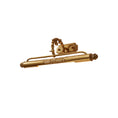
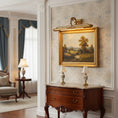


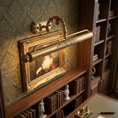
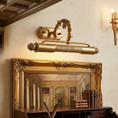
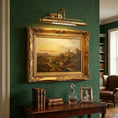
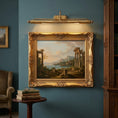
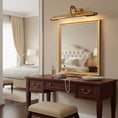
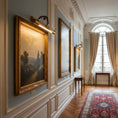
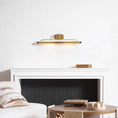
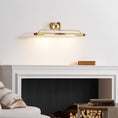
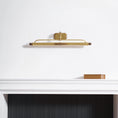
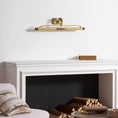
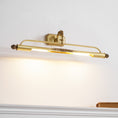
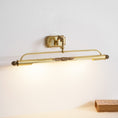
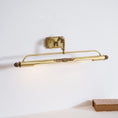
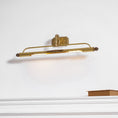
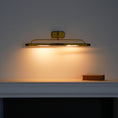
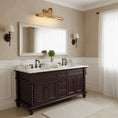
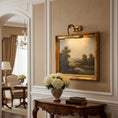
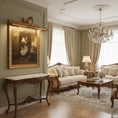
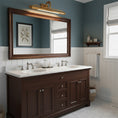
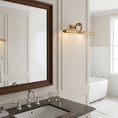
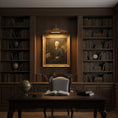
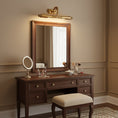


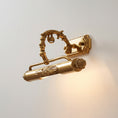
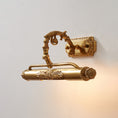
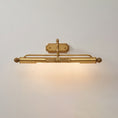
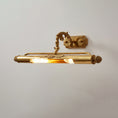
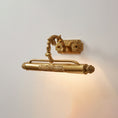
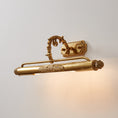
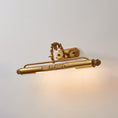
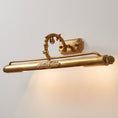
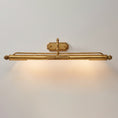
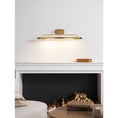
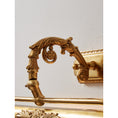
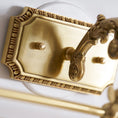
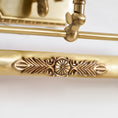
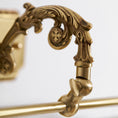
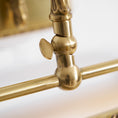
Latão Antigo · Moldura de Fotografia · Aplique de Galeria
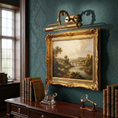
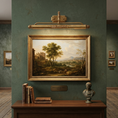
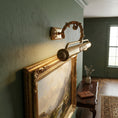
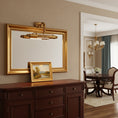
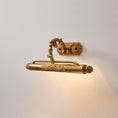
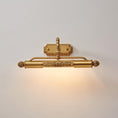
Uma moldura esbelta em latão antigo que acolhe a sua fotografia, impressão ou obra de arte escolhida — e ilumina-a. A luz integrada lava a peça com um brilho quente ao estilo de galeria, fazendo qualquer imagem parecer curada. Troque a obra de arte sempre que desejar; a moldura permanece, a exibição muda.
Veja em Ação
Visão geral do produto
Comprimento — Escolha no Checkout
Três comprimentos partilham a mesma altura de 15,5 cm e projeção de parede de 15,5 cm — escolha o comprimento que melhor se adequa à sua obra de arte e espaço de parede.
Pequeno
C 45 cm
L 17.7″
A 15,5 cm · Profundidade 15,5 cm
Médio
C 58 cm
L 22.8″
A 15,5 cm · Profundidade 15,5 cm
Grande
C 76 cm
L 29.9″
A 15,5 cm · Profundidade 15,5 cm
Materiais e Acabamento
Latão Antigo
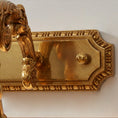
Corpo em latão maciço com pátina antigo acabado manualmente em tons quentes.
Moldura de Fotografia
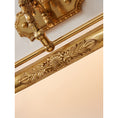
Aloja uma fotografia, impressão ou obra de arte — troque as peças para renovar o seu espaço.
Brilho de Galeria
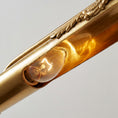
Luz integrada direcional que ilumina a obra de arte — iluminação discretamente curada.
Notas do Produto
| Dimensões do candeeiro | Pequeno: C 45 × A 15,5 cm / C 17,7″ × A 6,1″ Médio: C 58 × A 15,5 cm / C 22,8″ × A 6,1″ Grande: C 76 × A 15,5 cm / C 29,9″ × A 6,1″ |
| Projeção de parede | 15,5 cm / 6,1″ — consistente em todos os tamanhos |
| Tamanho da caixa de junção | C 16 × A 7 cm / C 6,3″ × A 2,8″ |
| Material da estrutura | Latão maciço |
| Acabamento | Latão antigo |
| Tipo de casquilho | Candelabro E12 ou E14 |
| Lâmpada incluída | Não — vendida separadamente |
| Tipo de montagem | Montagem na parede · Ligação fixa · Orientação horizontal |
| SKU | RDW-212218 |
Antes da Instalação
A Pania monta-se numa caixa de junção de parede embutida com tamanho C 16 × A 7 cm / C 6,3″ × A 2,8″. Esta é ligeiramente maior do que uma caixa de parede de single-gang padrão.
Se a sua caixa de parede existente tiver um tamanho diferente, o seu eletricista pode instalar um adaptador de caixa de junção ou uma caixa embutida nova antes da montagem. Por favor, confirme isto com o seu instalador antes de fazer a encomenda.
Instalação
- Instalação fixa na parede — recomenda-se um eletricista licenciado.
- Requer uma caixa de junção embutida de L 16 × A 7 cm / L 6,3″ × A 2,8″. Todos os acessórios de montagem estão inclusos.
- Projectada para montagem horizontal na parede — o quadro está orientado em paisagem, com a luz integrada a correr ao longo da borda superior.
- A obra de arte é inserida pelo verso através de um painel de suporte removível — detalhes completos no guia de instalação.
- Adequado para locais interiores secos e húmidos. Não classificado para zonas húmidas/chuveiro ou uso exterior.
FAQ
Como insiro ou mudo a imagem? +
O quadro tem um painel de suporte removível que permite deslizar a obra de arte para dentro e para fora pelo verso. O processo é o mesmo quer esteja a pendurar o equipamento pela primeira vez quer esteja a trocar gravuras mais tarde. O guia de instalação aborda os passos exactos.
Que tamanho de obra de arte se ajusta a cada comprimento? +
A abertura interior do quadro é ligeiramente mais pequena do que o comprimento externo. Como orientação geral, a sua obra de arte deve ter aproximadamente 3–5 cm menos do que o comprimento externo e cerca de 10 cm de altura. Para dimensões precisas, consulte a ficha técnica antes de encomendar, ou corte a sua impressão conforme necessário.
E se a minha caixa de junção de parede tiver um tamanho diferente? +
A Pania requer uma caixa de junção embutida de L 16 × A 7 cm / L 6,3″ × A 2,8″. Se a sua caixa existente for mais pequena ou tiver um formato diferente, o seu electricista pode instalar uma caixa embutida de maior dimensão ou um adaptador de caixa de junção. Por favor, confirme este passo com o seu instalador antes de encomendar.
Que lâmpadas recomenda? +
Lâmpadas LED de base de vela E12 ou E14 em branco quente (2700K), 3–4W cada uma (≈40W equivalente incandescente). Os tamanhos mais compridos utilizam mais lâmpadas — o número exacto de lâmpadas por variante está listado na ficha técnica.
Este aparelho é atenuável? +
O equipamento em si é compatível com regulação de intensidade. Combine lâmpadas LED E12/E14 reguláveis com um comutador de regulação compatível TRIAC (por ex. Lutron, Leviton Decora). As lâmpadas padrão não-reguláveis funcionarão apenas com brilho máximo.
Como cuido do acabamento em latão antigo? +
Limpe com um pano macio e seco. Para impressões digitais, um pano de microfibra ligeiramente húmido seguido de secagem completa é aceitável. Evite limpadores abrasivos, químicos fortes e polimentos de latão — a pátina antigo é intencional, e o polimento irá removê-la.
Transferências

- Design de forma única
- Fabricado com responsabilidade
- Material de alta qualidade
- Testado quanto à durabilidade
MANUTENÇÃO
MANUTENÇÃO
- Limpe com um pano macio e seco.
- Para proteger o acabamento, não recomendamos o uso de limpadores domésticos ou abrasivos.
- Não exceda a potência especificada.
POLÍTICA DE ENVIO E DEVOLUÇÃO
POLÍTICA DE ENVIO E DEVOLUÇÃO
Aproveite o envio gratuito em todos os produtos. Com Entrega à Porta, o seu artigo é enviado do nosso Centro de Distribuição via UPS dentro de 2-3 dias úteis e chega à sua casa em 4-6 semanas. Os artigos elegíveis podem ser devolvidos no prazo de 30 dias após receção. Os artigos personalizados não são elegíveis para devolução.
10%
OFF
Use this code at checkout to enjoy a 10% discount on your entire purchase.


Envio Rápido
4-6 semanas para entrega

Certificação da América do Norte
Descrição Geral da Certificação da América do Norte

Pagamento Seguro
Pagamento seguro com múltiplos cartões de crédito.


Measuring for Pendant Lighting
When installing pendants and chandeliers, it’s important to consider how you want your fixtures to hang in relation to the other furnishings in your space. Read on for our recommendations on how to hang the perfect light.
Kitchen
Aim for 30–36″ from the bottom of your fixture’s shade to the top of your island or countertop. Space multiple pendants 26–30″ apart. For a sense of proportion and balance, allow 12″ from the outermost fixture to the edge of your counter.
Dining Room
For optimal lighting and visibility, the bottom of your pendant should sit 30″ from the surface of your dining table. To scale your fixture, take the length and width of the room in feet, then convert that to inches. For a 10′ by 14′ room, the chandelier should be about 24″ wide.
Bedroom
If you’re hanging a pendant above a nightstand, allow for at least 30″ between the bottom of the shade and your nightstand’s surface. To keep the look balanced, center your pendant over your nightstand.

One fixture. Every room. Infinite arrangements.
Mount it horizontally above a mirror, vertically in a corridor, or flanking a headboard — the linear sconce reshapes the spatial grammar of any wall it inhabits.
Lineam Lucis — A line of light on every wall.

What Makes a Sconce Linear?
Stripped to its essence: a long, slender bar of light, mounted flush to the wall.
Unlike a conventional sconce with a shade or arm, the linear wall lamp presents its light source as a horizontal or vertical stroke — an architectural element as much as a lighting fixture. The profile is minimal, the shadow it casts intentional. It draws the eye along the wall rather than up or across the room, creating a sense of calm, ordered space.
Three Ways to Mount
The same fixture reads entirely differently depending on axis and placement. Here are the three arrangements our designers recommend — each suited to a different room and purpose.
The classic application. Mounted horizontally above a bathroom vanity, bedroom headboard, or over a console table, the horizontal sconce creates a strong, grounding line that widens the perceived space. Ideal for spans of 18–48 inches; pair two symmetrically for a balanced composition.
Rotated 90 degrees, the same fixture becomes a hall sconce that draws the eye upward and lends height to a corridor or stairwell landing. Mounted at eye level in pairs flanking a doorway, it creates a ceremonial, gallery-like threshold. The vertical mount is particularly striking in minimal interiors with high ceilings.
Select models feature a pivoting arm that rotates the light bar toward a specific surface — typically artwork or a bookshelf. This is the preferred setup for gallery picture lighting, where precise beam direction matters more than ambient spread. Check individual product listings to confirm pivot availability before purchasing.
Seven Sconces, One Discipline
Each model interprets the linear form through a different finish and function — from the gallery-ready picture light to the understated vanity bar.


Your Art Deserves Its Own Light
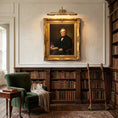
The picture light is among the oldest uses of the linear sconce — and the most demanding.
Illuminating artwork requires control: the beam must be warm enough not to bleach colour, narrow enough not to flood adjacent walls, and angled so it falls evenly across the canvas from top to bottom. Our pivoting picture lights are engineered for this task — a low-profile backplate that mounts flush to the wall, a slim bar that extends forward at the right depth, and LED lamps pre-tuned to 2700K warmth that enhances oil paint and photography alike.
Five Rooms, One Fixture
The linear sconce's versatility is its greatest virtue — below, the five spaces where our customers find it indispensable.
Bathroom Vanity
Mounted horizontally above or on both sides of a mirror, the linear sconce provides shadow-free task lighting for grooming — the professional lighting designer's preferred alternative to overhead downlights.
Bedroom Headboard
A horizontal bar centred above the headboard replaces two bedside lamps, freeing the nightstands and creating a cleaner architectural line. Ideal for platform beds and built-in millwork headboards.
Hallway & Corridor
Vertical pairs flanking a doorway or spaced along a long corridor create a sense of arrival and procession — a lighting technique borrowed directly from museum gallery design.
Living Room Gallery Wall
Above a console, sofa, or fireplace mantel — the linear picture light throws warm, focused illumination onto your curated art collection, turning the everyday into exhibition.
Home Library
A slimline sconce between bookshelves illuminates spines and reading corners without the visual weight of a pendant or floor lamp — keeping the space intimate and the books the focus.
Four Steps to Perfect Light
All mounting hardware and a step-by-step guide are included in every box. A licensed electrician is recommended for the wiring step.
Use the included template to mark the wall-box position. Confirm the centre height — typically 65–72 inches from the floor for a vanity, or 6–8 inches above the artwork for a picture light. Cut or locate the existing wall box.
Connect the ground, neutral, and live wires to the junction box. For dimmable operation, ensure the circuit is wired through a TRIAC-compatible dimmer (Lutron Skylark or equivalent). Electrician's work — do not skip.
Feed the wires through the backplate opening and fasten the mounting bracket to the wall box using the included screws. Press the backplate flush and secure with the decorative bolts. Check level with a spirit level before fully tightening.
Clip or screw the light bar onto the backplate. For pivoting models, rotate the arm to your desired angle — typically 30–45° down for picture lighting, or parallel to the wall for ambient/vanity. Insert your preferred E26 LED bulb and restore power.
