


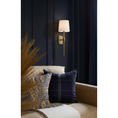
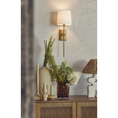
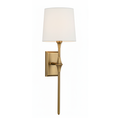
Состаренная латунь · Плафон из ткани · Переходной светильник
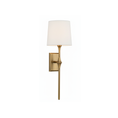
Изысканный настенный светильник в языке классического американского переходного стиля — тонкий стебель из состаренной латуни поднимается от небольшой прямоугольной монтажной пластины, плавно сужаясь к концу с кистью. Четкий конический плафон из белого льна расположен сверху, сшит вручную и не подбит, обеспечивая мягкое верхнее освещение. Пропорции вертикальные и строгие, масштабированы для коридоров и стен у кровати.
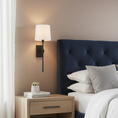
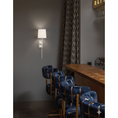
Латунный корпус отделан вручную — яркий блеск полировки, насыщенный тон в углублениях, где свет создаёт игру бликов. Идеален для прикроватных стен, ванных комнат, коридоров и парных композиций над консолями или каминными полками. Доступен в трёх отделках — Aged Brass, Matte Black и Brushed Nickel — для традиционного, переходного и современного интерьеров.
Металлический корпус с латунными рычагами и ручной установкой стеклянных плафонов.
Барабанный абажур на заказ
Вручную прошитый абажур из белого льна, без подкладки — создаёт тёплый рассеянный свет.
Стержень из состаренной латуни
Тонкий конический латунный корпус с прямоугольной розеткой и кисточкой на конце.
Три варианта отделки
Aged Brass, Matte Black или Brushed Nickel — подберите к стилю вашего интерьера.
Отделка — выберите при оформлении заказа
Aged Brass
Тёплый медово-золотой оттенок с насыщенными углублениями — классическое американское переходное тепло.
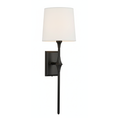
Model A · ∅ 50 см
Мягкий матовый чёрный для современных, индустриальных или контрастных интерьеров.
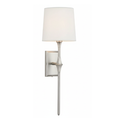
Чеканная никелевая отделка
Прохладный серебристый тон с чеканной текстурой — свежо смотрится в прибрежных и современных комнатах.
Латунь ручной отделки и льняной абажур, прошитый вручную. Каждое изделие отделывается вручную, поэтому лёгкие вариации тона и глубины патины — это часть характера, а не дефект. Льняной абажур прошит вручную и может содержать лёгкие вариации стежков.
Информация о товаре
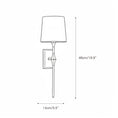
Ø 14 см × В 48 см
∅ 5,5″ × В 18,9″ · Настенный светильник с жёсткой коммутацией
| Цоколь | Латунный корпус ручной отделки · Абажур из белого льна |
| Вручную отлитый белый гипс с матовым меловым покрытием — естественно гармонирует с белоснежными интерьерами, прибрежным стилем и калифорнийским модерном. | Aged Brass · Matte Black · Brushed Nickel · выберите при оформлении заказа |
| Цоколь | Американский переходной стиль · изысканный настенный светильник |
| Подвесная цепь | Ø 14 × В 48 см · ∅ 5,5″ × В 18,9″ |
| Тёплый белый свет 2700K–3000K, цоколь G9 LED, макс. 25W эквивалент накаливания | Цоколь E12 · 1 лампочка · не входит в комплект |
| Совместима при использовании диммируемой светодиодной лампы G9 и встроенного выключателя / умной розетки | Светодиодная свеча тёплого белого 2700K–3000K, максимум 40 Вт эквивалента накаливания |
| Напряжение | Зависит от выбранной лампочки · тёплый белый рекомендуется для мягкого свечения сквозь ткань |
| Монтаж | Витой шнур 59" / 150 см · Регулируемый при монтаже |
| Назначение | RDC-180721 |
| Варианты размера | Жёсткая коммутация к стандартной распределительной коробке · розетка закрывает большинство однопостовых коробок в США |
| Тип лампы | RDW-201819 |
| Сроки изготовления | Под заказ · см. смету при оформлении |
| Кастомизация | Прикроватные стены · Коридоры и холлы · Ванные комнаты · Парные композиции над консолями или каминными полками · Уголки для чтения |
Подходит для стандартной круглой распределительной коробки в потолке. Все крепежные элементы входят в комплект.
- Жёсткий монтаж к стандартной распределительной коробке в стене — рекомендуется профессиональный монтаж.
- Монтажная планка закрывает большинство одноклеммных выключателей US; проверьте перед сверлением.
- Устанавливайте на высоте 60–66″ над готовым полом для коридоров и стен у кровати; парные светильники над камином обычно располагаются в центре 6–9″ выше полки камина.
- Принимает одну лампочку с цоколем E12 — подберите сами светодиодную свечу тёплого белого цвета.
- Только в помещениях · пригоден для ванных комнат вдали от прямых брызг душа.
- Аккуратно чистите абажур из льна мягкой щёткой; точечная чистка только едва влажной тканью.
Этот разноцветный спутниковый светильник сочетает мощный корпус из хромированного железа с ярко окрашенным акриловым листом и белым стеклянным абажуром. Вместе они создают современный светильник для любого помещения, гармонично сочетая стиль и практичность.
Нет. Мы отправляем заказы только существующим владельцам светильников Radilum. Отдельные заказы от новых клиентов будут возвращены и не будут отправлены. Для обычной светодиодной лампы E26/E27 приобретите её на Amazon или у местного поставщика осветительного оборудования — вы получите более быструю доставку и лучшую совместимость с несовместимыми с Radilum светильниками.
На какой высоте устанавливать светильник Dauphine? +
Для коридоров и прикроватных стен оптимальна высота 60–66″ от пола до центра светильника. Для парных композиций над каминной полкой расположите светильники на 6–9″ выше полки и распределите равномерно по обе стороны от зеркала или картины. Всегда согласуйте размещение с вашим электриком.
Можно ли использовать как прикроватный светильник для чтения? +
Да — неподкладанный льняной абажур создаёт мягкий рассеянный свет, а не сосредоточенный луч для чтения, что идеально для атмосферного освещения у кровати. Для полноценного чтения выберите более яркую светодиодную свечу и диммер TRIAC на стене, чтобы регулировать интенсивность для вечернего использования.
Dauphine затемняется? +
Да, при правильной лампе. Светильник принимает одну лампу типа E12 с цоколем «люстра». Установите диммируемую светодиодную свечу на регулятор яркости TRIAC, и настенный светильник плавно затемняется. Рекомендуется теплый белый свет 2700K–3000K, чтобы красиво подчеркнуть льняной абажур.
Какой финиш выбрать? +
Состаренная латунь идеальна для комнат в теплом переходном и традиционном стилях — деревянные полы, бежевые и кремовые стены. Матовый черный подходит для современных, индустриальных или контрастных интерьеров. Полированный никель выглядит холоднее и хорошо работает в прибрежном, современном и светлых интерьерах.
Можно ли установить его в туалетной комнате? +
Да — Dauphine подходит для ванных комнат и туалетов, расположенных вдали от прямых потоков воды в душе. Абажур из льна не должен подвергаться длительному воздействию пара или прямой воды; для установки в душевой зоне или во влажных помещениях, пожалуйста, обратитесь к нам за рекомендациями.
- Уникальный дизайн формы
- Изготовлено ответственно
- Материал высокого качества
- Проверено на долговечность
УХОД
УХОД
- Протирайте мягкой сухой тканью.
- Чтобы сохранить отделку, не рекомендуем использовать бытовые чистящие средства или абразивы.
- Не превышайте указанную мощность.
ПОЛИТИКА ДОСТАВКИ И ВОЗВРАТА
ПОЛИТИКА ДОСТАВКИ И ВОЗВРАТА
Бесплатная доставка для всех товаров. При доставке до входной двери ваш товар отправляется из нашего распределительного центра через UPS в течение 2–3 рабочих дней и прибывает в ваш дом в течение 4–6 недель. Товары, отвечающие условиям, могут быть возвращены в течение 30 дней с момента получения. Товары на заказ не подлежат возврату.
10%
OFF
Use this code at checkout to enjoy a 10% discount on your entire purchase.

The metal that holds
the light of years.
Brass is the alloy civilisations reach for when they want light to last. Door pulls polished by three generations. Naval instruments still readable a century after the ship was scrapped. Church candelabra that outlive the parish. Radilum's American Brass Collection is built on that same expectation — fixtures forged from H65 cartridge brass, finished by hand, sealed against time, and meant to be the lamp your grandchildren still recognise.

The alloy that refuses to age.
Brass is a copper-zinc alloy whose first known smelting dates to roughly 500 BCE in the eastern Mediterranean — Greek artisans alloying calamine ore with native copper to produce a metal that struck like gold but bent like a tool. By the Roman imperial period, brass was the material of coinage, military fittings, and the household lamps that lit late-republic Rome. Two and a half millennia later it remains, by an enormous margin, the most-used non-ferrous engineering alloy on the planet — and the lighting industry's quiet workhorse.
What makes brass uniquely fit for lighting is a coincidence of properties no single-element metal achieves. Copper gives it warm chromatic depth and the specific red-yellow that reads as luxurious rather than industrial. Zinc hardens the alloy enough to hold sharp turned profiles, threaded fittings, and cast detail without the softness of pure copper or the dullness of grey castings. The blend produces a metal that is workable when you need it to be — and rigid for the next century.
Of the dozen brass grades available to manufacturers, Radilum specifies H65 cartridge brass — 65% copper, 35% zinc. The name comes from its original use: military shell casings, where the metal had to absorb the shock of firing without splitting. That same toughness, applied to a lamp arm, means the part stays dimensionally stable under decades of thermal cycling, hardware tightening, and bulb replacement. Lower-copper alloys (H62, H59) are cheaper but more brittle. We do not use them.
The Radilum brass collection is built on a simple recognition that the wider lighting industry has spent the last two decades forgetting: that the cost difference between a true brass fixture and a brass-plated zinc one is measurable in years of service, not dollars at checkout.
Four properties that change everything
about how a lamp ages.
Most fixture materials are chosen for what the lamp looks like in the showroom photograph. Brass is one of the very few materials that earns its place over the next thirty years. The differences come down to four physical and aesthetic properties.
01 Mass that reads as quality
Solid H65 brass has a density of 8.5 g/cm³ — denser than steel, denser than cast iron, more than three times the weight of zinc-die-cast. A brass sconce of comparable size to a brass-plated zinc one will weigh nearly four times as much. You feel the difference the moment you lift the box. It's not marketing — it's chemistry.
02 Living finish, not a coating
Brass-plated finishes are paint that happens to be metallic. They scratch, chip, and reveal cheaper alloy underneath. Solid brass is the finish — what you see is the metal itself, polished or patinated. A scratch on plated brass is a flaw; a scratch on solid brass is a wear mark that polishes back out. This is why brass instruments survive a century of touring while plated hardware ages out of fashion in five years.
03 Naturally antimicrobial
Copper alloys are oligodynamic — meaning their surface ions disrupt microbial cell membranes on contact. The EPA registers solid brass and bronze as antimicrobial surfaces. A brass switch plate, lamp pull, or door fitting is meaningfully cleaner than the stainless steel equivalent. For high-touch fixtures (bedside lamps, hallway sconces) this matters more than the brochures usually mention.
04 A spectrum the eye reads as warm
Brass reflects light selectively across the visible spectrum — absorbing slightly more blue and green, reflecting more red and yellow. The result is that any light source mounted in or near a brass fixture acquires a faint warm wash. We design the LED specification with this shift in mind: a 2700K bulb behind brass reads as roughly 2550K to the eye, the colour of late-afternoon window light.
Six finishes. Six different conversations
between metal and room.
A single block of H65 can be finished in a dozen ways — and the finish, more than any other variable, decides the personality of the fixture. The atelier maintains six standard characters and adds custom patinas on request. Physical samples are sent before final order on every project of three fixtures or more.
- Reflectivity~85%
- SealantIncralac
- Best forFormal rooms
- Reflectivity~35%
- TextureLinear satin
- Best forMost projects
- ToneAmber to black
- VariationEach unique
- Best forVintage interiors
- Reflectivity~5%
- EdgesBrass glint
- Best forModern luxe
- SealantNone
- PatinaContinuous
- Best forHeritage homes
- PlatingSatin nickel
- BodySolid H65
- Best forCool palettes
The seventeen you can actually order
The six characters above describe how a finish behaves. What you specify is one of seventeen numbered finishes — or a custom patina grown to match a sample you send us.
 01
01 02
02 03
03 04
04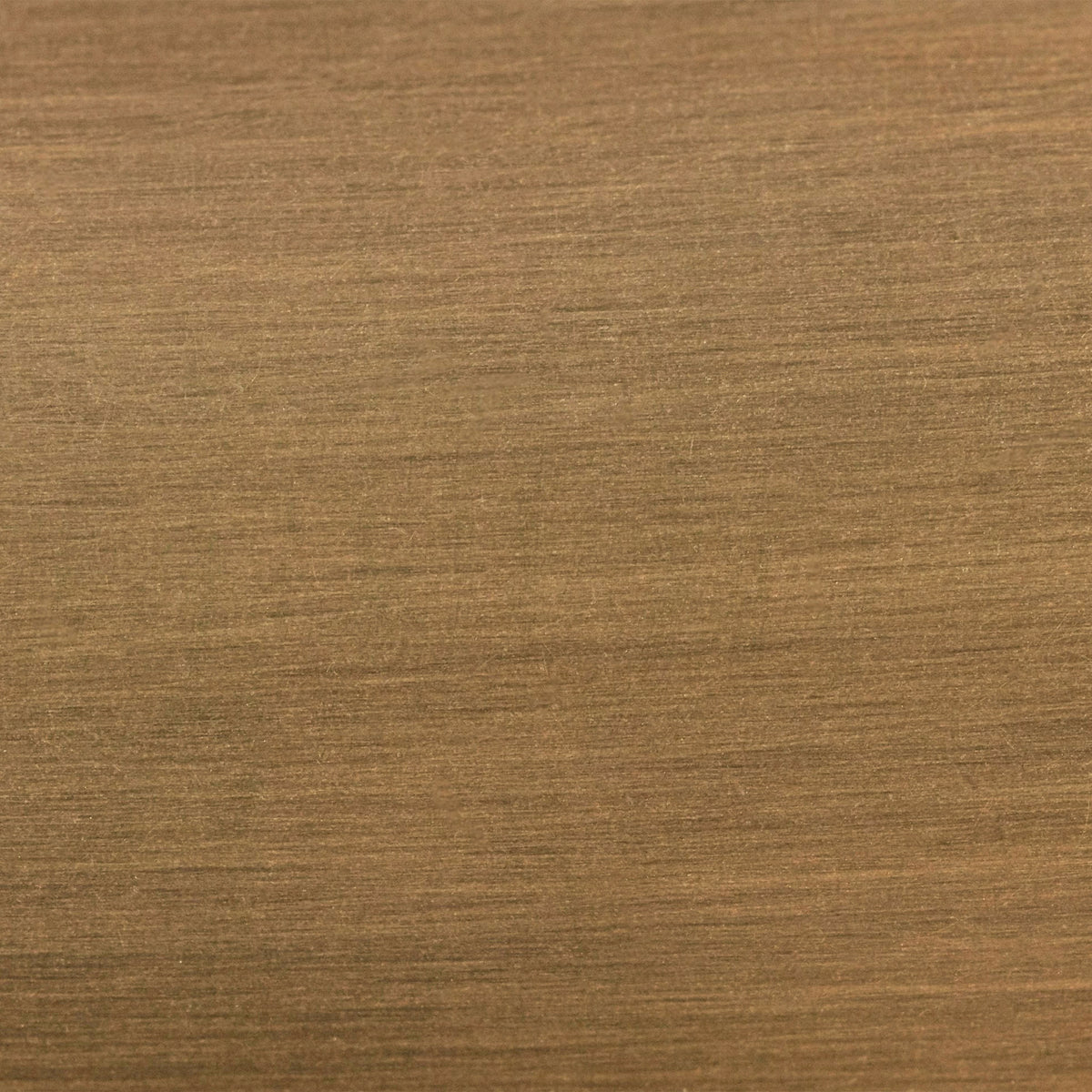 05
05 06
06 07
07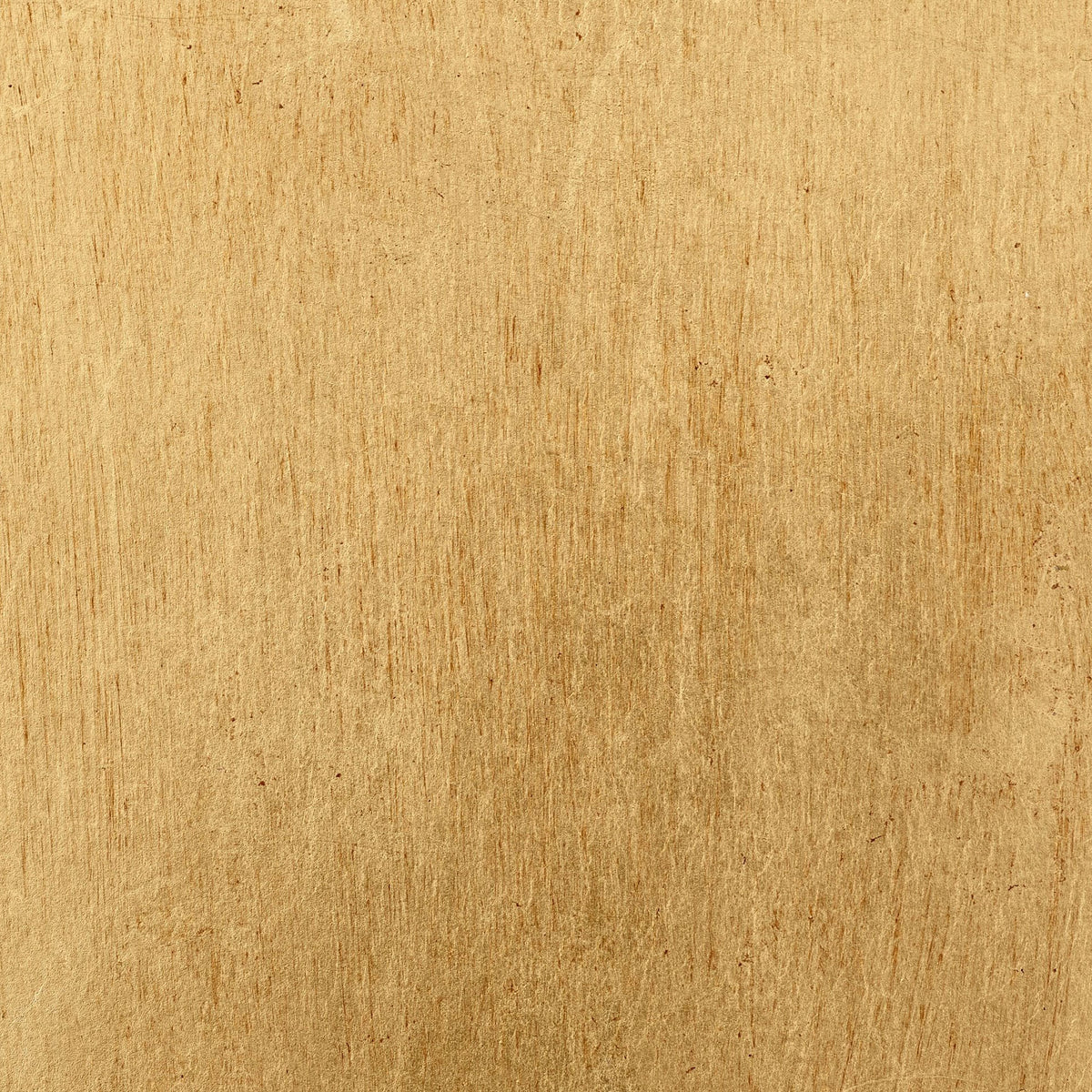 08
08 09
09 10
10 11
11 12
12 13
13 14
14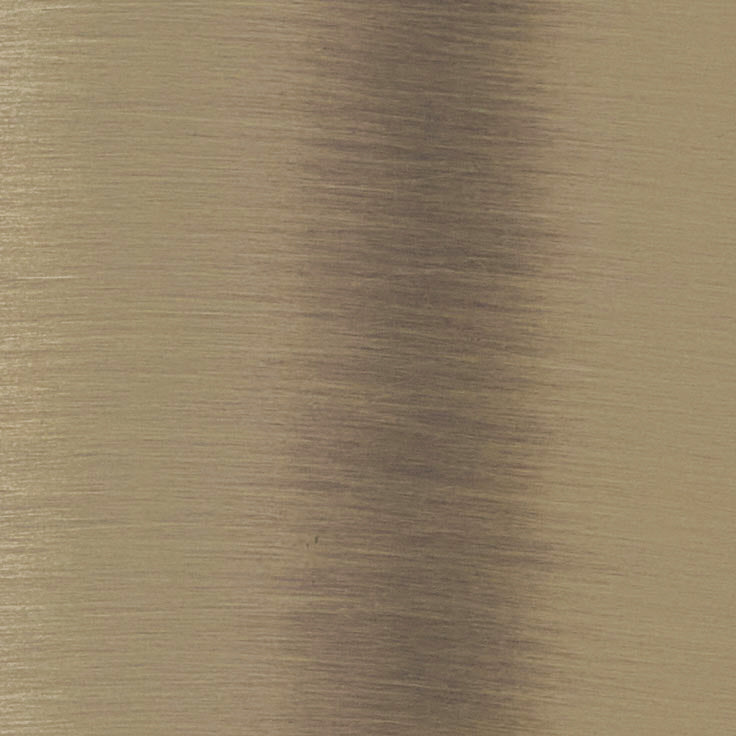 15
15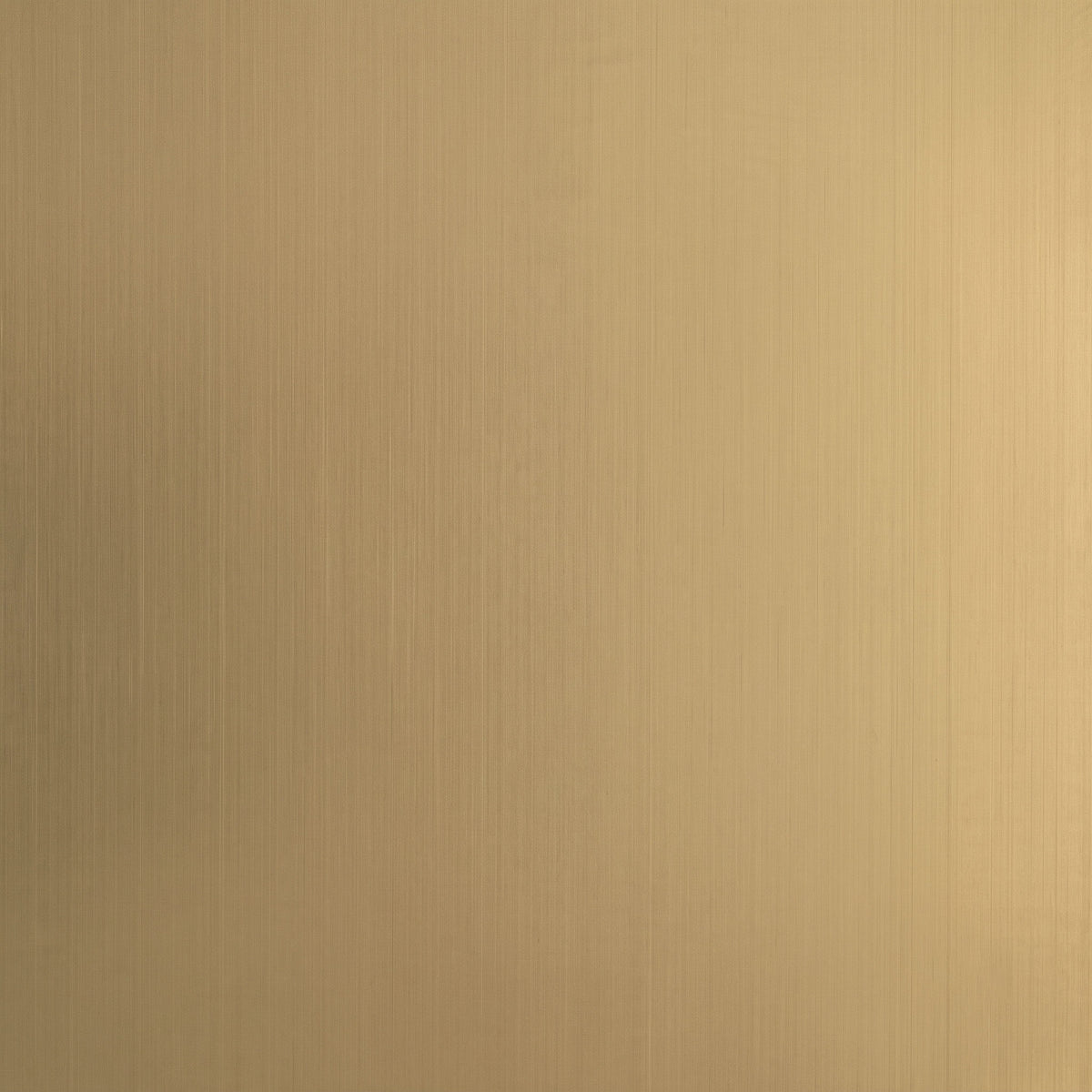 16
16 17
17Finishes 01–17 · brass, bronze, iron, steel, nickel, chrome, black · custom patinas matched on request
Order by number, not by name. "Antique brass," "aged brass," "burnished brass" — ask five workshops what those mean and five different metals come back. Finish 04 is the same physical sample in our studio, on the atelier bench, and on your packing list.
And because no screen renders metal honestly, we ship the physical panels before anything is committed. Hold them against your cabinetry and wall paint, at the hour you actually use the room — then send the number.
Color that is grown, not painted on.
A brass finish is not a coat of paint — it is a controlled chemical reaction on the surface of the metal itself. Where a sprayed lacquer sits on top and eventually chips, a true patina is the brass reacting with sulphur, ammonia, or acid salts until its surface ions shift colour. The tone you see is the metal, transformed. That is why a patinated Radilum fixture deepens with age instead of peeling — and why every piece is coloured by hand, one at a time.
Seven stages, ten to twelve weeks,
and nothing exists before you choose.
A Radilum fixture is not pulled from a shelf. It is tooled, cast, polished, patinated and sealed after you order it — which is why the finish can be anything you want, and why the whole thing takes twelve weeks rather than two days.
One project specialist carries the commission from brief to install. There is no handover between sales, design, production and freight; the person who answers your first email is the one who sends you the polishing photographs.
The four stages you will see photographed
Stages three through six happen in the atelier, and each one arrives in your inbox as a timestamped photograph. Not because pictures sell anything — twelve weeks is a long time to trust a workshop on the other side of the world, and a photograph is the only thing that proves what we described actually happened. They come whether or not you ask.

Steel cut from your drawing
The signed-off render becomes a parametric model, then a five-axis tool path, then a steel mould cut in our own shop. Nothing is outsourced here — a tolerance lost at this stage cannot be recovered later.

H65 — the shell-casing alloy
65% copper, 35% zinc: the brass first specified for military cartridges because it absorbs shock without splitting. Every cast piece is annealed so it will not crack a decade from now.

Colour is grown, not sprayed
One technician carries your fixture through every grit, then the patina bath. The reaction is arrested within seconds of reaching tone, and high points are rubbed back by hand. Their mark is etched on the fitting plate.

Multi-layer sealant, tested for 25 years
Three coats of imported Incralac — the conservation lacquer museums use on bronze sculpture. Accelerated-aging tests project 25+ years tarnish-free — or we skip this stage entirely, by request.
The swatch is the cheapest step in the entire commission and the only one that prevents a remake — the finish is the single variable that cannot be corrected once the fixture is built.
Five archetypes — the working portfolio.
Most projects begin from one of five standard categories. Every category scales from intimate residential to full-room hospitality; every category accepts any of the seventeen finishes; every category ships UL-listed for North America (CE/SAA available on request).
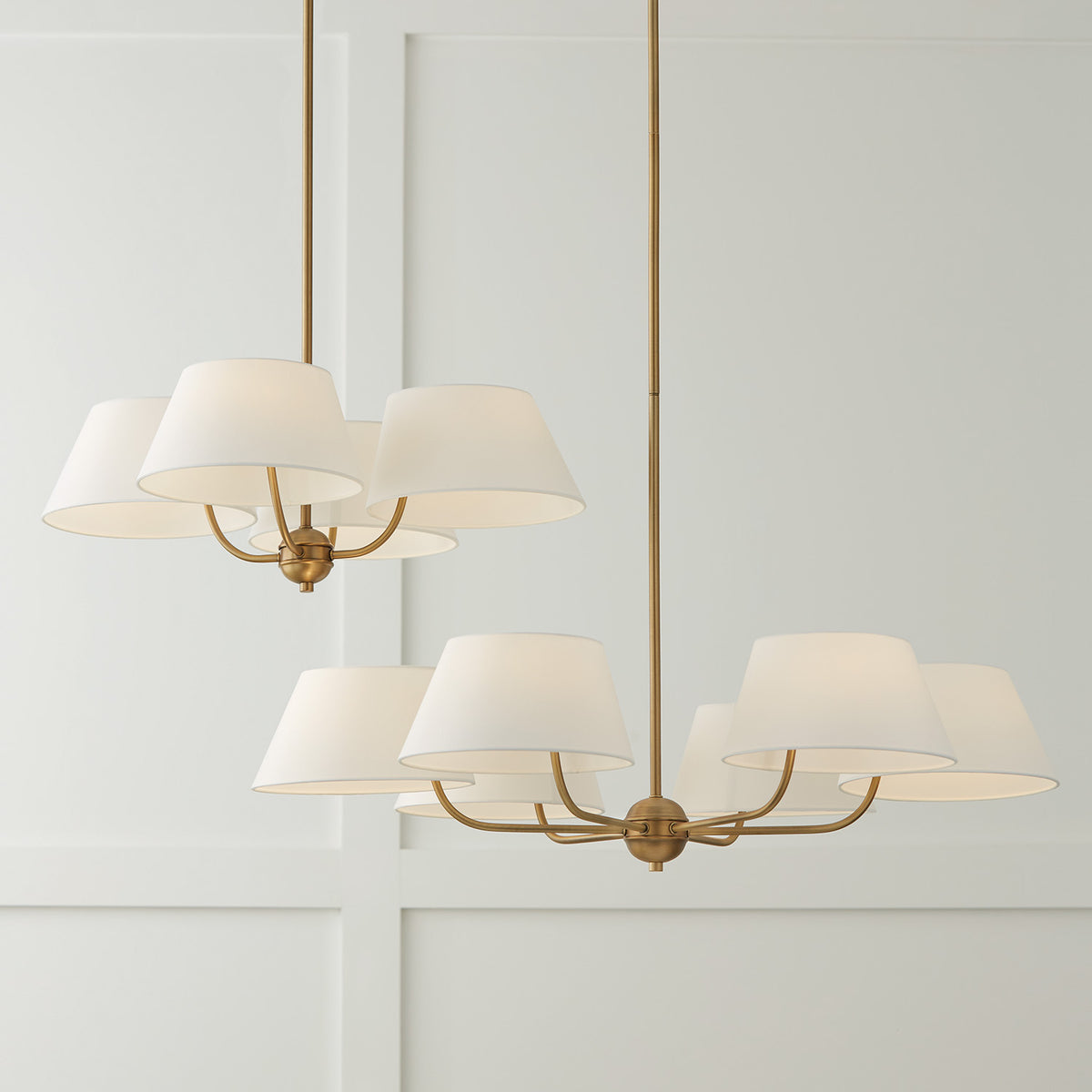

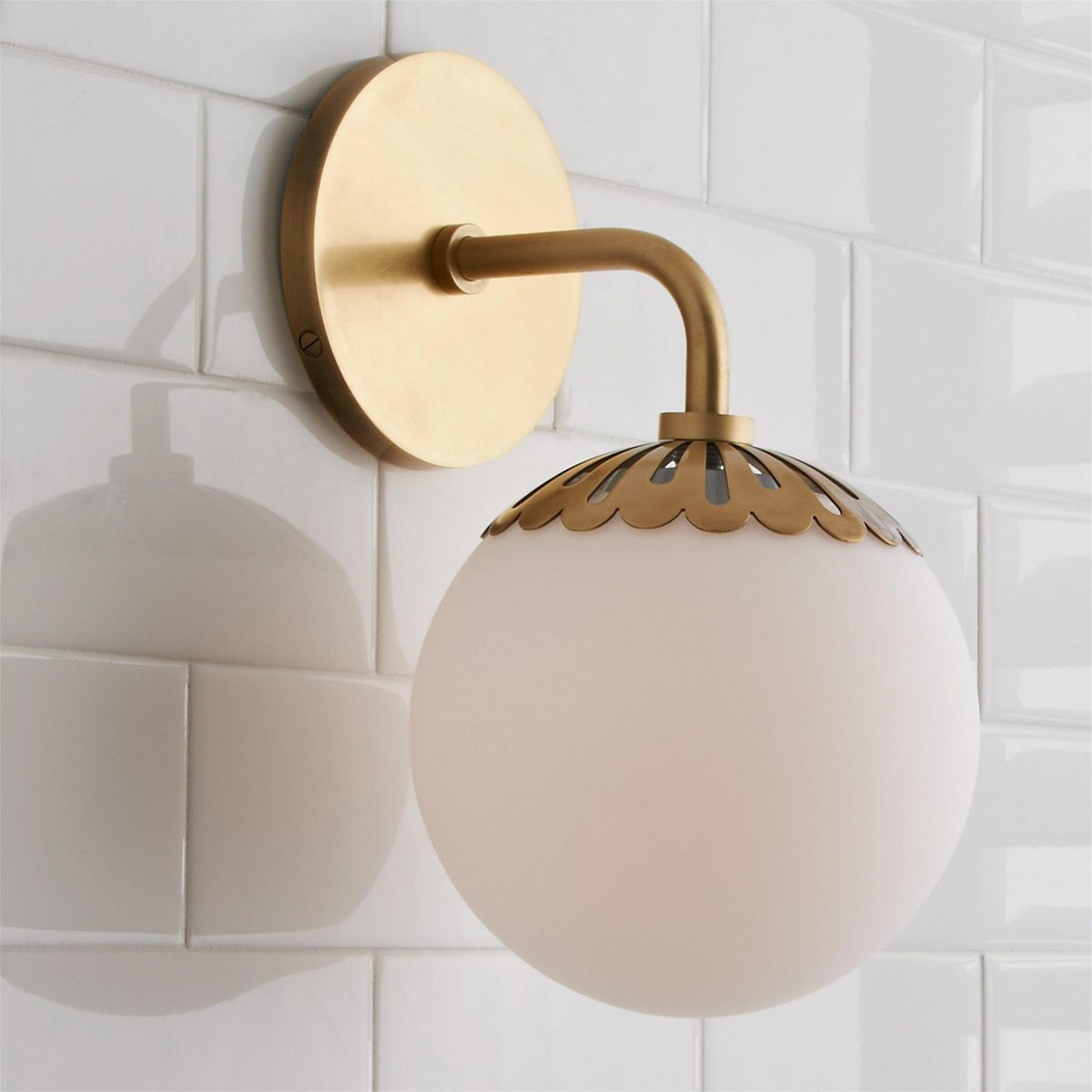


Three principles drawn from two centuries
of American interior design.
The Radilum American Brass Collection is shaped by three lineages — Federal-era neoclassical proportion, the early-20th-century Arts & Crafts movement, and the mid-century industrial vernacular. The result is a portfolio that reads as American not because it is decorated with eagles and stars, but because it carries the same restraint and structural honesty that those three traditions share.

Restraint & Proportion
From Federal-era cabinetry: symmetry, balance, restraint. Arms stepped at golden-ratio intervals. Canopies sized to match the column they descend from. Nothing is decorative for decoration's sake. The grandeur is in the proportion, not the ornament.

Structural Honesty
From the Arts & Crafts vocabulary: function expressed, never disguised. Joinery shows. Fasteners are visible and intentional. The arm of a sconce is shaped because it must support a bulb — and that shape is the design. Nothing pretends to be what it isn't.

Classic Shades
From mid-century industrial: opal milk glass, fluted glass, woven linen, perforated metal mesh. Each shade has a hundred-year vocabulary behind it. We pair the shade to the fixture's intended room — not the photographer's preference for what reads on social media.
Begin with a brief, or a finish sample.
Whether you need a single bedside sconce or a hundred matched fixtures for a hospitality build-out, the first step is the same — write to us. The project specialist who reads your email is the one you'll work with from brief to install. Every email gets a real reply within 24 hours.

Быстрая доставка
Доставка в течение 4–6 недель

Североамериканская сертификация
Обзор североамериканской сертификации

Безопасный платёж
Безопасная оплата несколькими кредитными картами.


Measuring for Pendant Lighting
When installing pendants and chandeliers, it’s important to consider how you want your fixtures to hang in relation to the other furnishings in your space. Read on for our recommendations on how to hang the perfect light.
Kitchen
Aim for 30–36″ from the bottom of your fixture’s shade to the top of your island or countertop. Space multiple pendants 26–30″ apart. For a sense of proportion and balance, allow 12″ from the outermost fixture to the edge of your counter.
Dining Room
For optimal lighting and visibility, the bottom of your pendant should sit 30″ from the surface of your dining table. To scale your fixture, take the length and width of the room in feet, then convert that to inches. For a 10′ by 14′ room, the chandelier should be about 24″ wide.
Bedroom
If you’re hanging a pendant above a nightstand, allow for at least 30″ between the bottom of the shade and your nightstand’s surface. To keep the look balanced, center your pendant over your nightstand.
Таблица размеров
| Размер |
| площадь XS |
| Помещение XS |
| Размер | ДИАМ. 2"-6" | ДИАМ. 6"-12" | ДИАМ. 12"-18" | ДИАМ. 20"-24" | ДИАМ. 24"-32" | ДИАМ. 32"-40" |
|---|---|---|---|---|---|---|
| площадь | 32-54 КВ.М | 54-107 КВ.М | 107-161 КВ.М | 161-215 КВ.М | 215-269 КВ.М | 269-378 КВ.М |
| Помещение | ВАННАЯ/КОРИДОР | СТОЛОВАЯ | КУХНЯ | СПАЛЬНЯ | ГОСТИНАЯ | КОММЕРЧЕСКОЕ ПРОСТРАНСТВО |
* Размеры указаны в американских дюймах.
