










Radilum
Lustre Hunter
Livraison standard gratuite aux États-Unis, au Canada, en Union européenne, au Royaume-Uni, en Australie et aux Émirats arabes unis · 4–6 semaines par fret maritime assuré · livraison express 1–3 semaines
💡 Utilisez le code de réduction RDSHN pour profiter de 10 % de réduction
Complete the collection

 €375,95
Lustre traditionnel à 6 bras · Appliques chandeliers · Laiton · Noir · Nickel · E14
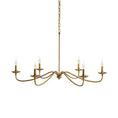
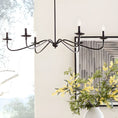
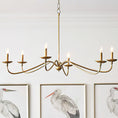
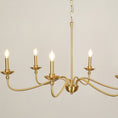
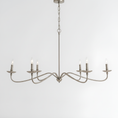
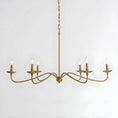
Six bras en volutes s'étendent à partir d'un moyeu central selon le format classique du lustre chandelier — chaque bras se courbe vers l'extérieur et vers le haut avant de se terminer par une applique de style chandelle. La proportion verticale allongée maintient le luminaire élancé par rapport à son diamètre de 96 cm, et la géométrie des volutes traditionnelles évoque l'authenticité d'époque sans la lourdeur des luminaires classiques richement ornementés. Trois options de finition — Laiton, Noir et Nickel — permettent à cette même forme de s'adapter du style traditionnel chaleureux au style formel contemporain.
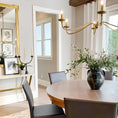
Avec ses 96 cm de diamètre, le lustre convient confortablement aux tables de salle à manger et aux salons standard. La chaîne de suspension de 50 cm offre une hauteur d'accrochage ajustable selon les différentes hauteurs de plafond. Les six douilles E14 sont toutes remplaçables par l'utilisateur — contrôle total de la luminosité et de la température de couleur grâce au choix des ampoules.
Voir en action
Finition — À choisir à la caisse
Laiton naturel
Laiton poli chaud — la lecture la plus traditionnelle. S'accorde avec les murs crème, les cadres dorés et les intérieurs aux tons chauds.
Noir
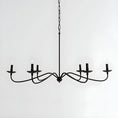
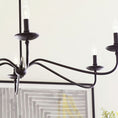
Noir mat — la forme des volutes traditionnelles se lit comme graphique et contemporaine. Convient aux palettes sombres et aux intérieurs de transition.
Nickel satiné
Nickel brossé froid — un métallique plus discret et neutre. Fonctionne dans les intérieurs à la fois traditionnels et formels contemporains.
Dimensions
Les ampoules ne sont pas incluses. Les six bras utilisent des douilles E14 chandelier (max 60 W par douille). Nous recommandons des ampoules LED E14 chandelier de 4–6 W à 2700 K blanc chaud — le ton chaud convient à toutes les trois finitions et donne aux appliques une qualité de lumière aux chandelles. Les ampoules en forme de pointe de flamme sont le choix le plus authentique pour les appliques de style chandelle.
Spécifications
| SKU | RDC-202725 |
| Configuration | 6 bras · Taille unique |
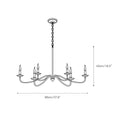
| Dimensions | ∅ 96 × H 42 cm · ∅ 37,8″ × H 16,5″ |
| Chaîne de Suspension | 50 cm / 19,7″ · Réglable à l'installation |
| Options de Finition | Laiton · Noir · Nickel |
| Matériaux | Corps de luminaire en laiton |
| Culot | E14 chandelier × 6 · Ampoules non incluses · Remplaçables par l'utilisateur · Max 60 W par douille |
| Tension | AC 110–240V · Universel |
| Fixation | Câblage permanent suspendu par chaîne · Boîte de jonction standard |
| Idéal pour | Salles à manger · Salons · Entrées · Intérieurs traditionnels et de transition |
Téléchargements
Questions fréquentes
Quelle finition convient à mon intérieur ? +
Le laiton est le plus chaud et le plus traditionnel — il s'associe naturellement aux murs crème ou blanc chaud, aux tons de bois et aux accents dorés ou anciens. Idéal pour les intérieurs traditionnels, de style Provence française et Régence hollywoodienne. Le noir est le plus polyvalent selon les styles — la géométrie des volutes se lit comme graphique plutôt que travaillée, ce qui convient aux espaces transitionnels, industriels et moderne-traditionnel. Le nickel est le plus neutre — un métallique discret et frais qui fonctionne dans les intérieurs contemporains-formels et scandinave-traditionnel où les métaux chauds auraient un effet trop lourd.
À quel type de table à manger convient-elle ? +
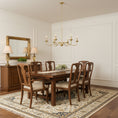
D'un diamètre de 96 cm, ce lustre convient aux tables de salle à manger entre 140 et 200 cm de longueur. La règle empirique standard veut que le diamètre du lustre soit à peu près la moitié de la largeur de la table — à 96 cm, cela fonctionne bien au-dessus d'une table de 180–200 cm sans paraître surdimensionné. Pour les plus petites tables (120–140 cm), le lustre fonctionnera toujours mais dominera visuellement davantage la table ; positionnez-le à la bonne hauteur (75–80 cm au-dessus de la surface de la table) pour conserver les proportions confortables.
Quel type d'ampoule dois-je utiliser ? +
Chaque bras accepte une ampoule E14 candélabre (max 60W, bien que les équivalents LED de 4–6W soient fortement recommandés). Pour les appliques style bougie, une ampoule LED E14 forme flamme à 2700K blanc chaud est le choix le plus approprié historiquement — la pointe effilée imite fidèlement une flamme de bougie. Une ampoule LED E14 cylindrique ou ronde simple fonctionne aussi. Les ampoules ne sont pas incluses.
Est-elle graduable ? +
Oui, lorsqu'elle est équipée d'ampoules candélabre LED E14 dimmables et d'un gradateur mural TRIAC compatible (tous deux vendus séparément). Spécifiez « dimmable » lors de l'achat d'ampoules LED E14, et confirmez que votre gradateur est évalué pour les charges LED. L'atténuation d'un lustre candélabre traditionnel à 30–50 % produit une atmosphère particulièrement chaleureuse, aux chandelles, parfaite pour les salles à manger et les salons.
Téléchargements
Dimension drawings

Besoin d'un autre document ? Contactez un designer — envoyé sous 1 jour ouvrable.
FAQ
What are the exact dimensions of the Hunter Chandelier?
The chandelier is 96 cm in diameter and 42 cm in height (37.8″ × 16.5″). The hanging chain is 50 cm long and adjustable at installation.
What materials and finishes are available?
The lamp body is brass. Three finish options are available: Natural Brass, Black, and Satin Nickel.
What style is the Hunter Chandelier?
It's a mid-century modern, minimalist, coastal, and modern/contemporary chandelier with six scrolling arms in a candelabra format.
What type of bulbs does it use and are they included?
It has six E14 candelabra sockets (max 60W each). Bulbs are not included. We recommend 4–6W LED E14 candelabra bulbs at 2700K warm white for a candlelit quality.
How is the Hunter Chandelier installed?
It's hardwired and chain-suspended to a standard junction box. The 50 cm hanging chain is adjustable at installation to suit different ceiling heights.
Vous hésitez encore ? Posez une question — réponse dans les 24 heures ouvrables.
- Design de forme unique
- Fabriqué de manière responsable
- Matériau de haute qualité
- Testé pour la durabilité
ENTRETIEN
ENTRETIEN
- Époussetez avec un chiffon doux et sec.
- Pour protéger la finition, nous ne recommandons pas l'utilisation de nettoyants ménagers ou d'abrasifs.
- Ne pas dépasser la puissance spécifiée.
POLITIQUE D'EXPÉDITION ET DE RETOUR
POLITIQUE D'EXPÉDITION ET DE RETOUR
Profitez de la livraison gratuite sur tous les produits. Avec la livraison à la porte d'entrée, votre article est expédié de notre Centre de distribution par UPS dans un délai de 2 à 3 jours ouvrables et arrive à votre domicile en 4 à 6 semaines. Les articles admissibles peuvent être retournés dans les 30 jours suivant la réception. Les articles fabriqués sur commande ne sont pas admissibles au retour.
Dans notre atelier
Fabrication sur commande, expédition assurée
Chaque luminaire est fabriqué ou taillé à la commande — 2–4 jours ouvrables pour le métal, 3–5 pour la pierre, 3–4 semaines pour le verre soufflé à la main. Puis fret maritime, dédouanement pris en charge par nos soins, suivi jusqu'à votre porte en environ 4–6 semaines. Vous en avez besoin plus rapidement ? Livraison express par avion, 1–3 semaines, prix affiché à la caisse.
Façonné à votre mesure
Rien ici n'est définitif
Modifiez la finition, la couleur, la pierre, la taille — ou envoyez-nous une forme.
Services de design
Plans d'éclairage maison complète gratuits
Envoyez-nous vos plans d'étage ou photos ; un designer Radilum retourne un plan pièce par pièce avec luminaire, dimensions et hauteur de fixation — généralement sous 2 jours ouvrables.

Expédition rapide
Livraison en 4 à 6 semaines

Certification nord-américaine
Aperçu de la certification nord-américaine

Paiement sécurisé
Paiement sécurisé par plusieurs cartes de crédit.


L'histoire du fer et du laiton
Coulé, ciselé et finalisé à la main
Nos luminaires en laiton et fer sont coulés, ciselés et finalisés dans notre propre atelier — dorés à la feuille d'or, bronzés ou laqués à la main, ce qui explique qu'aucun deux ne possède exactement le même éclat. La couleur se développe dans le bain de finition plutôt que d'être pulvérisée, puis scellée pour vieillir avec grâce. Choisissez une finition ci-dessus, ou demandez n'importe quelle autre finition métallique de la Bibliothèque des Finitions.
Le métal qui porte
la lumière des années.
Le laiton est l'alliage que les civilisations choisissent quand elles veulent que la lumière dure. Des poignées de porte polies par trois générations. Des instruments nautiques encore lisibles un siècle après le démantèlement du navire. Des chandeliers d'église qui survivent à la paroisse. La Collection Brass Atelier Américain de Radilum repose sur cette même conviction — des luminaires forgés en laiton de cartouche H65, finis à la main, scellés contre le temps, et destinés à être la lampe que vos petits-enfants reconnaissent.

L'alliage qui refuse de vieillir.
Le laiton est un alliage cuivre-zinc dont la première fonte connue remonte à environ 500 av. J.-C. en Méditerranée orientale — des artisans grecs alliaient le minerai de calamine au cuivre natif pour produire un métal qui frappait comme l'or mais se pliait comme un outil. À l'époque de l'Empire romain, le laiton était le matériau des monnaies, des équipements militaires et des lampes domestiques qui éclairaient Rome à la fin de la République. Deux millénaires et demi plus tard, il demeure, de très loin, l'alliage d'ingénierie non ferreux le plus utilisé au monde — et le cheval de trait silencieux de l'industrie de l'éclairage.
Ce qui rend le laiton particulièrement adapté à l'éclairage est une coïncidence de propriétés qu'aucun métal monoélémentaire n'atteint. Le cuivre lui confère une profondeur chromatique chaleureuse et le rouge-jaune spécifique qui se lit comme luxueux plutôt qu'industriel. Le zinc durcit l'alliage juste assez pour conserver les profils tournés nets, les raccords filetés et les détails moulés sans la mollesse du cuivre pur ou la ternissure des moulages gris. Le mélange produit un métal qui est travaillable quand vous en avez besoin — et rigide pour le siècle à venir.
Parmi la douzaine de nuances de laiton disponibles pour les fabricants, Radilum spécifie le laiton de cartouche H65 — 65 % cuivre, 35 % zinc. Le nom vient de son usage initial : les douilles de projectiles militaires, où le métal devait absorber le choc du tir sans se fissurer. Cette même ténacité, appliquée à un bras de lampe, signifie que la pièce reste dimensionnellement stable pendant des décennies de cycles thermiques, de serrage d'écrous et de remplacement d'ampoules. Les alliages à cuivre plus faible (H62, H59) sont moins chers mais plus fragiles. Nous ne les utilisons pas.
La collection laiton de Radilum repose sur une reconnaissance simple que l'industrie de l'éclairage au sens large a passé les deux dernières décennies à oublier : que la différence de coût entre un vrai luminaire en laiton et un luminaire en zinc plaqué laiton se mesure en années de service, pas en dollars à la caisse.
Quatre propriétés qui changent tout
sur la façon dont une lampe vieillit.
La plupart des matériaux de luminaires sont choisis pour ce que la lampe ressemble sur la photo de la vitrine. Le laiton est l'un des très rares matériaux qui mérite sa place au cours des trente prochaines années. Les différences se résument à quatre propriétés physiques et esthétiques.
01 Une masse qui se lit comme de la qualité
Le laiton H65 massif a une densité de 8,5 g/cm³ — plus dense que l'acier, plus dense que la fonte, plus de trois fois le poids du zinc moulé sous pression. Une applique en laiton de taille comparable à une applique en zinc plaqué laiton pèsera près de quatre fois plus. Vous ressentez la différence dès que vous levez la boîte. Ce n'est pas du marketing — c'est de la chimie.
02 Une finition vivante, pas un revêtement
Les finitions plaquées laiton sont de la peinture qui se trouve être métallisée. Elles se rayent, s'écaillent et révèlent un alliage moins cher dessous. Le laiton massif est la finition — ce que vous voyez est le métal lui-même, poli ou patiné. Une rayure sur du laiton plaqué est un défaut ; une rayure sur du laiton massif est une marque d'usure qui se repolit. C'est pourquoi les instruments de laiton survivent à un siècle de tournées tandis que les ferrures plaquées deviennent démodées en cinq ans.
03 Naturellement antimicrobien
Les alliages de cuivre sont oligodynamiques — ce qui signifie que les ions de leur surface perturbent les membranes cellulaires des micro-organismes au contact. L'EPA enregistre le laiton et le bronze massifs comme surfaces antimicrobiennes. Une plaque interrupteur en laiton, un tirant de lampe ou une quincaillerie de porte est visiblement plus propre que l'équivalent en acier inoxydable. Pour les luminaires très utilisés (lampes de chevet, appliques de couloir), cela compte plus que les brochures ne le mentionnent généralement.
04 Un spectre que l'œil lit comme chaud
Le laiton réfléchit la lumière de manière sélective dans le spectre visible — absorbant légèrement plus de bleu et de vert, réfléchissant plus de rouge et de jaune. Le résultat est que toute source lumineuse montée dans ou près d'un luminaire en laiton acquiert un léger reflet chaud. Nous spécifions la LED en tenant compte de ce décalage : une ampoule 2700K derrière du laiton se lit comme environ 2550K à l'œil, la couleur de la lumière du soir en fin d'après-midi.
Six finitions. Six conversations différentes
entre le métal et l'espace.
Un seul bloc de H65 peut être finalisé d'une douzaine de façons — et la finition, plus que toute autre variable, détermine la personnalité de la luminaire. L'atelier maintient six caractères standard et ajoute des patines personnalisées sur demande. Des échantillons physiques sont envoyés avant la commande finale pour tout projet de trois luminaires ou plus.
- Réflectivité~85%
- ScellantIncralac
- Idéal pourLes espaces formels
- Réflectivité~35%
- TextureSatin linéaire
- Idéal pourLa plupart des projets
- TonalitéAmbre à noir
- VariationChacune unique
- Idéal pourIntérieurs vintage
- Réflectivité~5 %
- ArêtesScintillement de laiton
- Idéal pourLuxe moderne
- ScellantAucun
- PatineContinue
- Idéal pourMaisons de caractère
- PlacageNickel satiné
- CorpsLaiton massif H65
- Idéal pourPalettes froides
Les dix-sept que vous pouvez réellement commander
Les six caractéristiques ci-dessus décrivent le comportement d'une finition. Ce que vous spécifiez est l'une de dix-sept finitions numérotées — ou une patine personnalisée cultivée pour correspondre à un échantillon que vous nous envoyez.
 01
01 02
02 03
03 04
04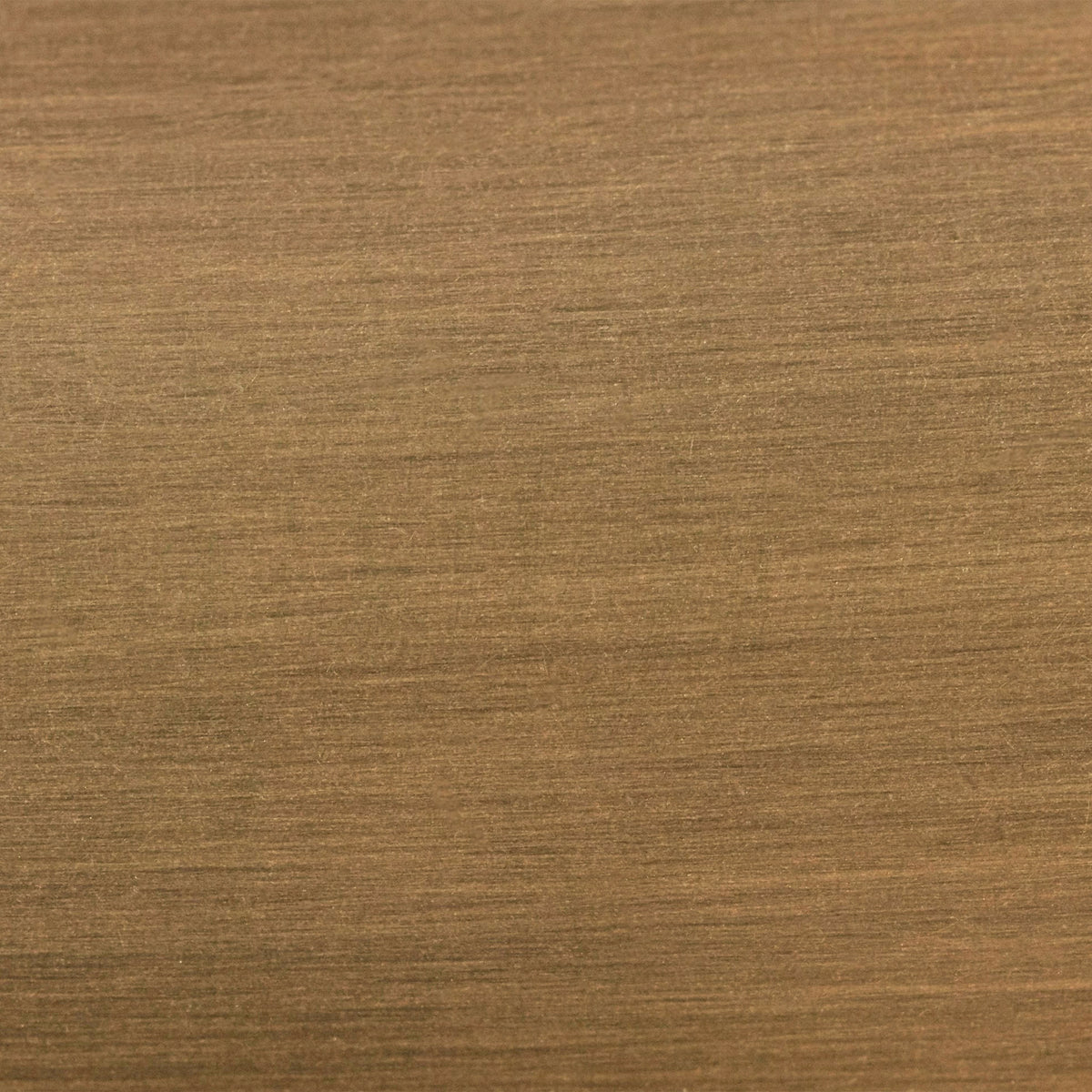 05
05 06
06 07
07 08
08 09
09 10
10 11
11 12
12 13
13 14
14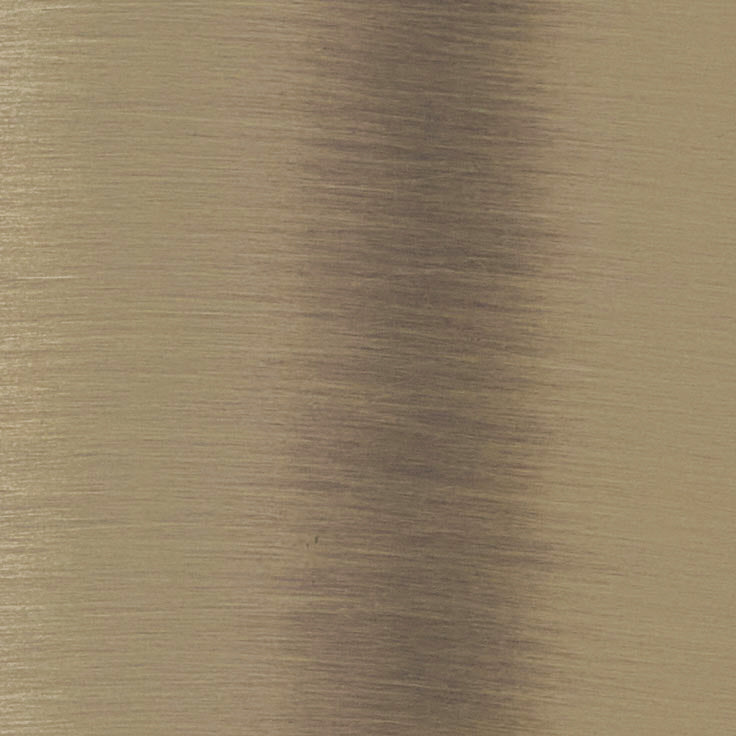 15
15 16
16 17
17
Finitions 01–17 · laiton, bronze, fer, acier, nickel, chrome, noir · patines personnalisées sur demande
Commandez par numéro, pas par nom. « Laiton antique », « laiton vieilli », « laiton brossé » — posez la question à cinq ateliers et cinq métaux différents reviendront. La Finition 04 est le même échantillon physique dans notre studio, sur l'établi de l'atelier et sur votre bon de livraison.
Et parce qu'aucun écran ne rend le métal honnêtement, nous expédions les panneaux physiques avant que quoi que ce soit ne soit engagé. Tenez-les contre vos meubles et la peinture murale, à l'heure où vous utilisez réellement la pièce — puis envoyez le numéro.
Une couleur cultivée, non peinte.
Une finition en laiton n'est pas une couche de peinture — c'est une réaction chimique contrôlée à la surface du métal. Là où une laque pulvérisée repose sur le dessus et s'écaille finalement, une véritable patine est le laiton réagissant avec le soufre, l'ammoniac ou les sels acides jusqu'à ce que les ions de sa surface changent de couleur. La teinte que vous voyez est le métal, transformé. C'est pourquoi une finition Radilum patinée s'approfondit avec l'âge au lieu de s'écailler — et pourquoi chaque pièce est coloriée à la main, une à la fois.
Sept étapes, dix à douze semaines,
et rien n'existe avant que vous le choisissiez.
Un luminaire Radilum n'est pas retiré d'une étagère. Il est usiné, coulé, poli, patiné et scellé après que vous le commandiez — c'est pourquoi la finition peut être exactement ce que vous voulez, et pourquoi le tout prend douze semaines plutôt que deux jours.
Un spécialiste de projet unique pilote la commande du briefing à l'installation. Il n'y a pas de transition entre la vente, le design, la production et la logistique ; la personne qui répond à votre premier email est celle qui vous envoie les photographies de polissage.
Les quatre étapes que vous verrez photographiées
Les étapes trois à six se déroulent à l'atelier, et chacune vous arrive par courriel sous forme de photographie horodatée. Non pas parce que les images vendent quoi que ce soit — douze semaines, c'est long pour faire confiance à un atelier de l'autre côté du monde, et une photographie est la seule preuve que ce que nous avons décrit s'est réellement produit. Elles arrivent que vous les demandiez ou non.

Acier découpé d'après votre dessin
Le rendu signé devient un modèle paramétrique, puis une trajectoire d'outil cinq axes, puis un moule en acier découpé dans notre propre atelier. Rien n'est externalisé ici — une tolérance perdue à ce stade ne peut pas être récupérée plus tard.

H65 — l'alliage de douille de cartouche
65 % de cuivre, 35 % de zinc : le laiton d'abord spécifié pour les cartouches militaires parce qu'il absorbe les chocs sans se fissurer. Chaque pièce coulée est recuite pour qu'elle ne se craquelle pas dans dix ans.

La couleur est développée, non pulvérisée
Un technicien porte votre luminaire à travers chaque grain, puis le bain de patine. La réaction est arrêtée en quelques secondes après avoir atteint la teinte, et les points hauts sont polis à la main. Sa signature est gravée sur la plaque de montage.

Scellant multicouche, testé pour 25 ans
Trois couches d'Incralac importé — le vernis de conservation que les musées utilisent sur les sculptures en bronze. Les tests de vieillissement accéléré projettent plus de 25 ans sans ternissement — ou nous sautons entièrement cette étape, sur demande.
L'échantillon est l'étape la moins chère de toute la commande et la seule qui prévient un refaçonnage — la finition est la seule variable qui ne peut pas être corrigée une fois que le luminaire est construit.
Cinq archétypes — le portefeuille professionnel.
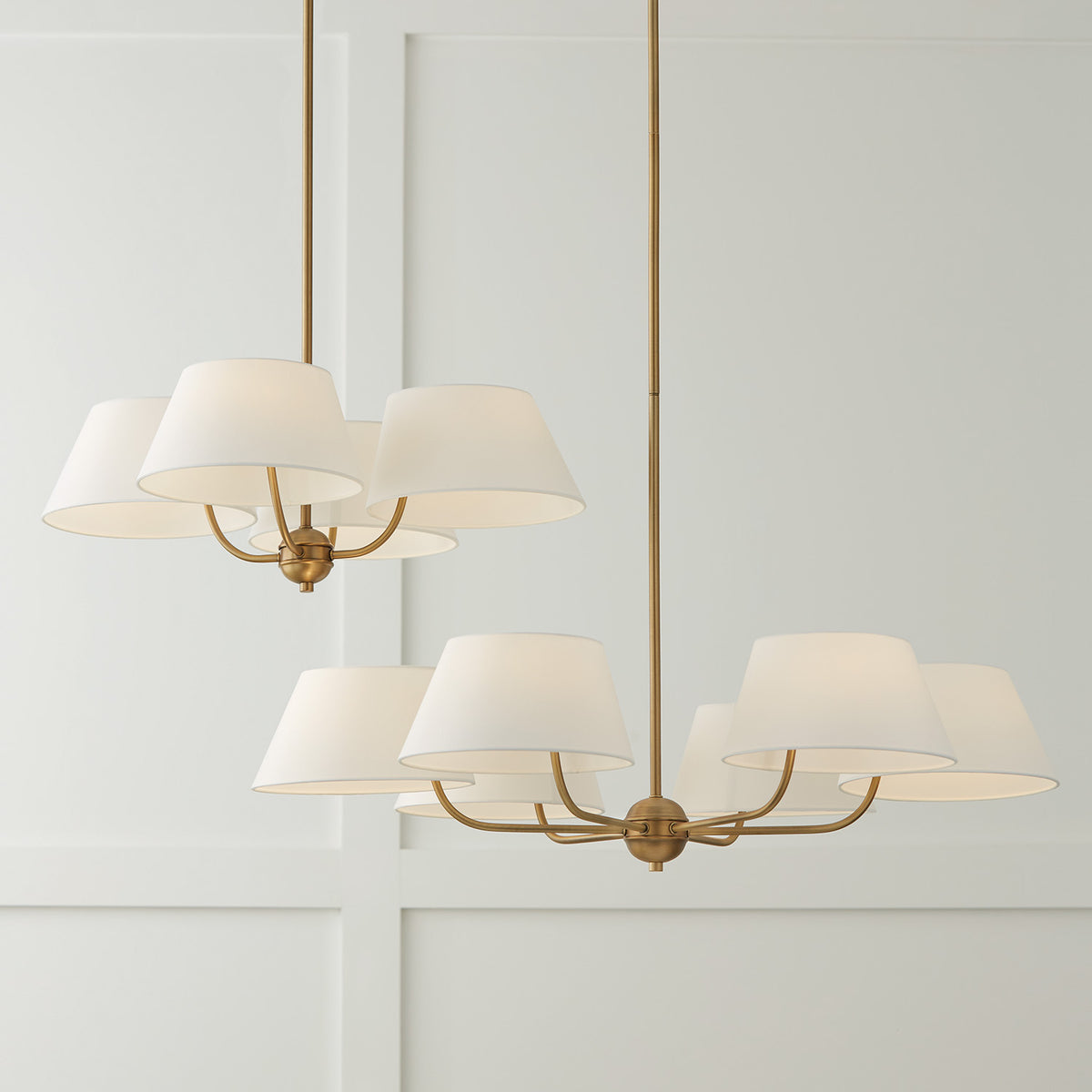
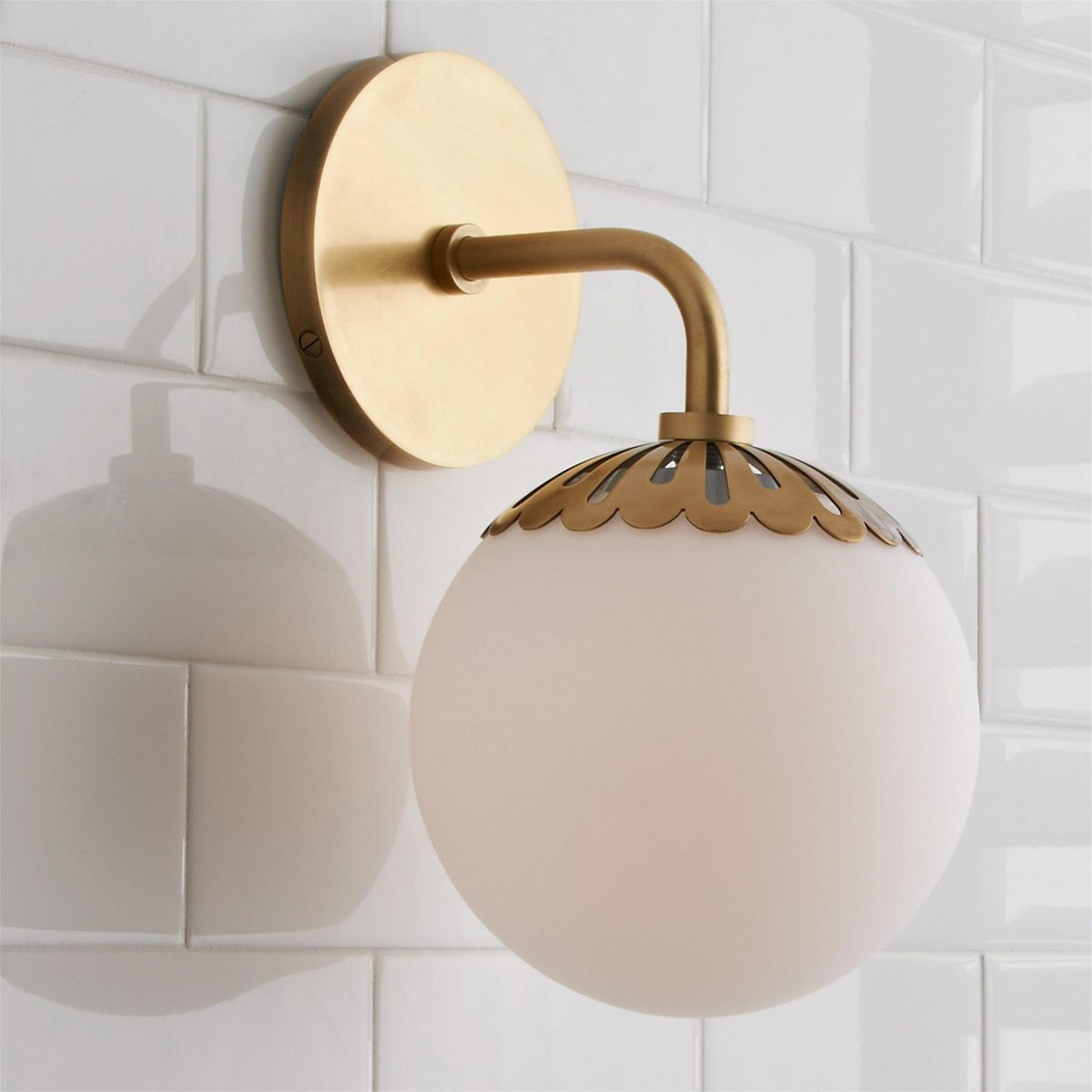
La plupart des projets commencent par l'une des cinq catégories standard. Chaque catégorie se décline du résidentiel intime à l'hospitalité plein air ; chaque catégorie accepte n'importe lequel des dix-sept finis ; chaque catégorie est expédiée homologuée UL pour l'Amérique du Nord (CE/SAA disponible sur demande).



Trois principes issus de deux siècles
de design intérieur américain.
La Radilum American Brass Collection puise sa source dans trois traditions — la proportion néoclassique de l'époque fédérale, le mouvement Arts & Crafts du début du XXe siècle, et le vocabulaire industriel du milieu du XXe. L'ensemble forme un portefeuille qui se lit comme américain non pas parce qu'il est orné d'aigles et d'étoiles, mais parce qu'il incarne la même retenue et l'honnêteté structurelle que ces trois traditions partagent.

Retenue & Proportion
Héritage du style fédéral : symétrie, équilibre, retenue. Les bras s'échelonnent selon les proportions du nombre d'or. Les montures s'ajustent à la dimension de la colonne dont elles se détachent. Rien n'est ornemental par pure décoration. La grandeur réside dans la proportion, non dans l'ornement.

Honnêteté Structurelle
Selon le vocabulaire Arts & Crafts : la fonction exprimée, jamais déguisée. L'assemblage apparaît. Les fixations sont visibles et délibérées. Le bras d'une applique est façonné parce qu'il doit supporter une ampoule — et cette forme est le design. Rien ne prétend être ce qu'il n'est pas.

Abat-Jour Classiques
Héritage du design industriel du milieu du siècle : verre opalin, verre cannelé, lin tissé, grille métallique perforée. Chaque abat-jour porte en lui un vocabulaire centenaire. Nous apparions l'abat-jour à la destination de l'applique — non à la préférence du photographe pour ce qui fonctionne sur les réseaux sociaux.
Commencez par un brief, ou un échantillon de finition.
Que vous ayez besoin d'une simple applique murale pour une chambre ou de cent luminaires assortis pour un projet d'hôtellerie, la première étape est toujours la même — écrivez-nous. Le spécialiste de projet qui lira votre email sera votre interlocuteur du brief à l'installation. Chaque email reçoit une réponse authentique sous 24 heures.
Dimensionner un lustre
Additionnez la longueur et la largeur de la pièce en pieds — ce nombre en pouces est un diamètre confortable. Vérifiez ensuite que le plafond peut supporter le poids.
Tableau des tailles
| Taille |
| superficie XS |
| Pièce XS |
| Taille | Ø 2"-6" | Ø 6"-12" | Ø 12"-18" | Ø 20"-24" | Ø 24"-32" | Ø 32"-40" |
|---|---|---|---|---|---|---|
| superficie | 32-54 PI² | 54-107 PI² | 107-161 PI² | 161-215 PI² | 215-269 PI² | 269-378 PI² |
| Pièce | SALLE DE BAIN/COULOIR | SALLE À MANGER | CUISINE | CHAMBRE | SALON | INTÉRIEUR COMMERCIAL |
* Les tailles sont américaines et exprimées en pouces.
Complétez votre intérieur
Pièces qui s'harmonisent avec the Lustre
De la même ligne de Éclairage Old Money — sélectionnées pour que la pièce se lise comme un ensemble.


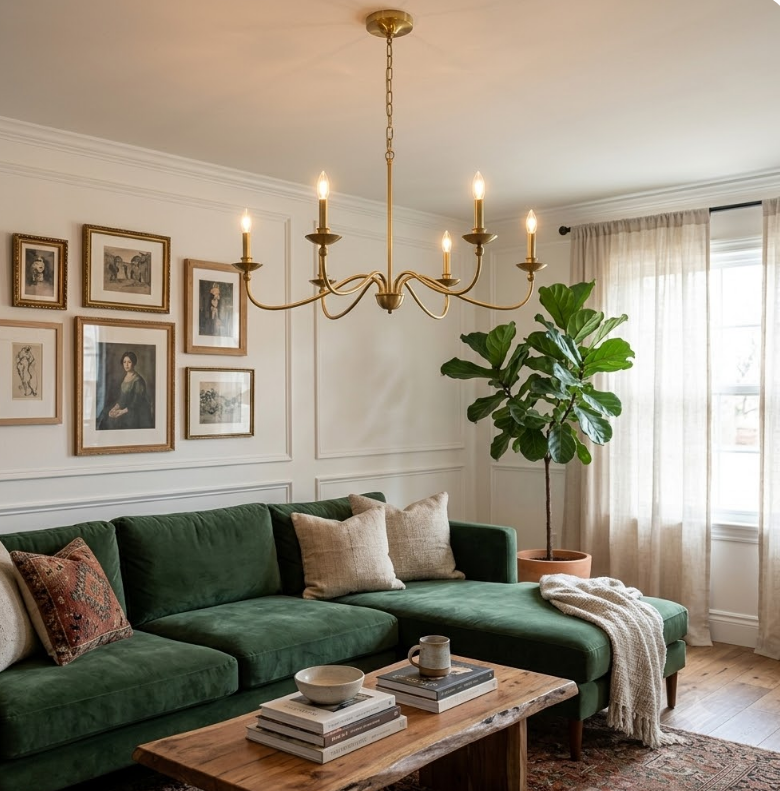
This chandelier completely transformed our living room. The elongated design draws the eye upward and makes the whole space feel more intentional and elegant. It gives off a warm, inviting glow in the evenings that feels both cozy and refined.
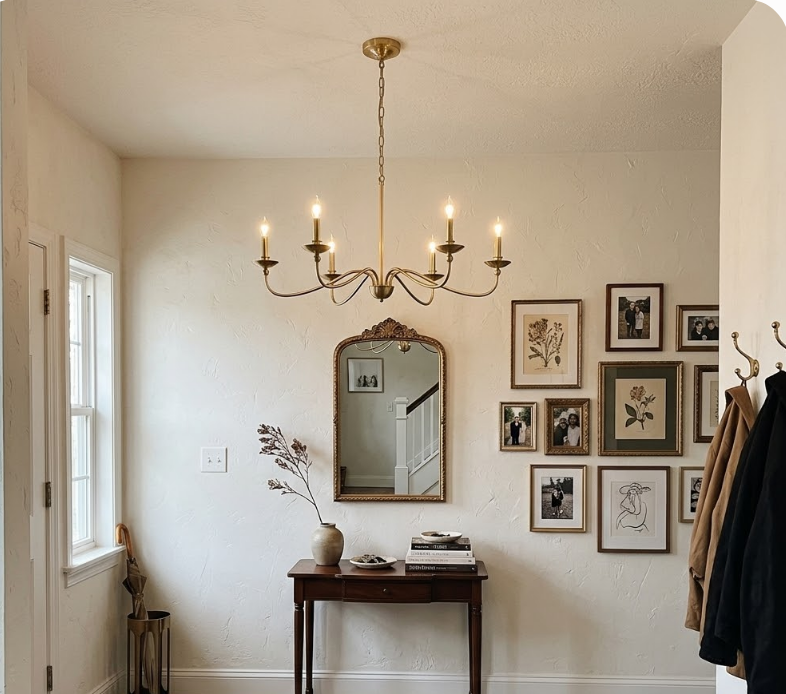
The scale is perfect for our entryway. It makes a strong first impression without overwhelming the space. Guests immediately notice it and always compliment how polished it looks.
Beautiful, relatively easy to install. Brass finish looks better than some of our more expensive fixtures.
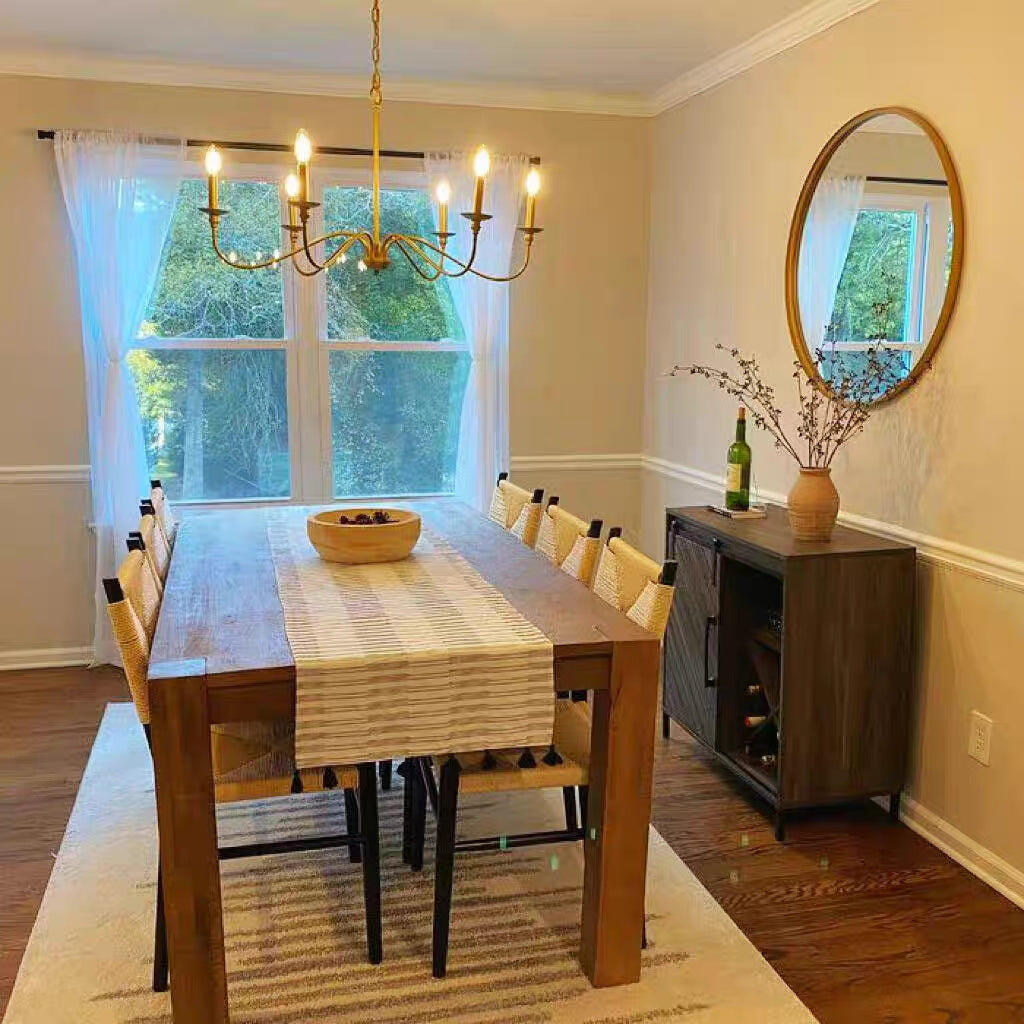

A "go to" fixture of mine! Love using this classic and clean lines fixture in my clients homes! Order it, you won't be disappointed!
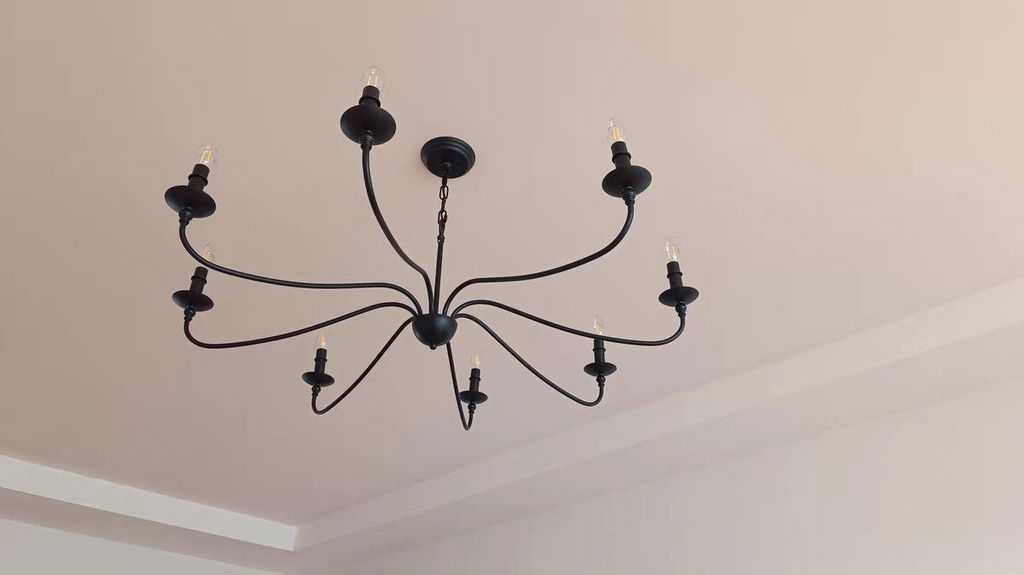
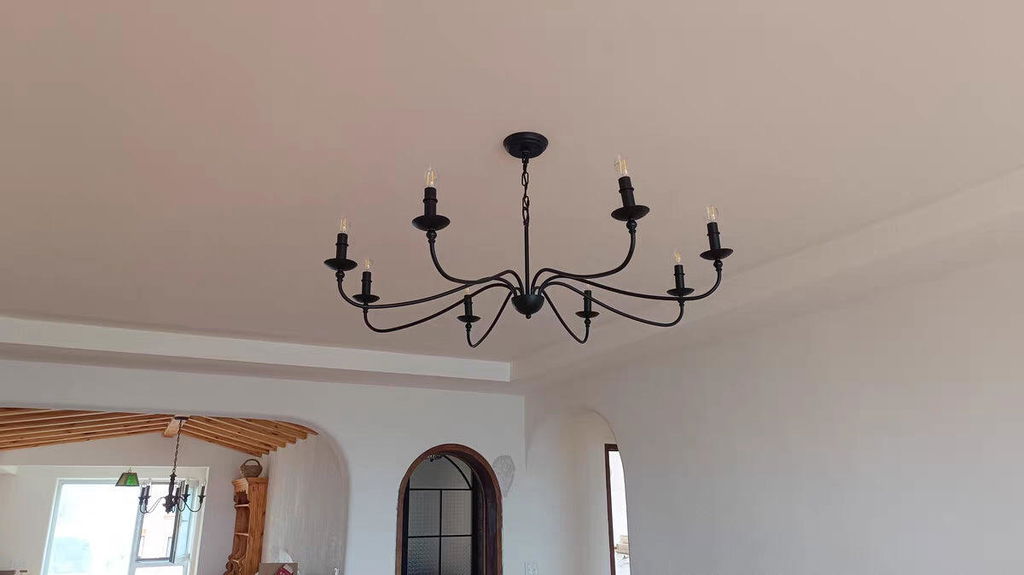
A "go to" fixture of mine! Love using this classic and clean lines fixture in my clients homes! Order it, you won't be disappointed!
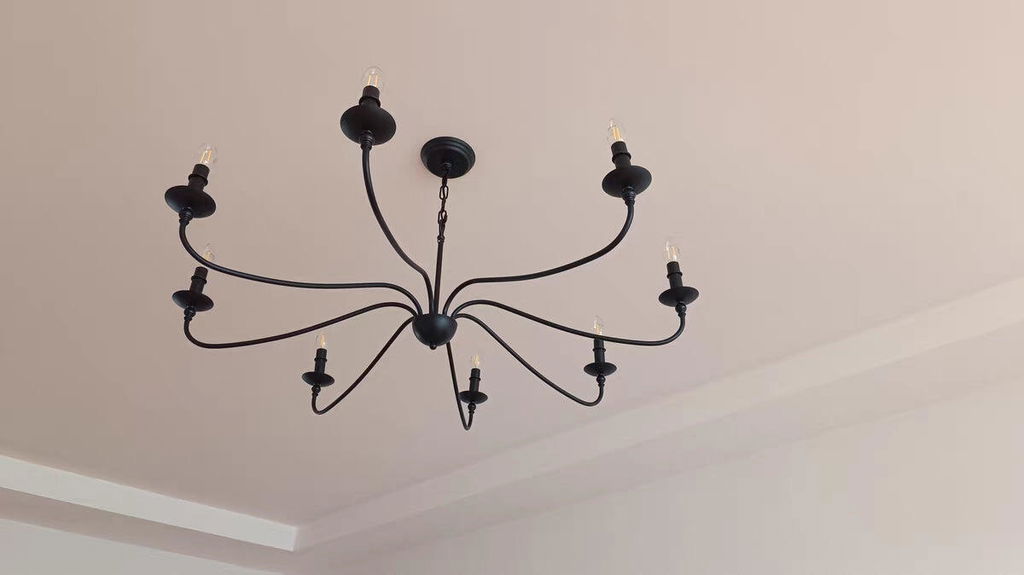
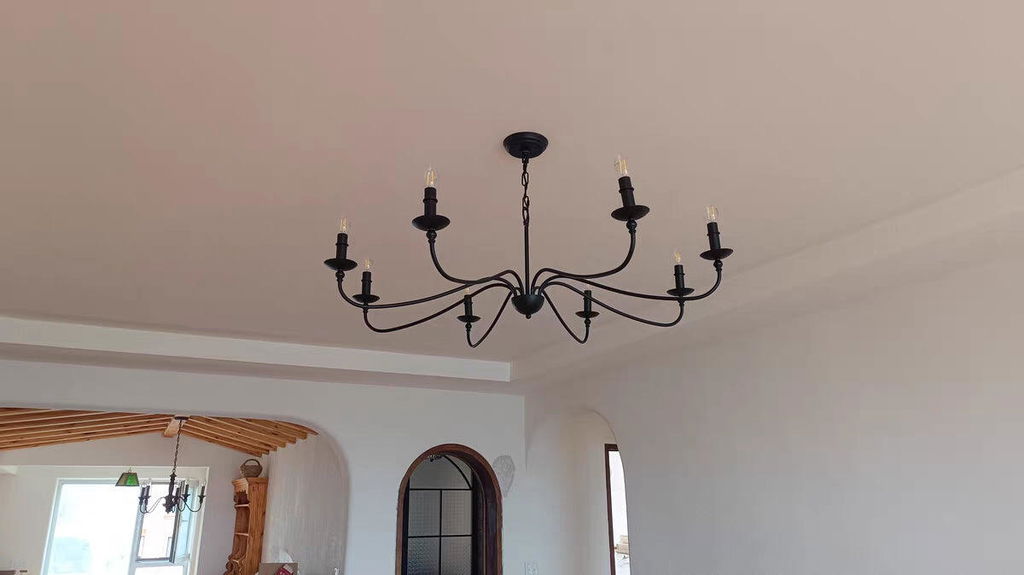
Good light fixture. Has served us well and still works great after several years. Looks just like the photo and assemblyinstallation was no sweat.
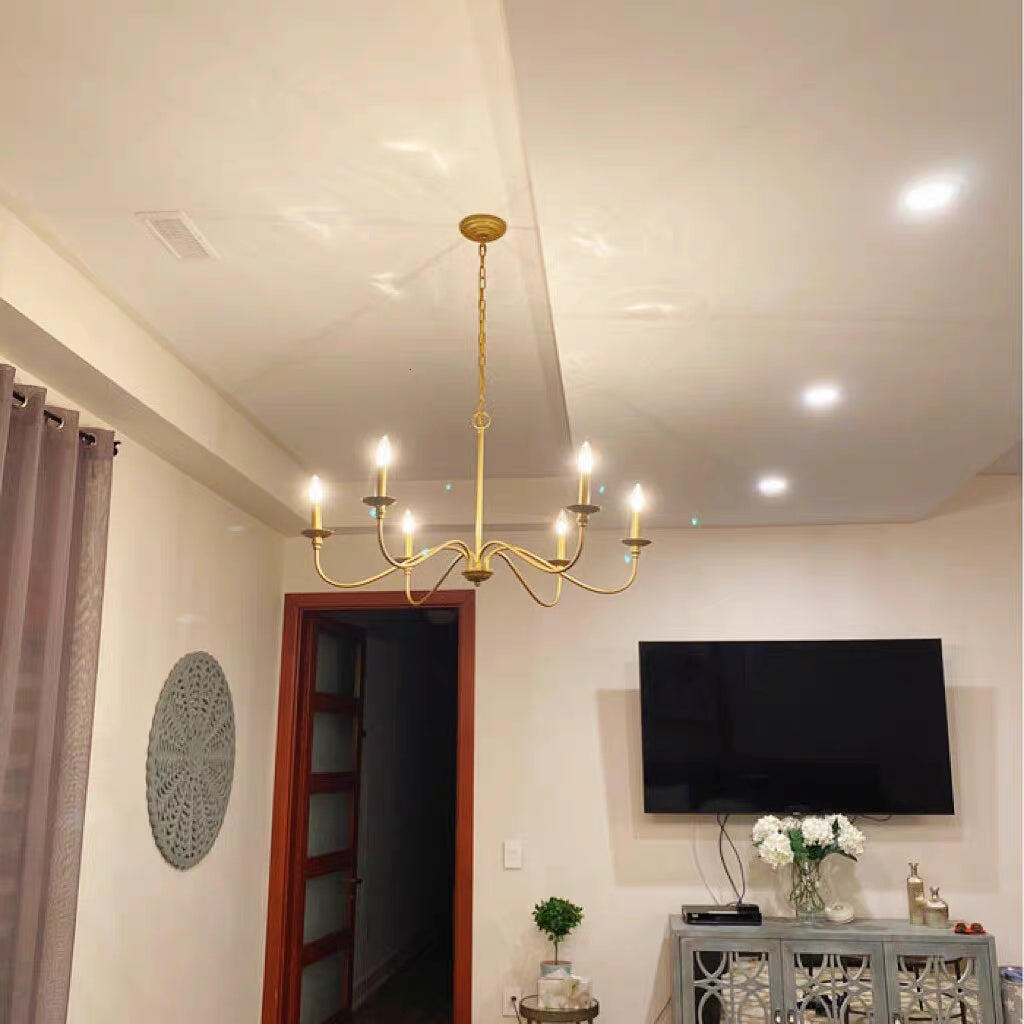
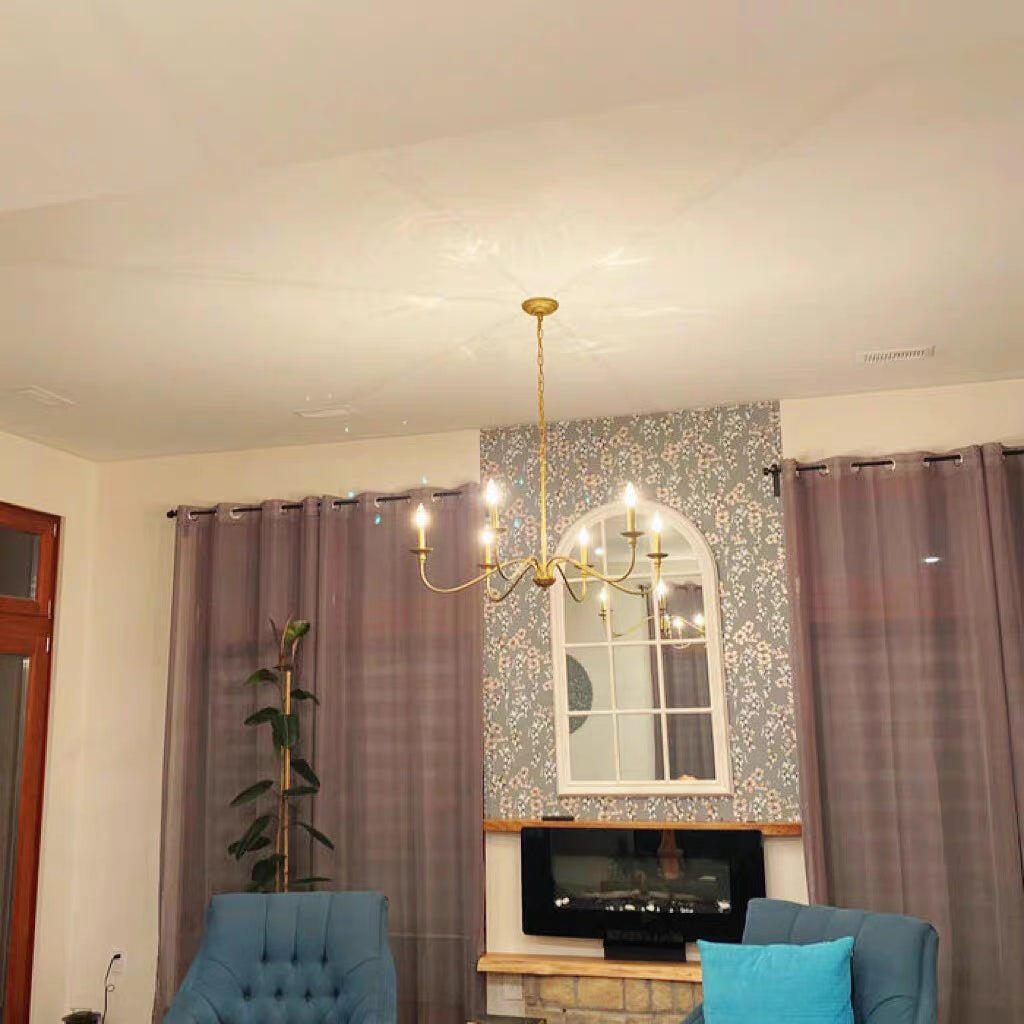

Good light fixture. Has served us well and still works great after several years. Looks just like the photo and assemblyinstallation was no sweat.
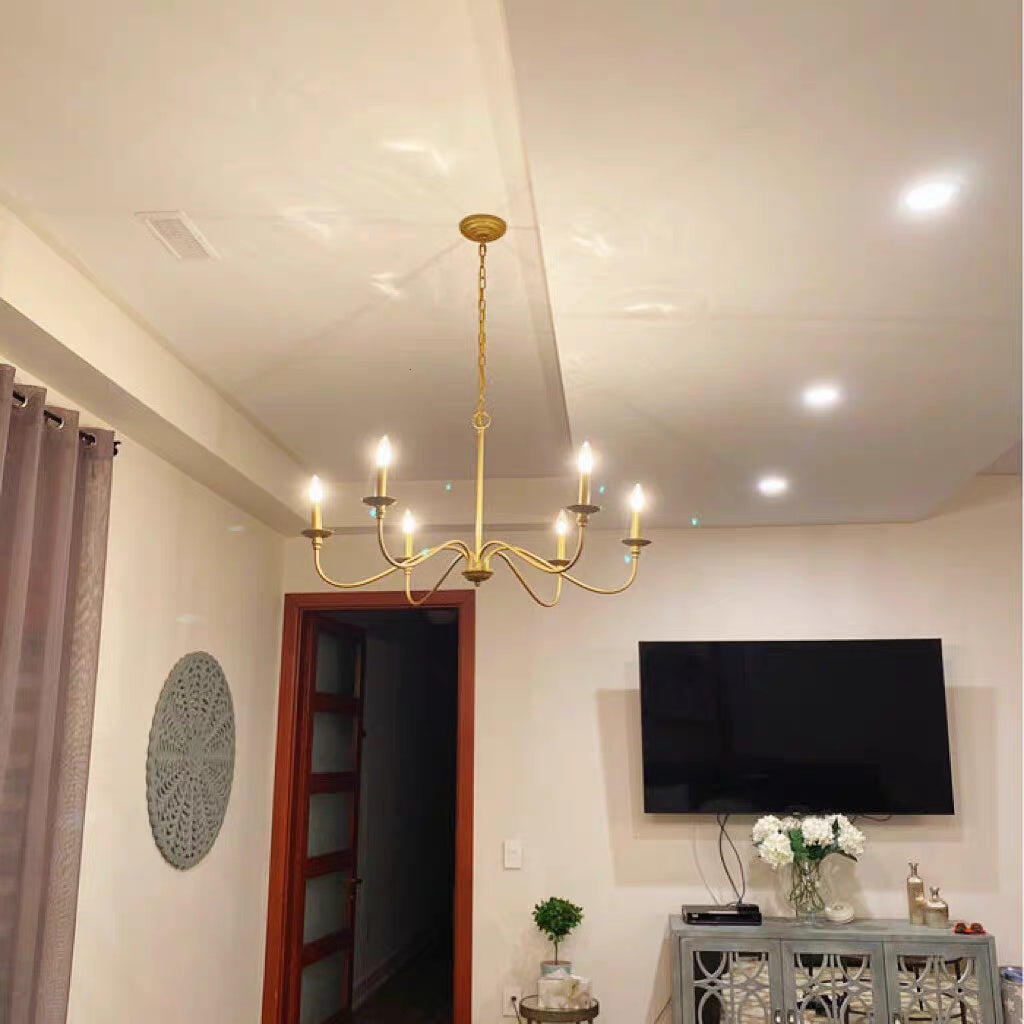
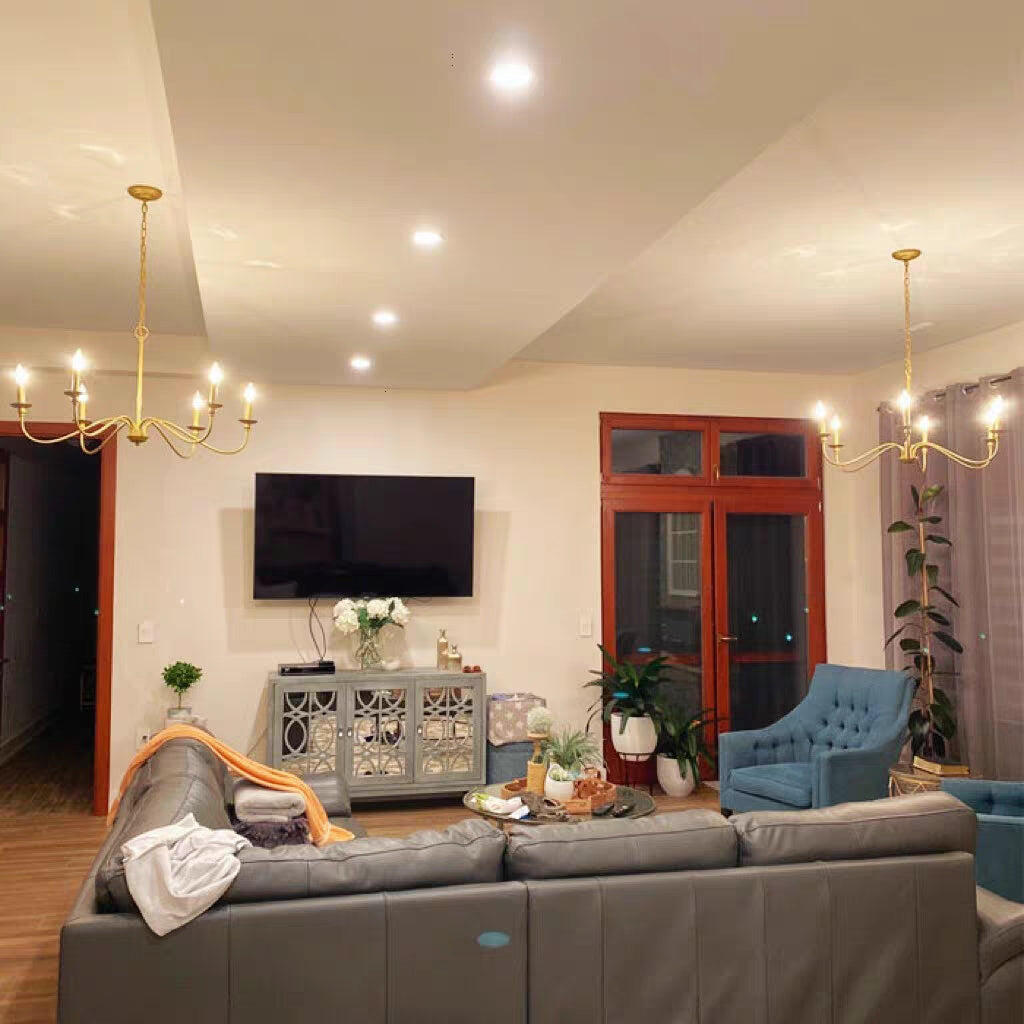
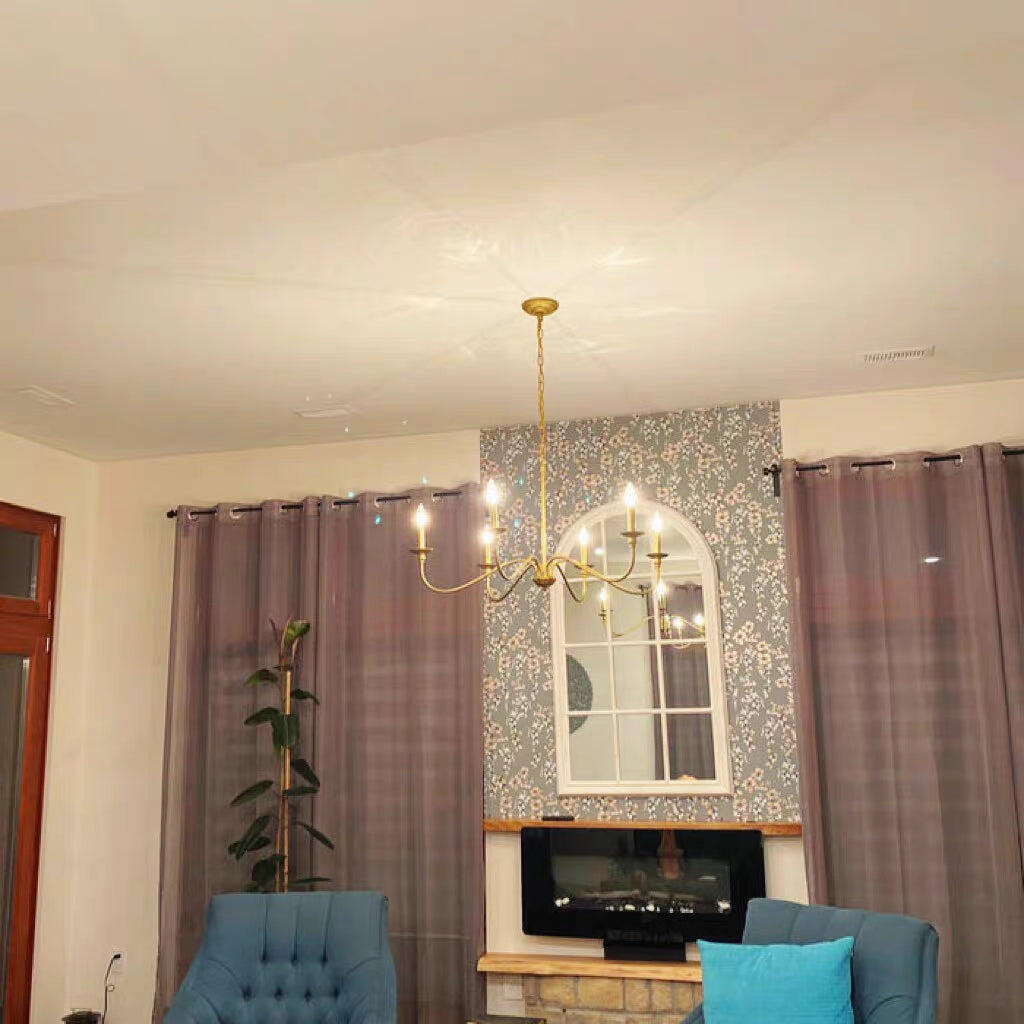
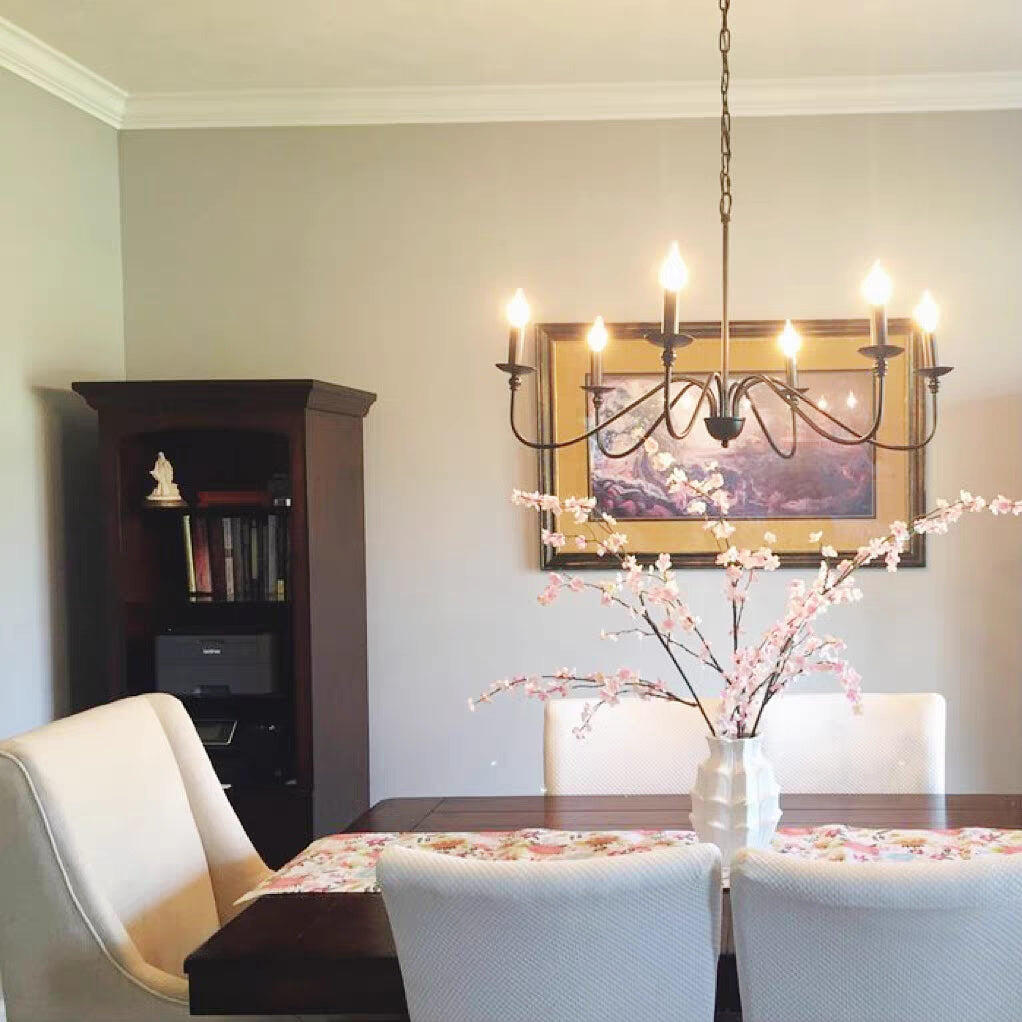
A perfect addition to my dining room. Simple clean and elegant.
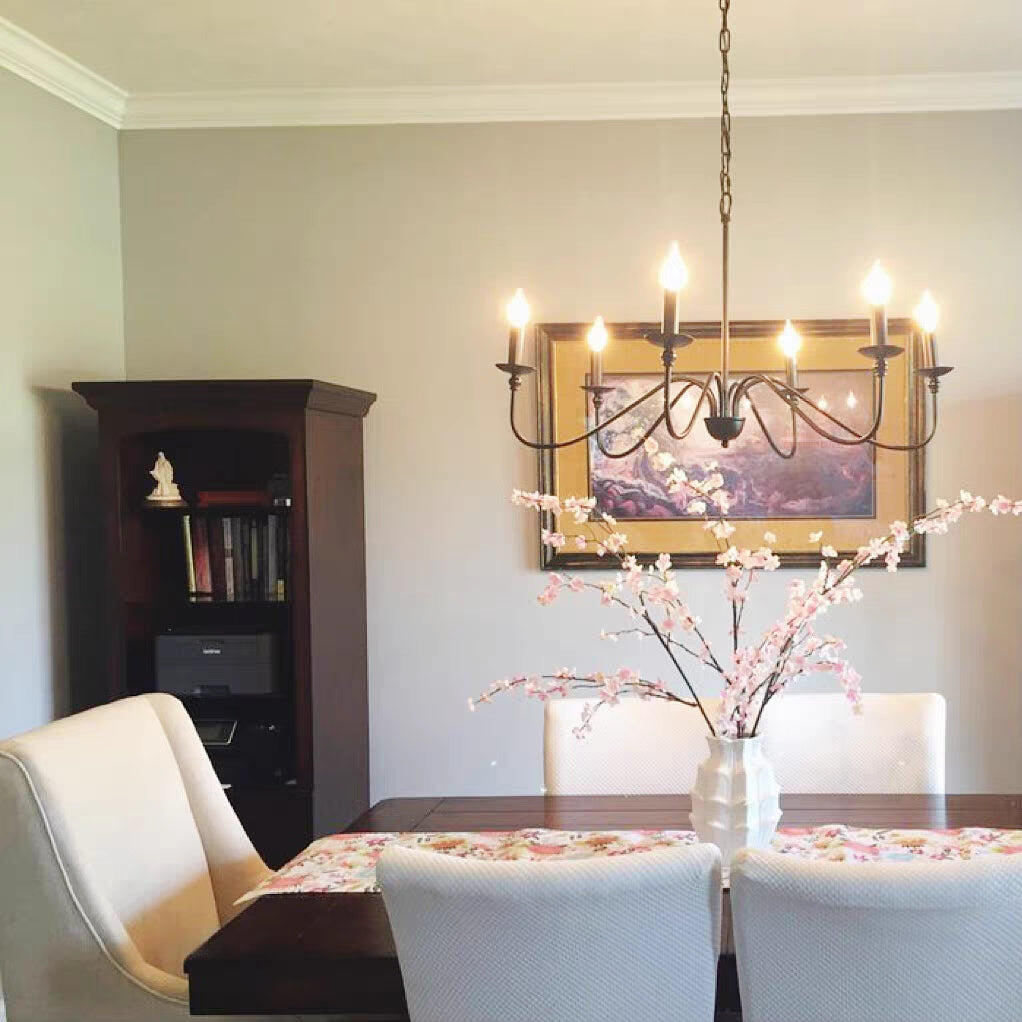
A perfect addition to my dining room. Simple clean and elegant.
Nice but a little cheaper feeling quality wise. But overall satisfied for the price.
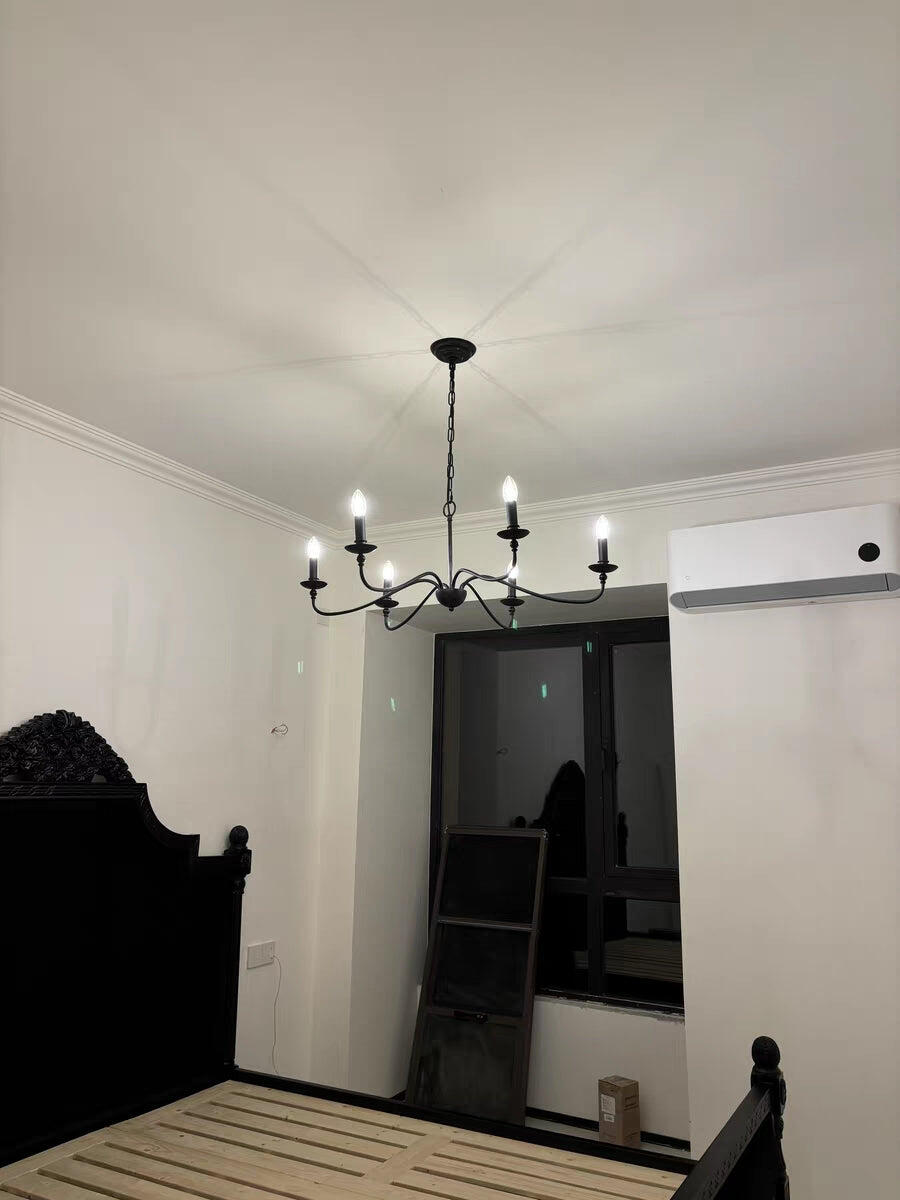
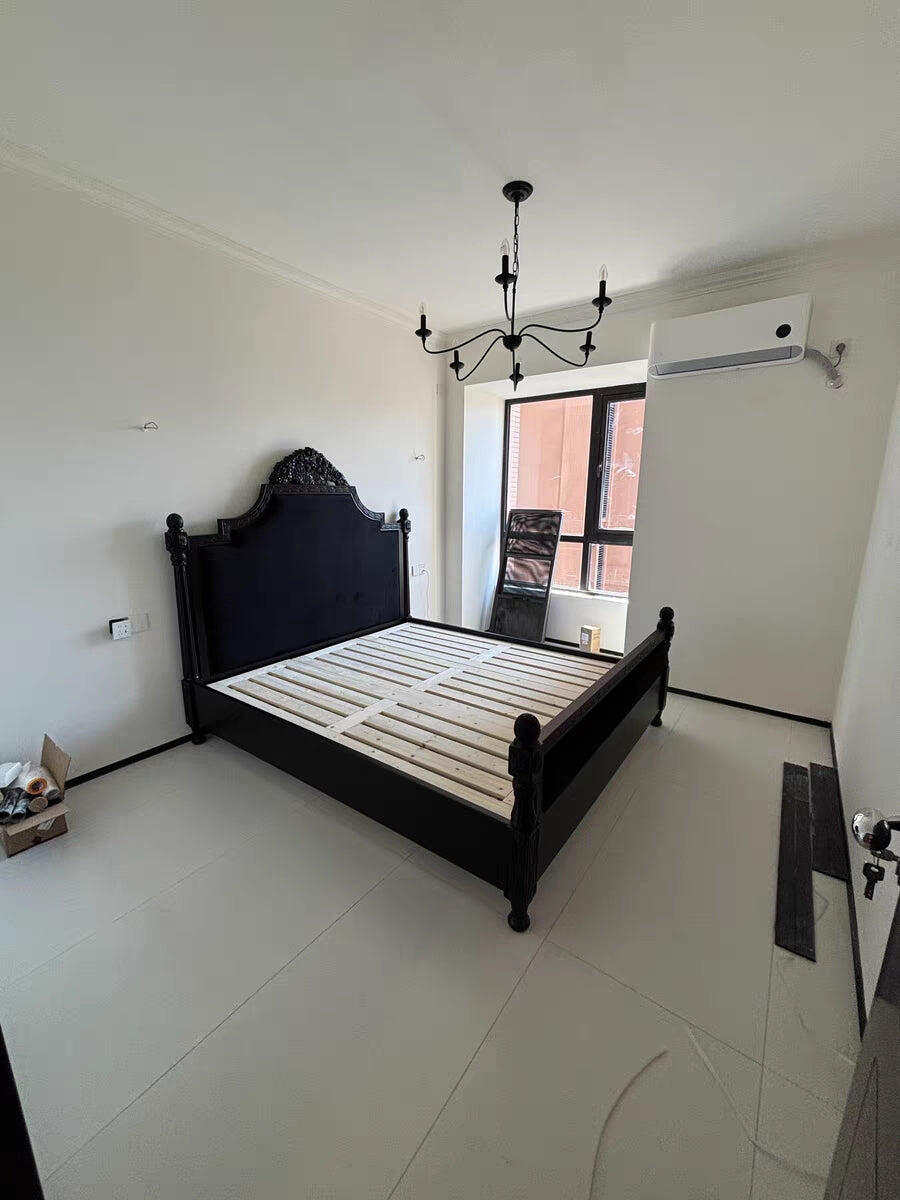
Nice but a little cheaper feeling quality wise. But overall satisfied for the price.
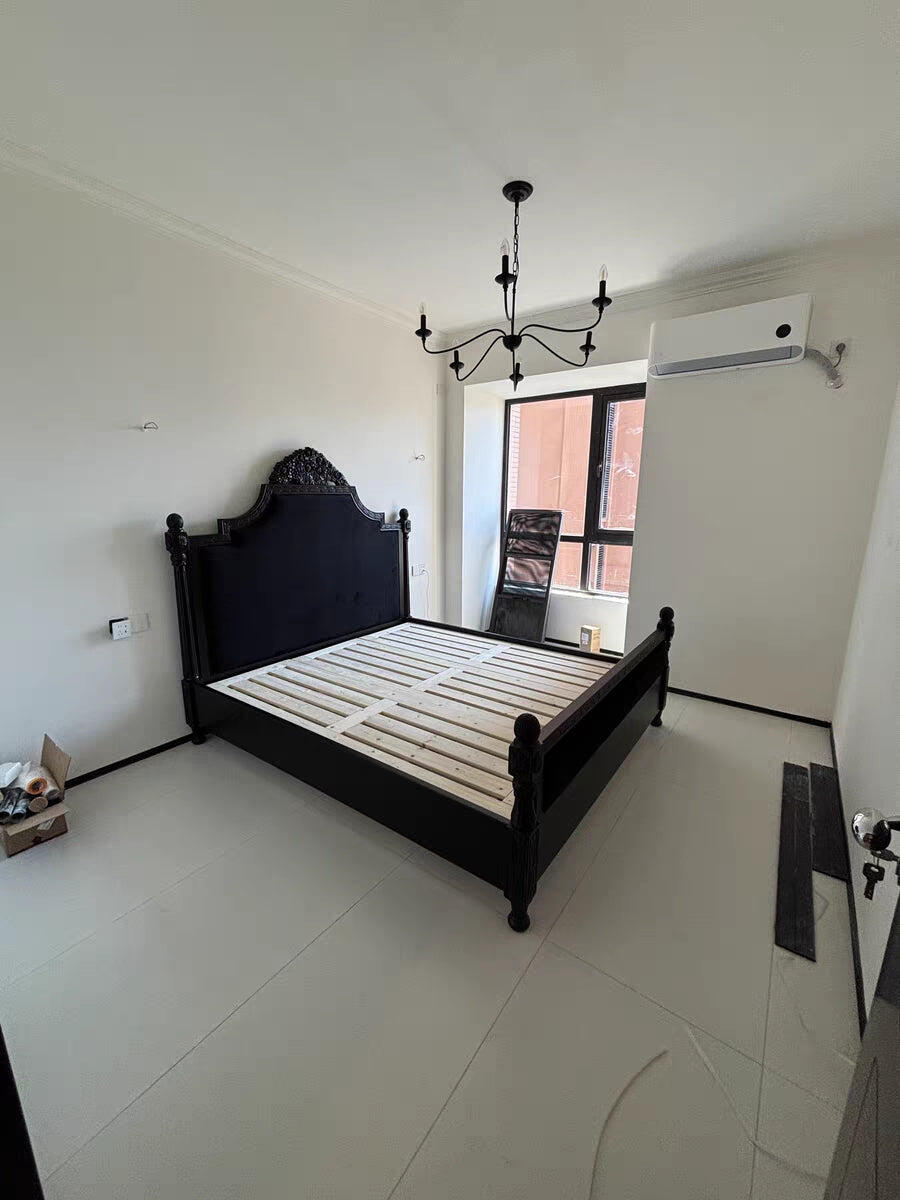
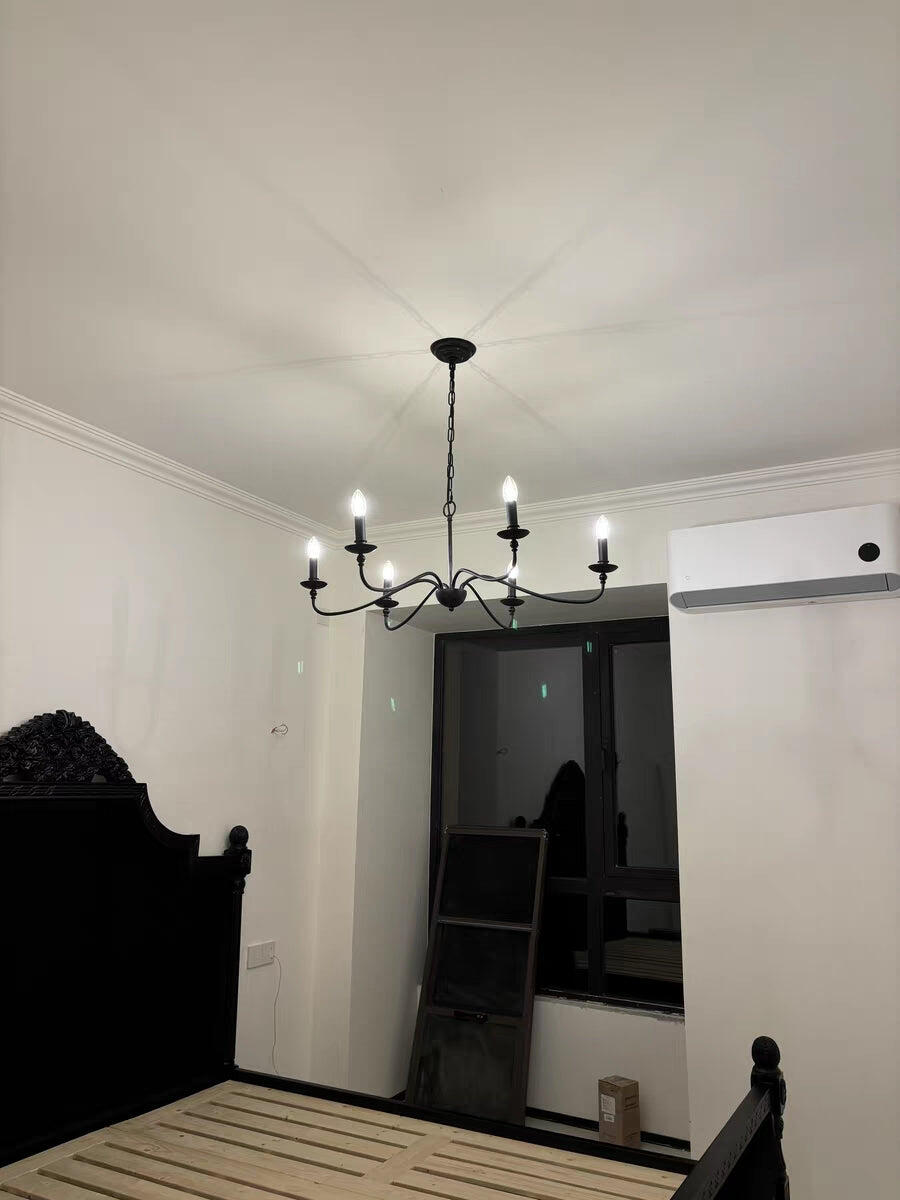
Super stylish for great price. Gorgeous addition to our living room. Highly recommended 5 stars plus plus. We get so many compliments.

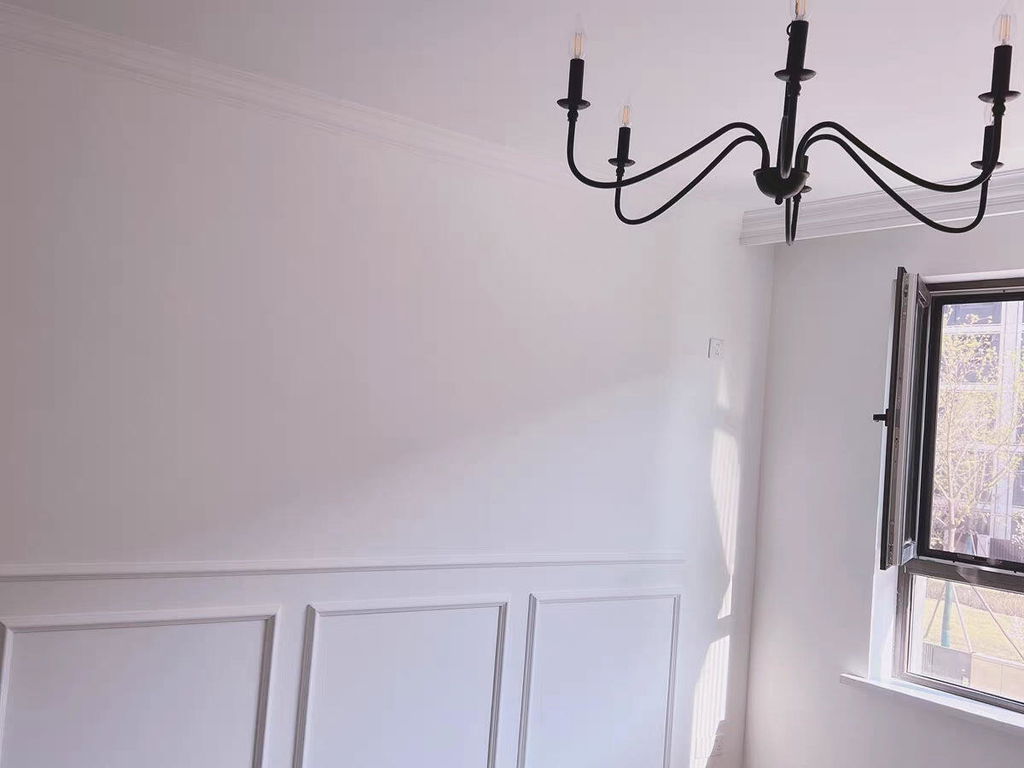
Super stylish for great price. Gorgeous addition to our living room. Highly recommended 5 stars plus plus. We get so many compliments.
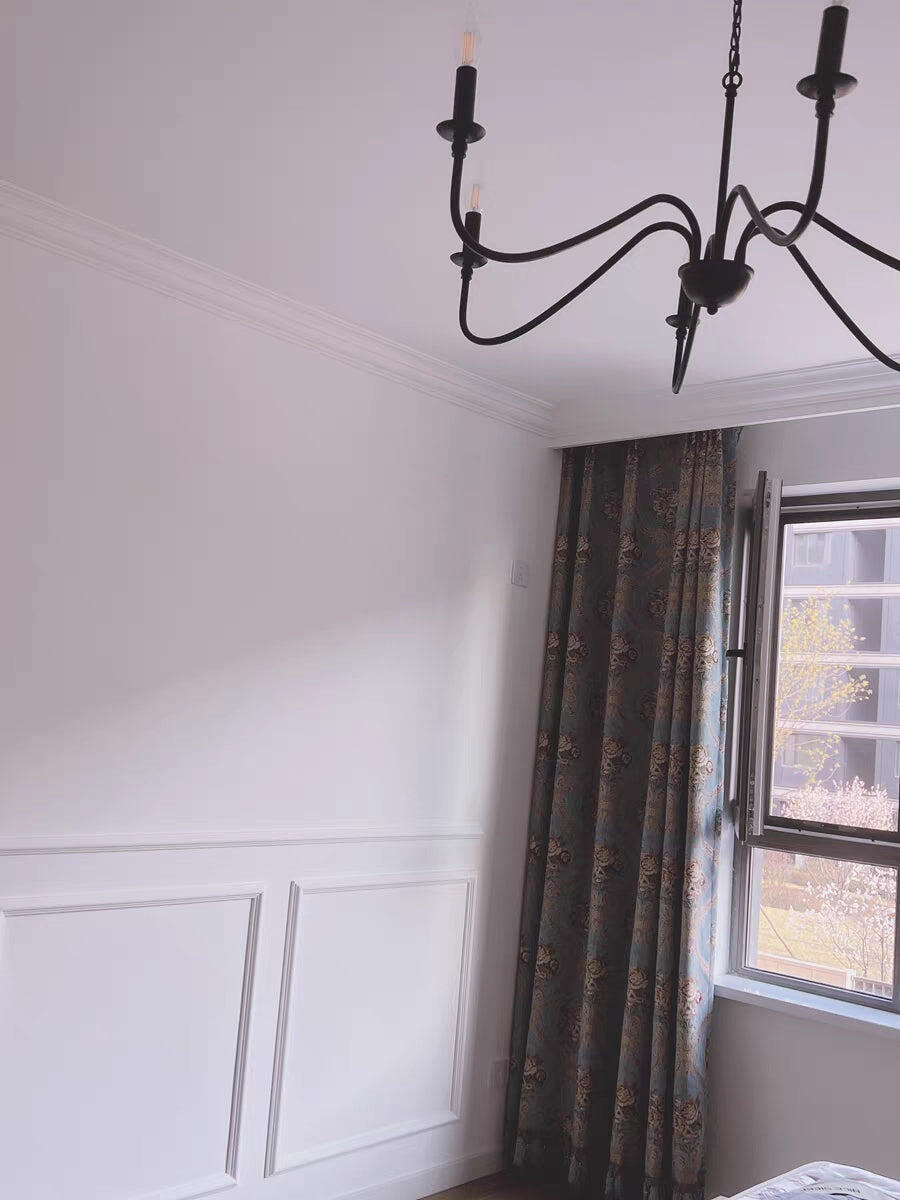
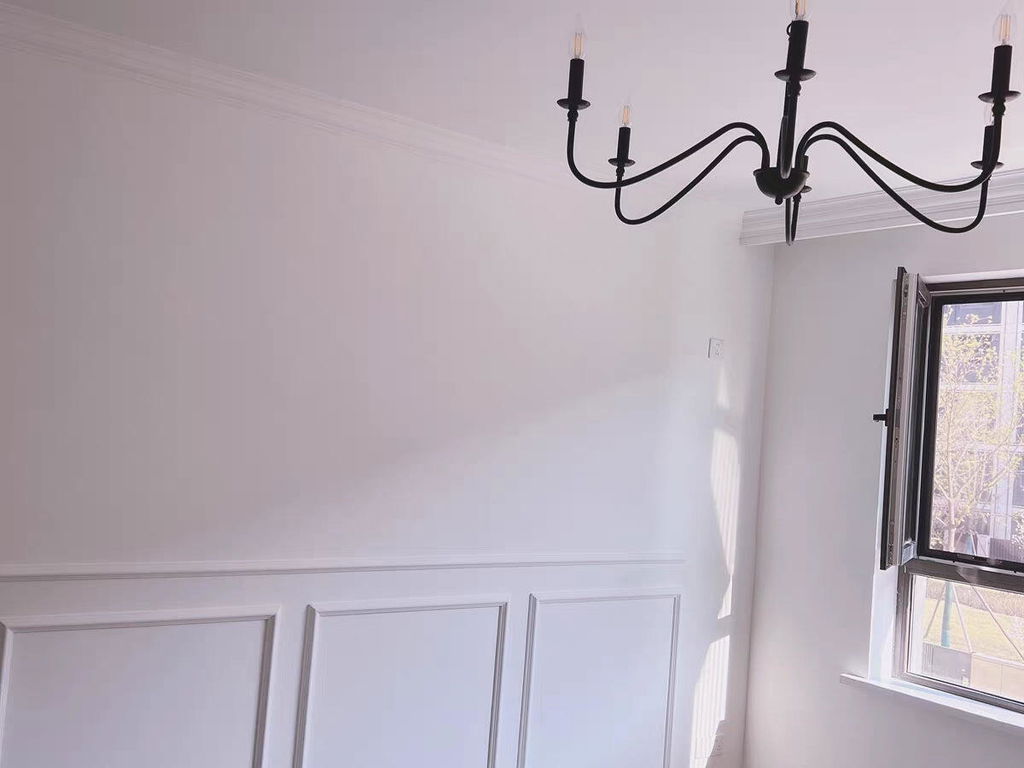
Installation was straightforward, and once hung, it felt very secure and stable. The final result looks far more expensive than expected.
Absolutely stunning once installed. The curved arms add a sense of movement that makes the fixture feel alive, even when it’s off. When lit, it creates a beautiful ambient atmosphere.
The chandelier looks nice overall, but it feels a bit larger in person than expected. It still works in the space, but I had to adjust furniture placement.
It’s the perfect statement piece above our dining table. It anchors the room without overpowering the rest of the decor.
This piece works beautifully in our transitional-style home. It ties together modern furnishings and more classic architectural elements seamlessly.
The lighting output is excellent. Each bulb contributes to a soft but noticeable brightness that works well for both evenings and gatherings.
This fixture elevated the entire room. It blends traditional styling with a more luxurious presence that makes the space feel upgraded instantly.
I was looking for something classic but not boring, and this delivered perfectly. The six-light layout spreads illumination evenly, so there are no dark corners anymore. It feels like a true centerpiece.
I love how the arms extend outward in a graceful way. It gives the chandelier a sense of structure without feeling rigid.
The effect after installation is very good. The details are very well done.
It gives off good light, though I wish it came with bulbs included so installation would have been fully complete out of the box.
I appreciate how balanced the design feels. Nothing looks too heavy or too delicate—it’s just right, especially for a formal dining or living area.
Récemment consulté
Offre de bienvenue
Dix pour cent de réduction votre première commande
Entrez le code à la caisse. S'applique à la commande complète, y compris les finitions personnalisées.
Commerce & Designers
Programme B2B
Tarifs net sur chaque luminaire, échantillons de finitions, modèles 3D et un contact projet dédié — pour les décorateurs d'intérieur, architectes, secteur hôtelier et promoteurs.
Demander un compte professionnel